A jig head OEM guide is useful for importers, fishing tackle brands, wholesalers and product managers who need stable bulk production, correct hook matching, accurate weight control and retail-ready packaging. In real sourcing work, a jig head is not only a lead head with a hook. Hook model, wire diameter, head shape, keeper design, coating method, eye position, packaging and quality inspection all affect product performance and repeat order consistency.
What This Jig Head OEM Guide Covers
- How importers and brands define a jig head product range
- Why hook selection and wire diameter affect performance and cost
- How head shape, weight tolerance and keeper design influence production
- What coating and packaging details should be confirmed before quotation
- How sample approval and QC reduce complaints in bulk orders
Table of Contents
- Define the target market and fishing method
- Confirm hook model, size and wire diameter
- Choose jig head shape and application
- Control weight range and tolerance
- Check keeper design and soft bait fit
- Select coating and finish method
- Check eye position and alignment
- Plan private label packaging
- Understand MOQ and cost structure
- Inspect quality before shipment
- Keep repeat orders consistent
- Prepare a complete RFQ checklist
Jig heads are common products in freshwater and saltwater lure fishing. They are used with soft baits, bucktail, skirts and many different rigging styles. For distributors, one jig head series may include several hook sizes, many weights, multiple colors and different packaging versions. Without a clear specification, the order can become difficult to control.
This jig head OEM guide is written for professional fishing tackle buyers who need reliable supply, clear specifications and repeatable quality. It focuses on practical sourcing details that affect quotation, sample approval, mass production and future reorder control.
For buyers planning a broader lure range, jig heads are often purchased together with soft baits, fishing hooks and other OEM fishing lures. Matching these products early can reduce development time and avoid assembly problems after production starts.
1. Use This Jig Head OEM Guide to Define the Target Market
Before asking for a price, importers and brands should define the target market and fishing method. A jig head for bass fishing, zander fishing, perch fishing, crappie fishing, saltwater fishing or heavy-duty pike fishing may need different hook strength, head shape, coating and packaging.
Buyers should also confirm whether the product will be sold as a budget bulk item, mid-range retail pack or premium branded product. This affects hook selection, finish quality, color range, packaging style and inspection standard.
Common jig head weights include 1/32 oz, 1/16 oz, 1/8 oz, 1/4 oz, 3/8 oz, 1/2 oz, 3/4 oz, 1 oz and heavier sizes. Metric weights such as 3g, 5g, 7g, 10g, 14g, 20g, 30g and 40g are also common in European markets.
2. Confirm Hook Model, Size and Wire Diameter
Hook selection is one of the most important parts of a jig head OEM guide. The hook determines penetration, holding strength, lure balance and customer satisfaction. It also has a direct impact on cost.
Buyers should confirm hook type, hook size, wire diameter, shank length, gap width, eye angle, point sharpness and coating. A 3/0 hook from one supplier may not match another supplier’s 3/0 hook in actual length, gap or wire thickness.
Wire diameter should match the target fish and fishing method. A thicker hook improves strength but may reduce penetration or change the action of a small soft bait. A thinner hook penetrates more easily but may bend under heavy load.
For professional OEM orders, it is useful to send a physical hook sample or confirm an exact reference hook. Terminalpro can also help buyers compare suitable fishing hook options for jig head projects.
3. Choose Jig Head Shape Based on Application
Jig head shape affects swimming action, bottom contact, hook position and soft bait presentation. The right shape depends on the target fish, fishing depth, retrieve style and bait type.
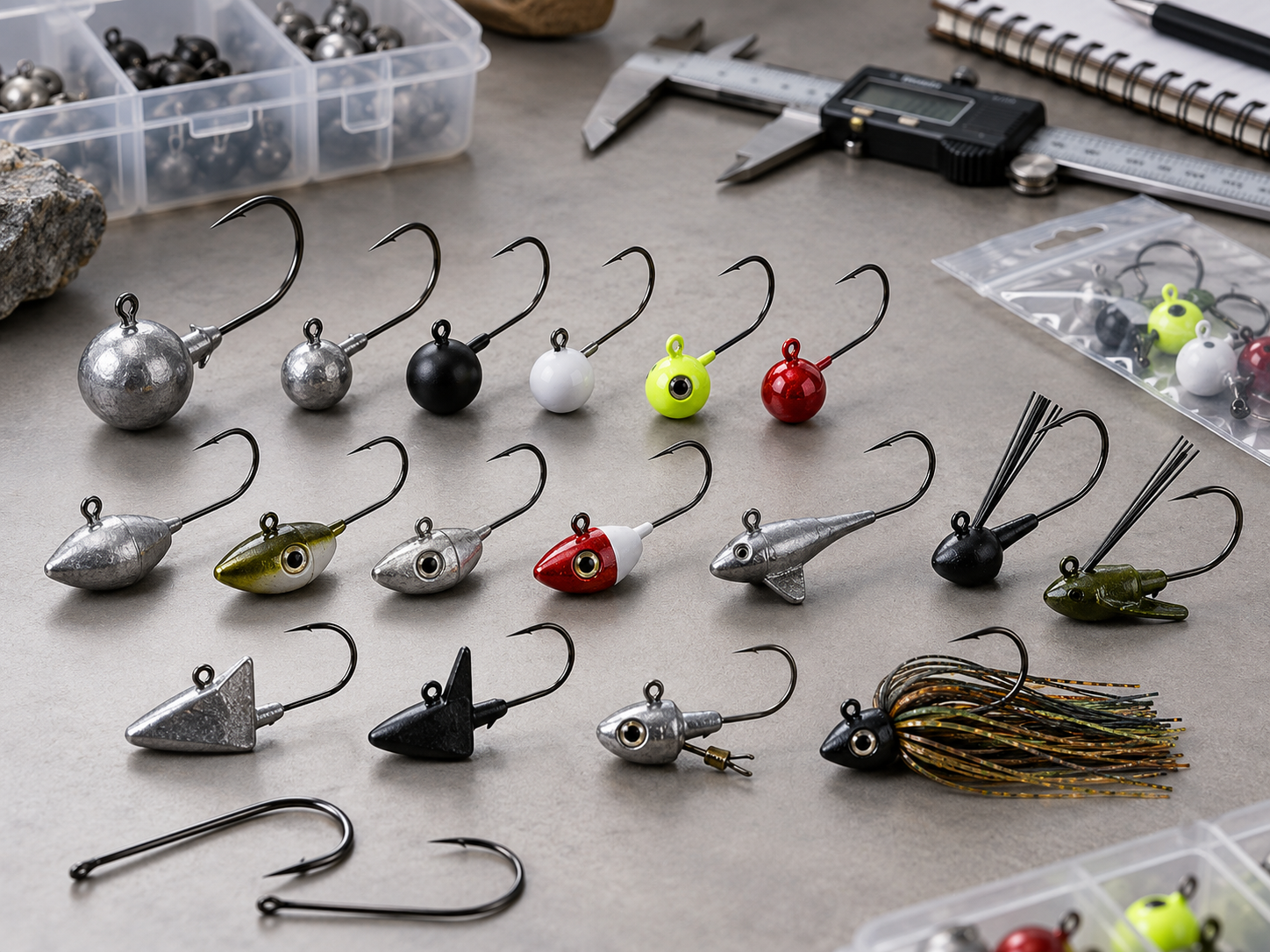
Common shapes include round head, football head, ball head, stand-up head, swim jig head, darter head, tube jig head, weedless jig head and saltwater jig head. Each shape has a different purpose. For example, football heads are often used for bottom contact, while swim jig heads are designed for moving presentations.
Buyers should not select a head shape only by appearance. A head that looks attractive may not work well with the intended soft bait or hook angle. Sample testing with the actual bait is recommended before mass production.
Buyers can review Terminalpro’s jig heads product range when planning standard models, custom shapes or private label jig head series.
4. Control Weight Range and Tolerance
Weight control is critical for jig head bulk orders. The stated weight affects fishing depth, casting distance, sink rate and customer expectations. If the actual weight varies too much, retailers and end users may complain.
Importers should confirm weight range, unit system, acceptable tolerance and whether the weight is measured with hook or lead head only. Some markets use ounces, while others use grams. Packaging artwork must match the actual product specification.
In production, weight can be affected by mold design, lead material, hook placement and trimming. For repeat orders, approved samples should be kept as reference so that future batches remain consistent.
5. Check Keeper Design and Soft Bait Fit
The keeper is a small detail, but it can affect how well the soft bait stays on the hook. A poor keeper design may tear the bait, hold it too loosely or make assembly difficult.
Common keeper options include lead barb, wire keeper, collar keeper, screw lock, double barb and custom keeper structures. The best choice depends on bait material, bait size, softness and target retail position.
If the jig head is designed for a specific soft bait, the buyer should test the actual bait on the sample jig head. This is especially important for private label lure programs where the jig head and soft bait are sold together.
6. Select Coating, Finish and Color Requirements
Jig head finish affects both durability and retail appearance. Common options include unpainted lead, painted finish, powder coating, epoxy coating, matte black, metallic finish, glow color and custom colors.
Powder coating is widely used for durability and production efficiency. Painted and epoxy finishes may be selected for higher-end products or more detailed color effects. For saltwater use, buyers should also consider corrosion resistance of hooks and other components.
For products sold in the European market, buyers may need to review material and labeling requirements under REACH regulation, especially when lead material, coatings and retail packaging are involved.
7. Check Hook Eye Position and Alignment
Hook eye position affects lure action, line angle and assembly quality. A small difference in eye angle can change how the jig head swims or how the soft bait sits in the water.
During sample approval, buyers should check whether the hook eye is centered, clean, open and free from excessive coating. Paint or powder inside the eye can create problems during rigging.
For bulk orders, eye alignment should be included in the inspection checklist. If the hook is not placed consistently in the mold, the finished jig heads may vary in appearance and action.
8. Plan Private Label Packaging Before Final Quotation
Packaging should be planned before the final price is confirmed. Jig heads are heavy and have sharp hooks, so packaging must protect the product, reduce hook tangling and support retail display.
Common packaging options include small polybags, header bags, blister packs, clamshell packs, plastic boxes, foam cards and bulk packing. For private label orders, buyers should prepare logo artwork, barcode, SKU, weight, hook size, quantity per pack, warning text and country of origin information.
Packaging style can change labor cost, carton size and shipping arrangement. A five-piece retail pack, ten-piece bulk bag and fifty-piece distributor pack have different cost structures. Terminalpro’s custom packaging support can help buyers align product information, label design and carton marks before production.
9. Understand MOQ, Mold Cost and Cost Structure
Jig head MOQ depends on head shape, weight range, hook selection, coating, color quantity and packaging method. Standard molds usually have more flexible MOQ, while custom head shapes or private label packaging require better quantity planning.
A common cost mistake is to ask for too many weights and colors in the first order without enough quantity per SKU. For distributors, it is usually better to identify core weights and proven colors first, then expand the range after sales data confirms demand.
A practical RFQ should show quantity per weight, hook size, color and packaging style. This allows the supplier to calculate product cost, packaging cost, labor cost and lead time more accurately.
10. Inspect Jig Head Quality Before Shipment
Jig head quality control should cover more than appearance. Key inspection points include hook position, hook sharpness, head weight, coating quality, eye opening, keeper shape, barb quality, color consistency, pack quantity and carton marks.
Before mass production, buyers should approve pre-production samples. These samples should be checked with the actual soft bait, packaging and target rigging method.
For professional importers, a simple QC checklist can reduce disputes and help maintain stable quality across repeat orders. Terminalpro’s process and quality control work focuses on sample approval, production follow-up, packing checks and shipment preparation.
11. Keep Repeat Orders Consistent Across Batches
For brands and distributors, repeat order consistency is often more important than one-time sample appearance. Customers expect the same hook size, weight, coating color and packaging quality when they reorder the same SKU.
Buyers should keep approved samples, hook specifications, color standards, packaging artwork and carton requirements as production references. If any component changes, such as hook supplier, coating method or packaging material, the change should be confirmed before production.
This jig head OEM guide recommends treating approved samples as control standards, not only as sales samples. That approach helps reduce batch differences and makes long-term supply easier to manage.
12. Jig Head OEM Quotation Checklist for Professional Buyers
A complete RFQ is the practical output of this jig head OEM guide. It helps suppliers quote accurately and helps buyers compare options beyond unit price.
Jig Head OEM RFQ Checklist
- Target Market: Bass, perch, zander, pike, crappie, saltwater or general lure fishing
- Head Shape: Round, football, swim jig, stand-up, weedless, tube jig or custom shape
- Weight Range: Ounce or gram weights with acceptable tolerance
- Hook: Hook type, size, wire diameter, shank length, gap and eye angle
- Keeper: Lead barb, wire keeper, screw lock, collar or custom keeper
- Material: Lead alloy or other material requirement
- Finish: Unpainted, painted, powder coated, epoxy, matte, glow or custom color
- Packaging: Polybag, header bag, blister, clamshell, box, foam card or bulk packing
- Label Details: Logo, barcode, SKU, weight, hook size, quantity and warning text
- Quantity: Quantity per weight, color, hook size and packaging style
- Reference: Photos, drawings, physical samples or existing product codes
- Quality Standard: Weight tolerance, coating standard, hook sharpness and packing accuracy
Conclusion
A useful jig head OEM guide should help professional buyers turn a general product request into a clear purchasing specification. For importers, fishing tackle brands and distributors, the key is not only finding a low unit price. Hook selection, weight control, head shape, keeper design, coating, packaging and quality inspection all affect market performance and repeat order stability.
Terminalpro supports professional fishing tackle buyers with jig heads, lead jigs, spinnerbaits, sinkers, hooks, swivels, snaps and other fishing tackle products.
Buyers can also read our jig head OEM quotation guide or download our fishing accessories catalog to prepare product specifications before sending an RFQ.
Need a Jig Head OEM Quotation?
Send us your jig head shape, weight range, hook specification, keeper requirement, coating option, packaging idea and estimated quantity. Terminalpro will review your project and provide a practical OEM quotation for bulk production.
FAQ
What information is needed for a jig head OEM quotation?
Buyers should provide head shape, weight range, hook size, hook wire diameter, keeper design, coating requirement, packaging method and estimated quantity per SKU.
Why is hook selection important for jig head OEM orders?
Hook selection affects penetration, strength, soft bait fit, lure balance and customer satisfaction. Buyers should confirm hook size, wire diameter, gap, shank length and eye angle before production.
Can jig heads be packed with private label packaging?
Yes. Jig heads can be packed in polybags, header bags, blister packs, clamshell packs, plastic boxes, foam cards or bulk packs with private label artwork, barcode and SKU information.
What affects jig head OEM cost?
Main cost factors include head weight, hook specification, mold situation, coating method, color quantity, keeper design, packaging method and total order quantity.
How can importers keep jig head quality consistent across repeat orders?
Importers should keep approved samples, hook specifications, weight tolerance, color standards, packaging artwork and carton requirements as references for future production batches.