1. Standard pack + label
Suitable for trial orders, small quantity projects, online testing or buyers who want to start quickly with lower packaging investment.
- Lower starting cost
- Faster preparation
- Good for first orders
- Flexible for many SKUs
Custom packaging is an important part of fishing tackle OEM projects. Buyers need to confirm packaging type, product quantity per pack, artwork, barcode, warning text, material, hanging hole, carton protection and packaging MOQ before bulk production.
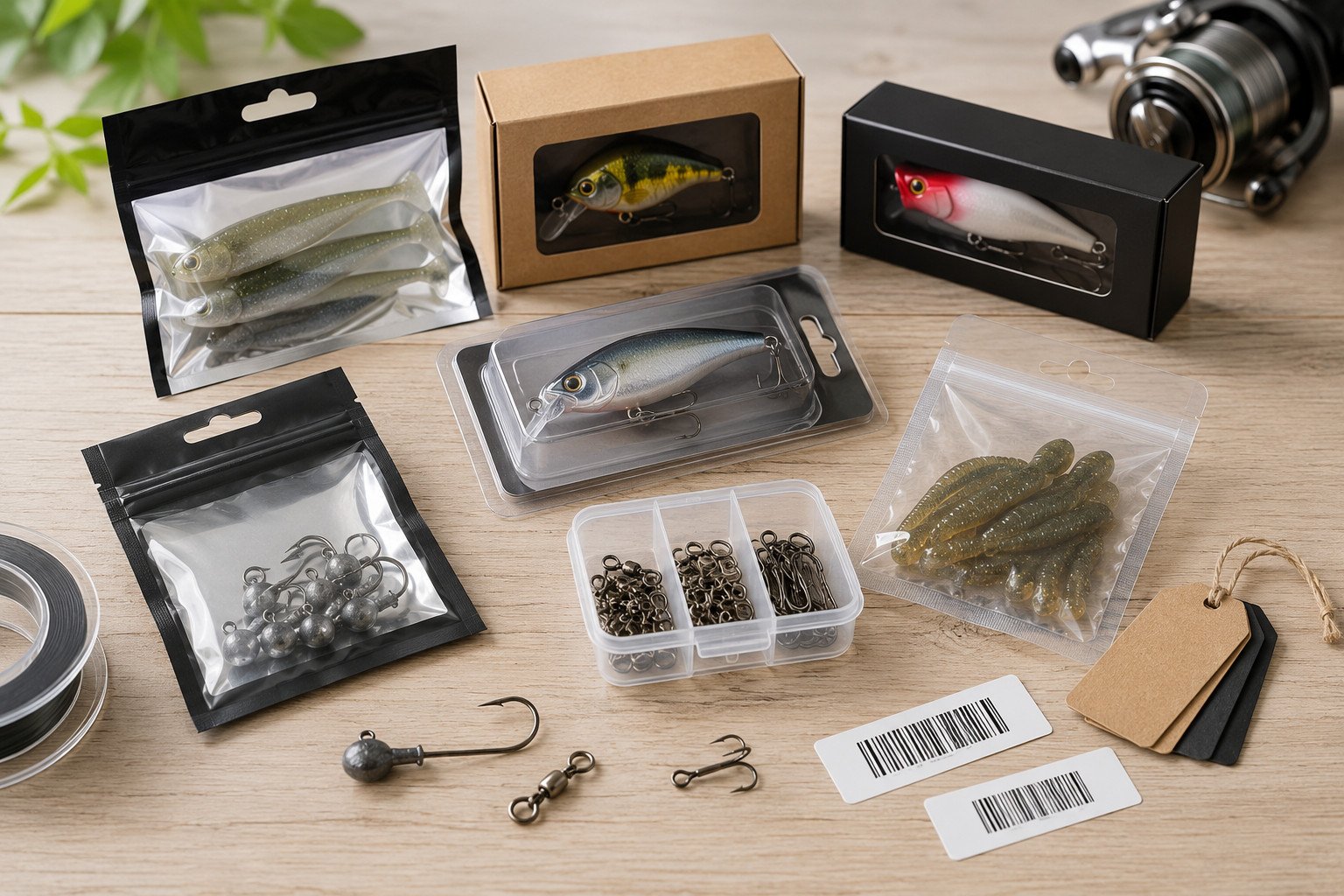
Different fishing tackle products need different packaging. A soft bait bag, hard lure blister, jig head card, swivel pack and tool box should not be planned in the same way.
| Packaging type | Best used for | Main details to confirm | Buyer should prepare |
|---|---|---|---|
| Printed soft bait bag | Soft plastics, worms, paddle tails, craws, creature baits. | Bag material, oil resistance, scent resistance, seal strength, hanging hole and pack count. | Artwork, bag size, pieces per bag, color mix, barcode and warning text. |
| Blister card / clamshell | Hard lures, jig heads, spinnerbaits, tools and retail lure packs. | Blister size, card size, product fixing method, hook protection and Euro hole. | Product size, pack layout, card artwork, barcode and retail display requirement. |
| Header card + bag | Terminal tackle, hooks, swivels, snaps, soft baits, sinkers and small tools. | Header size, hole type, bag thickness, staple or seal method and product visibility. | Product quantity, bag size, logo, label text and market requirement. |
| Printed paper box | Fishing tools, lure sets, gift packs, rig kits and retail assortments. | Box structure, insert tray, carton strength, barcode, FNSKU and product protection. | Product dimensions, box style, artwork, pack quantity and shipping method. |
| Label / sticker packaging | Small trial orders, low MOQ private label projects and mixed product ranges. | Sticker size, material, logo, barcode, warning text and country-of-origin statement. | Label artwork, product count, SKU list and packaging photos if available. |
| Assortment / kit packaging | Starter kits, lure sets, hook sets, sinker kits and tool combinations. | Product mix, compartment layout, color mix, model labeling and carton protection. | SKU list, quantity per kit, packaging reference and retail channel. |
For first orders, the most expensive packaging is not always the best choice. Packaging should match order quantity, product value, retail channel and buyer budget.
Suitable for trial orders, small quantity projects, online testing or buyers who want to start quickly with lower packaging investment.
Suitable for brands and wholesalers that need logo, barcode, product name, warning text and retail display packaging without fully custom packaging structure.
Suitable for long-term product lines, major retail programs, kit packs, Amazon packs or exclusive packaging structures.
Packaging mistakes often happen when the product itself is confirmed, but the packaging is discussed too late. Each product type has its own packaging risks.
| Product category | Recommended packaging | Packaging risk to check |
|---|---|---|
| Soft baits | Printed soft bait bag, clear bag with label, insert card bag or kit pack. | Oil leakage, scent resistance, seal strength, color mixing, deformation and bag MOQ. |
| ABS hard lures | Blister card, clamshell, box, hanging card or protective inner tray. | Hook damage, paint scratches, body movement inside pack and retail display position. |
| Metal lures | Header card, blister, PE bag, box or individual protective packing. | Heavy weight, scratches, hook protection, carton strength and coating damage. |
| Jig heads | Small bag, blister card, header card, box or weight-assorted kit pack. | Coating chips, hook protection, weight labeling, count accuracy and warning text. |
| Spinnerbaits | Blister card, box, wire-frame protective pack or hanging retail pack. | Wire deformation, blade scratches, skirt compression and hook safety. |
| Terminal tackle | Small PE bag, header card, printed bag, plastic box or assortment kit. | Small part count, size labeling, barcode accuracy and mixed SKU control. |
| Fishing tools | Blister card, pouch, sheath, box, gift pack or tool set packaging. | Sharp parts, heavy product weight, logo position, accessory loss and carton protection. |
Packaging note: product MOQ and packaging MOQ are not always the same. Printed bags, blister cards, boxes and custom trays may have separate MOQ and setup time.
Good packaging is not only a nice design. It should help retail display, warehouse receiving, consumer use and compliance review.
| Packaging element | What to confirm | Why it matters |
|---|---|---|
| Brand logo | Logo file, logo color, position and size. | Private label products need consistent brand presentation. |
| Product name | Model name, size, weight, color, hook size or part number. | Helps consumers and warehouses identify each SKU correctly. |
| Barcode / SKU | UPC, EAN, SKU code, FNSKU or distributor code. | Important for retail stores, Amazon, warehouse receiving and inventory control. |
| Warning text | Hook warning, lead warning, small parts warning or market-specific wording. | Warning text should be reviewed before printing, especially for retail markets. |
| Country of origin | Made in China or buyer-required origin statement. | Often required for import, retail and customs documentation. |
| Hanging hole | Euro hole, round hole, no hole or retail display requirement. | Must match the buyer’s retail display system. |
| Material and finish | Bag material, card thickness, box paper, lamination, matte or gloss finish. | Affects durability, appearance, oil resistance and cost. |
| Carton mark | Item number, quantity, gross weight, net weight, carton size and destination mark. | Reduces warehouse receiving problems and shipping confusion. |
The following ranges are planning references only. Final cost depends on packaging type, material, artwork complexity, printing method, MOQ and order quantity.
| Cost item | When it may be needed | Typical planning range | Buyer should know |
|---|---|---|---|
| Artwork adjustment | When buyer has logo but packaging file is not print-ready. | Usually USD 50–300+ | AI, PDF or vector files are better than low-resolution images. |
| Packaging sample | When buyer needs to approve size, structure, material or retail presentation. | Usually USD 50–300+ | Physical packaging sample is useful before printing large quantities. |
| Printed bag setup | For soft bait bags, printed PE/OPP bags or private label small packs. | Usually USD 100–800+ | Bag material and MOQ should match product oil, scent and quantity plan. |
| Blister / tray tooling | For custom blister, clamshell, insert tray or product-specific plastic holder. | Usually USD 200–1,500+ | Custom blister tooling depends on product size and structure. |
| Box printing setup | For retail box, kit box, gift box or assortment box. | Usually USD 100–800+ | Box structure and paper thickness affect cost and carton protection. |
| Barcode / label setup | For UPC, EAN, FNSKU, SKU label or product information sticker. | Usually depends on label type | Barcode data should be provided and checked before printing. |
| Packaging MOQ difference | When product order quantity is lower than packaging factory MOQ. | Depends on packaging type | Extra packaging stock may remain for future orders. |
| Third-party review | When buyer needs label, material or market-specific compliance review. | Usually USD 150–600+ | Review cost depends on target market and test item. |
Cost note: for first orders with many SKUs and small quantity per SKU, label packaging or header card packaging may be more practical than fully printed custom bags or boxes.
Packaging should be confirmed together with the product, not after bulk production starts. This avoids wrong pack size, delayed printing, label errors and carton problems.
Confirm product type, size, quantity per pack, retail channel and packaging route.
Check bag, card, blister, box or tray size based on actual product dimensions.
Prepare logo, product name, barcode, warning text, origin statement and design file.
Review material, size, structure, hanging hole, product fit and retail appearance.
Confirm color, text, barcode, label position and final print file before production.
Pack according to approved sample, count, color mix, SKU label and carton plan.
Check pack count, barcode, artwork, sealing, product protection and carton mark.
Confirm carton strength, carton size, quantity per carton and shipping marks.
Packaging quotation is more accurate when product dimensions, pack quantity, artwork and retail channel are clear.
Packaging QC should cover artwork, barcode, pack count, sealing, product protection and carton strength. Small packaging errors can create serious warehouse and retail problems.
| QC item | Inspection focus | Why it matters |
|---|---|---|
| Artwork accuracy | Check logo, product name, size, color, warning text and origin statement. | Printing errors are difficult to fix after packaging production. |
| Barcode readability | Check barcode position, print clarity and SKU match. | Wrong barcode can cause retail and warehouse receiving problems. |
| Pack count | Check pieces per pack, color mix, weight mix and assortment accuracy. | Incorrect count creates customer complaints and inventory issues. |
| Seal strength | Check bag sealing, blister sealing, box closure and label adhesion. | Weak sealing can cause product loss, leakage or damaged retail packs. |
| Product protection | Check hooks, sharp parts, heavy metal items, soft bait oil and tool edges. | Packaging must protect both the product and the retail appearance. |
| Carton protection | Check carton strength, inner pack, quantity per carton and shipping marks. | Export cartons must protect products during international shipping. |
Choose the related OEM category if you are still confirming the product before packaging.
For soft baits, jig heads, spinnerbaits, ABS hard lures, metal lures and trolling lures.
For swivels, snaps, split rings, solid rings, hooks, sinkers, sleeves and rig components.
For fishing pliers, line cutters, fish grippers, dehookers and rigging tools.
These questions help buyers prepare packaging information before starting artwork, sampling or bulk production.
Yes. Private label packaging can include logo, product name, barcode, warning text, origin statement, printed bags, header cards, blister cards, boxes, labels and retail-ready packaging.
Often yes. Product MOQ and packaging MOQ may be different. Printed bags, blister cards, boxes and custom trays may require separate MOQ or setup cost.
Yes. For first trial orders or many SKUs with small quantity per SKU, clear bags with labels or header cards may be more practical than fully custom printed packaging.
Vector files such as AI or print-ready PDF are preferred. Low-resolution JPG or PNG files may need artwork adjustment before printing.
Yes. Barcode, SKU, EAN, UPC, FNSKU and product labels can be included. The buyer should provide accurate barcode data before final print approval.
Please send product photos, product dimensions, pieces per pack, packaging type, artwork files, barcode information, target quantity, target market and shipping requirement.
We will help review suitable packaging options based on product category, order quantity, retail channel and budget. Please include product photos, dimensions, pieces per pack, logo, barcode, warning text and packaging reference if available.