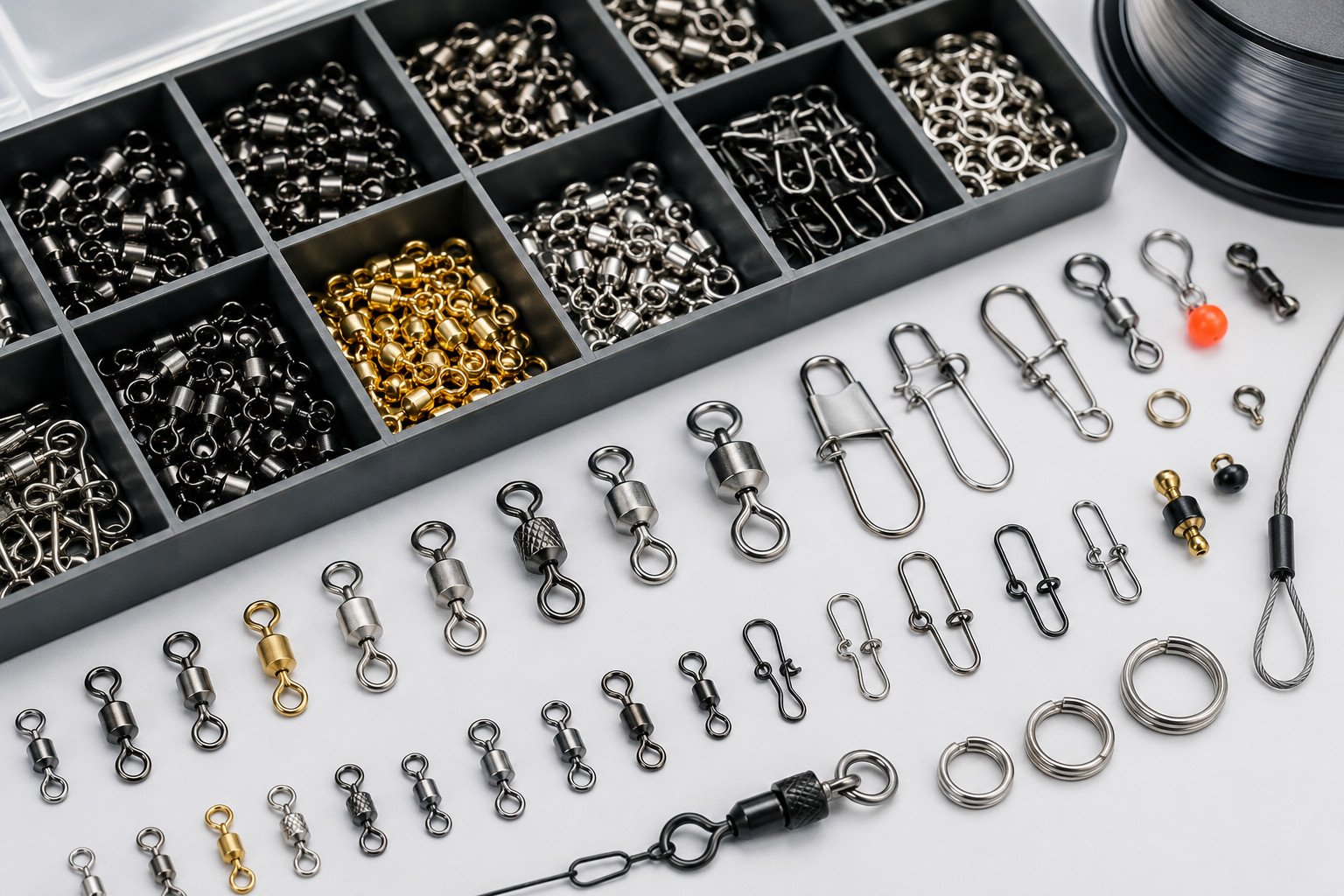
| Swivels |
Barrel swivel, crane swivel, rolling swivel, ball bearing swivel, crossline swivel. |
Size, rotation, material, breaking strength, surface finish and packaging count. |
Sample, size number, breaking strength, finish and quantity per pack. |
| Snaps |
Duo lock snap, coastlock snap, interlock snap, fast snap, lure snap. |
Wire diameter, opening force, springback, strength, shape and corrosion resistance. |
Sample or drawing, wire diameter, size, strength and target fishing use. |
| Split rings / solid rings |
Stainless split ring, heavy-duty split ring, solid ring, welded ring. |
Material, wire diameter, OD/ID, flatness, strength and saltwater performance. |
Ring size, wire thickness, strength requirement and material preference. |
| Fishing hooks |
Single hooks, jig hooks, treble hooks, circle hooks, assist hooks, bait hooks. |
Hook shape, wire strength, sharpness, barb, eye, finish and packaging. |
Hook model, size, finish, strength, point style and target fish. |
| Sinkers / weights |
Lead sinker, iron sinker, brass sinker, tungsten weight, drop shot weight, bullet weight. |
Material, weight tolerance, coating, shape, insert, swivel and packaging. |
Weight range, material, coating, drawing/sample and packaging plan. |
| Sleeves / crimps |
Aluminum sleeve, copper sleeve, double sleeve, crimp sleeve, leader sleeve. |
ID/OD, length, material, wall thickness, strength and size marking. |
Line size, sleeve dimensions, material, pack count and target rigging use. |
| Rig components |
Assist hook parts, leader parts, beads, clips, tubes, rig rings, connectors. |
Component match, material, size, assembly compatibility and packaging accuracy. |
Rig sample, part list, size details and quantity by component. |
| Carp terminal tackle |
Rig rings, bait screws, swivels, clips, sleeves, lead clips, carp accessories. |
Small part tolerance, color, material, pack count and retail presentation. |
Sample, size, color, material and private label packaging requirement. |