Request Quote
OEM solutions

Fishing Lure OEM Supplier in China

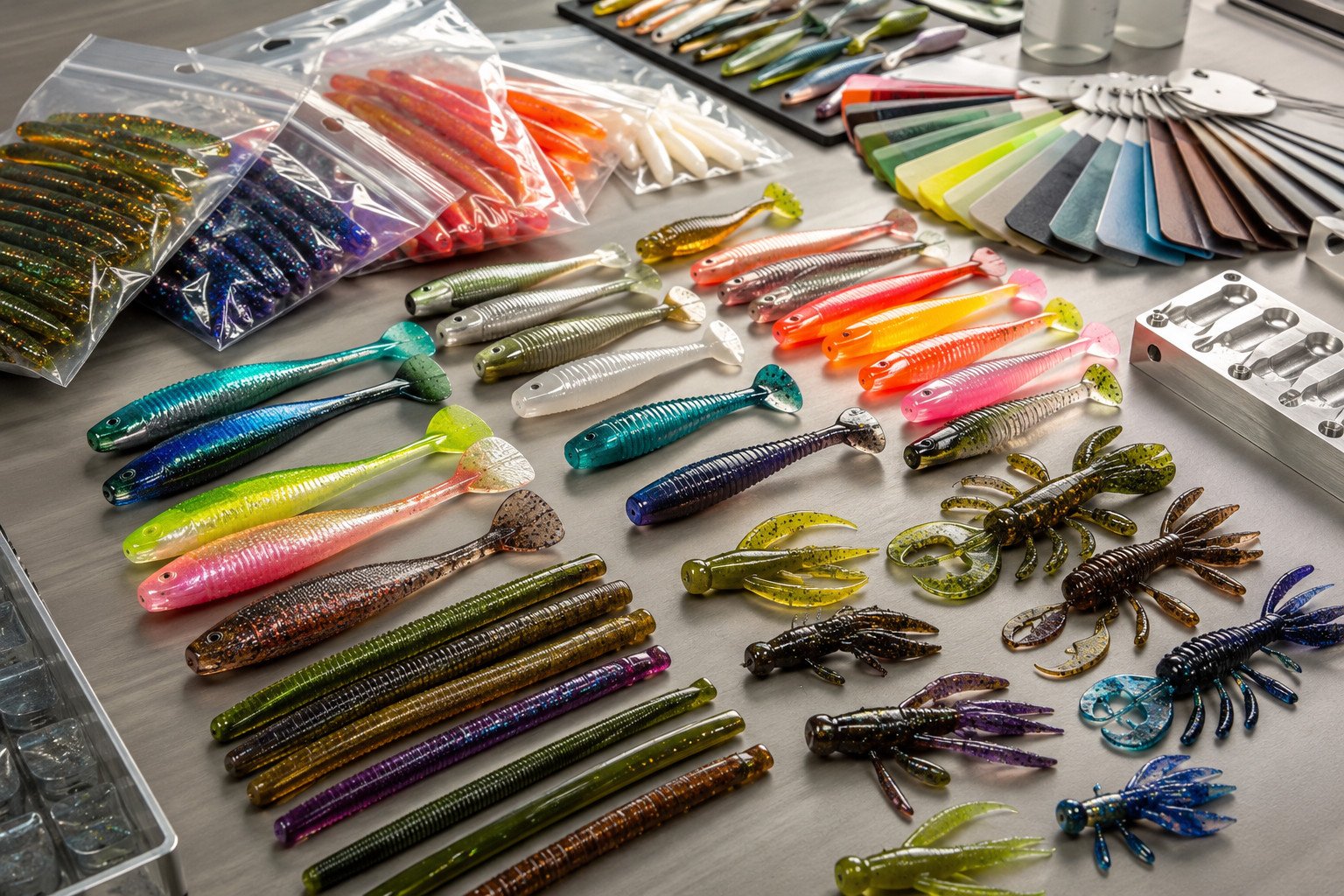
Fishing lure OEM projects can follow very different routes. ABS hard lures, soft baits, metal lures, spoons, spinnerbaits, jig heads, trolling lures and jigging lures do not share the same tooling, painting, material or assembly logic.

Fishing lure OEM supplier for hard lures soft baits jig heads spinnerbaits and metal lures

Project matching

Which lure category does your project belong to?

The first step is not price. The first step is to identify the correct product route. A soft bait project may need formula and color adjustment, while an ABS hard lure project may need tooling, painting and swim action review.

Lure category Typical products Main OEM focus Detailed OEM Page
ABS hard lure Minnow, jerkbait, crankbait, popper, topwater, hard swimbait. Body mold, internal weight, floating/sinking action, ultrasonic welding, painting, hooks and split rings. View Page →
Soft bait Paddle tail, worm, craw, grub, shad, creature bait, soft jerkbait. Mold, softness, color, glitter, scent, oil, salt content, action and bag sealing. View Page →
Metal lure VIB lure, metal blade bait, casting jig, jigging lure, metal body lure. Metal body, weight tolerance, plating, painting, glow/UV finish, hooks, split rings and corrosion resistance. View Page →
Jig head Round head, football head, stand-up jig, fish head jig, swim jig head. Head shape, weight, hook model, keeper, coating, eye position, mold and packaging. View Page →
Spinnerbait Spinnerbait, buzzbait, wire frame bait, skirted blade bait. Wire frame, blade type, head shape, hook, skirt, swivel, clevis, balance and assembly QC. View Page →
Trolling lure Offshore trolling lure, skirted trolling head, heavy trolling lure. Head material, skirt, rigging hardware, hook setup, heavy-duty packaging and saltwater durability. View Page →
OEM route

Do you need a new mold, or can you start from an existing product?

Many first orders do not need a new mold. Buyers can often reduce risk by starting with existing products, then upgrading to modified or exclusive designs after market testing.

1. Existing product route

Suitable when the buyer can accept an available lure shape and wants to customize color, hook, split ring, packaging or label.

  • Lower starting cost
  • Faster sampling
  • Suitable for first trial orders
  • Best for catalog-based sourcing

2. Modified product route

Suitable when the buyer likes an existing lure but wants to adjust color, finish, hardware, keeper, blade, skirt, hook size or packaging.

  • Moderate customization
  • Sample approval required
  • May involve component sourcing
  • Good for private label ranges

3. New tooling route

Required for exclusive shapes, new soft bait molds, new ABS hard lure bodies, custom jig head molds or unique product structures.

  • Highest customization level
  • Tooling cost required
  • Longer development time
  • Best for long-term product programs
Key decisions

What should be confirmed before quotation?

Different lure types have different quotation factors. Clear product information helps reduce repeated quotation changes and avoids sample routes that do not match the buyer’s real requirement.

Decision point Applies to Buyer should confirm Why it affects cost
Product shape All lure projects Existing sample, drawing, product photo, catalog code or rough sketch. Determines whether existing mold, modified mold or new tooling is needed.
Mold / tooling ABS hard lure, soft bait, jig head, custom metal body. Whether the buyer needs an exclusive shape or can start from existing products. New tooling changes up-front investment, sample time and MOQ planning.
Painting / coating Hard lure, metal lure, spoon, jig head, trolling lure. Color reference, UV/glow effect, clear coat, eyes, scale pattern or plated finish. Complex finish may require sample rounds, extra setup and stricter QC.
Soft bait formula Soft bait projects. Softness, salt content, scent, oil level, glitter and color structure. Formula changes affect material cost, sample approval, action and packaging.
Hooks and split rings Hard lure, metal lure, spoon, jigging lure, jig head, spinnerbait. Hook size, hook grade, split ring size, swivel, blade or other hardware. Hardware can change unit cost, strength, corrosion resistance and QC standard.
Packaging All lure projects. Bulk bag, PE bag, header card, blister card, printed box, barcode or FNSKU. Retail packaging may have separate artwork, MOQ, sample and lead time.
Target market Export orders. Country, retail channel, Amazon/FBA, warning label or compliance requirement. Market requirement affects packaging text, testing, material review and carton marking.
Up-front cost planning

Possible early investment before bulk production

The following ranges are only planning references, not final quotations. Actual costs depend on design complexity, order quantity, sample route, material, packaging and testing requirements.

Cost item When it may be needed Typical planning range Notes for buyers
Reference sample / courier When shape, action, color or material must match a physical product. Usually USD 30–150+ Courier cost depends on country, sample size and urgency.
Color / finish sample Custom painting, UV, glow, metallic, clear coat, plated finish or spoon patterns. Usually USD 50–300+ Multiple colors or repeated sample rounds may increase cost.
Soft bait formula sample Softness, scent, oil, salt, glitter or laminate color adjustment. Usually USD 100–300+ Physical sample is strongly recommended for matching softness and color.
3D drawing / prototype review When the buyer has an idea but no mold-ready file. Usually USD 100–500+ Depends on design complexity and whether prototype confirmation is needed.
Soft bait mold New soft bait shape, new appendage design or exclusive product line. Usually USD 800–2,500+ Large size, complex appendages or multiple cavities may cost more.
ABS hard lure mold New hard plastic lure body or exclusive body structure. Usually USD 1,500–5,000+ Internal weight, action, welding and body structure affect cost.
Jig head / metal mold New jig head shape, new casting body or special metal lure body. Usually USD 300–1,500+ Weight range, cavity number and hook position affect tooling.
Special hook / ring / component sourcing When a specific hook grade, split ring, blade, swivel, skirt or screw lock is required. Depends on component MOQ Some components require MOQ or deposit before production.
Packaging artwork / printing setup Printed bag, header card, blister card, box, barcode, FNSKU or warning label. Usually USD 100–800+ Packaging MOQ may be different from product MOQ.
Third-party testing When buyer or target market requires material, coating, strength or label review. Usually USD 150–600+ Cost depends on test item, standard and laboratory.

Cost note: standard products using existing molds usually require much lower up-front investment. New tooling, complex painting, soft bait formula work and retail packaging should be discussed early so the buyer can plan the project budget correctly.

Category routes

Choose the right detailed OEM page

Different lure projects need different quotation logic. Choose the closest product route below to review mold, material, painting, hardware, packaging and QC points in more detail.

ABS Hard Lure OEM

For minnows, jerkbaits, crankbaits, poppers, topwater lures and ABS VIB lures requiring body mold, action, internal weight, painting, hooks and split rings.

View ABS Hard Lure OEM

Soft Bait OEM

For paddle tails, worms, craws, creature baits, shads and other soft plastic baits involving material softness, color, scent, oil, salt and packaging.

View Soft Bait OEM

Metal Lure OEM

For jigging lures, spoons, metal VIBs, blade baits and casting jigs involving weight, metal body, plating, coating, hooks, rings and carton protection.

View Metal Lure OEM

Jig Head OEM

For lead jig heads, custom head shapes, hook position, keeper design, coating, weight range, mold cost and retail packaging.

View Jig Head OEM

Spinnerbait OEM

For wire frame baits, spinnerbaits, buzzbaits, skirted lures, blade selection, hook setup, skirt assembly, swivel, clevis and swimming balance.

View Spinnerbait OEM

Trolling Lure OEM

For offshore trolling lures, skirted trolling heads, heavy saltwater lures, rigging hardware, hooks, leaders, skirt colors and heavy-duty packaging.

View Trolling Lure OEM

Production planning

Typical fishing lure OEM process

The exact route depends on the lure type, but most OEM projects follow a similar decision sequence from product review to sample confirmation, packaging approval, production and QC.

1. Identify lure category

Confirm whether the project is soft bait, hard lure, metal lure, jig head, spinnerbait, spoon or trolling lure.

2. Review project route

Decide whether existing product, modified product or new tooling is the most practical route.

3. Confirm key specs

Review shape, size, weight, color, action, material, hook, ring, blade, skirt and packaging.

4. Estimate early cost

Check whether sample, tooling, formula, painting, component or packaging setup cost may be needed.

5. Prepare samples

Make or provide samples according to the approved route and buyer’s specification.

6. Adjust and approve

Confirm color, action, softness, coating, hardware, packaging and label details before bulk order.

7. Bulk production

Start production after sample, quantity, packaging and shipment details are confirmed.

8. QC and shipment

Check product quality, assembly, packaging count, carton protection and shipment readiness.

Quotation checklist

What buyers should send for a faster lure quotation

A complete inquiry helps us judge the correct product route and avoid a quotation based on incomplete assumptions.

Product information

  • Lure category and target fish species.
  • Product photo, sample, drawing or catalog code.
  • Length, weight, body material and action requirement.
  • Existing product, modified product or new tooling expectation.
  • Target quantity by model, color and size.

Function and components

  • Floating, sinking, suspending, vibration, wobble or trolling action.
  • Softness, scent, oil or salt requirement for soft baits.
  • Hook size, split ring, swivel, blade, skirt or keeper requirement.
  • Freshwater, saltwater or heavy-duty use requirement.
  • Color, coating, UV, glow or painting reference.

Packaging and market

  • Bulk bag, PE bag, printed bag, header card, blister card or box.
  • Logo, artwork, barcode, FNSKU and warning label.
  • Target market and compliance or label requirement.
  • Sample deadline and target delivery window.
  • Shipping destination or preferred Incoterms.
Quality control

QC focus changes by lure category

A soft bait, hard lure and metal lure should not be inspected in the same way. Each category has different risk points.

Lure category QC focus Common risk
Soft bait Shape, softness, color, glitter, scent, oil level, bag sealing and pack count. Color mismatch, oil leakage, deformation or wrong count.
ABS hard lure Body welding, action, balance, painting, eyes, hooks, rings and finish durability. Water leakage, action difference, paint defects or weak hardware.
Metal lure / spoon Weight, shape, plating, coating, hook/ring assembly and corrosion resistance. Weight deviation, coating chips, rust risk or weak split rings.
Jig head Weight, hook alignment, burrs, coating, keeper, eye position and packaging count. Hook angle error, coating damage or sharp burrs.
Spinnerbait Wire frame alignment, blade rotation, skirt assembly, hook, swivel and balance. Blade not rotating, frame deformation or loose skirt.

FAQ

Fishing lure OEM FAQ

These questions help buyers understand the main decisions before starting a lure OEM project.

Do I need a new mold for my fishing lure project?

Not always. If an existing lure shape is acceptable, the project can often start with color, hardware and packaging customization. New tooling is usually required for exclusive soft bait shapes, new ABS hard lure bodies, custom jig heads or special metal lure bodies.

Can you help me decide which lure category my project belongs to?

Yes. Send photos, samples or rough drawings, and we can help judge whether the project is closer to soft bait, hard lure, metal lure, jig head, spinnerbait, spoon, trolling lure or another route.

Can hooks, split rings and packaging be arranged together?

Yes. For many lure projects, hooks, split rings, blades, skirts, swivels, labels and retail packaging should be confirmed together because they affect cost, QC and final retail presentation.

Why do lure sample costs vary so much?

Sample cost depends on whether the project needs new tooling, soft bait formula adjustment, custom painting, special hardware, packaging artwork or repeated sample rounds.

Can you support small first orders?

Small first orders are easier when existing molds and standard packaging are used. New tooling, many colors, special components or printed retail packaging usually require higher MOQ or up-front setup cost.

What information should I send before asking for price?

Send lure type, photos or samples, size, weight, target action, material, hook/ring requirement, color references, packaging idea, target quantity and destination market.

Ready to plan this OEM project?

Send your lure concept, samples or catalog reference

We will help judge the correct lure category, possible production route, up-front cost items and quotation details. Please include product photos, size, weight, material, color, target quantity and packaging requirement.

WhatsApp