Hard baits are important products for fishing tackle brands, importers, distributors and retail buyers. A clear hard bait OEM guide helps professional buyers confirm body design, lure action, material, internal weight, painting, hooks, packaging and quality standards before placing bulk orders.
What This Guide Covers
- How importers define a hard bait OEM product range
- Why body design and internal weight affect swimming action
- How painting, coating and hook selection influence product positioning
- What packaging details should be prepared before quotation
- How sample approval and quality control reduce production risks
For professional fishing tackle buyers, hard bait sourcing is not only about choosing a lure shape from a catalog. A small difference in body balance, lip angle, weight position, coating thickness, hook size or split ring strength can change how the lure performs in water.
This hard bait OEM guide is written for importers, established fishing tackle brands, distributors and product managers who need stable production, repeatable quality and retail-ready packaging.
1. Start with a Clear Hard Bait OEM Guide and Product Positioning
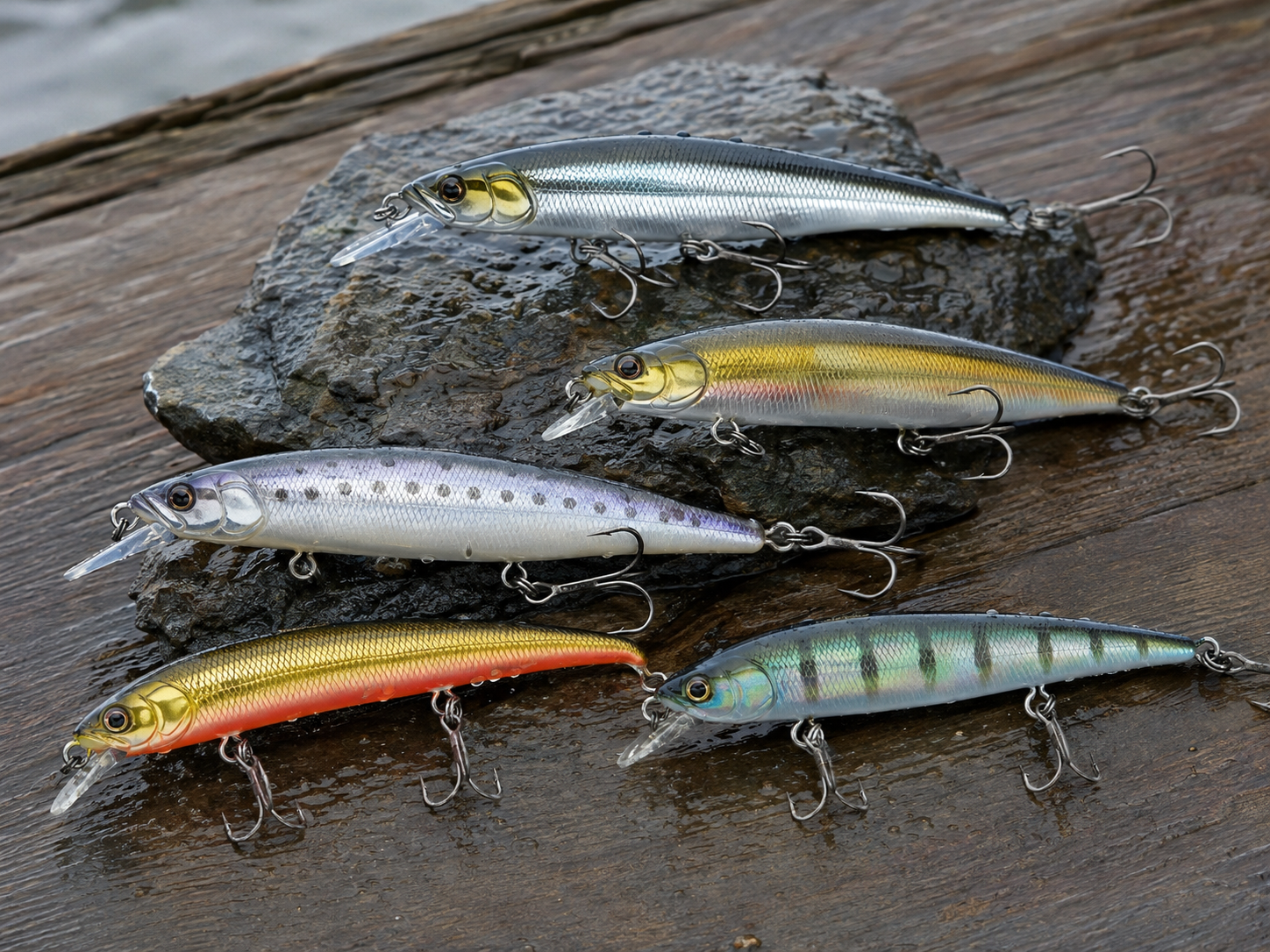
Before asking for a quotation, buyers should define the product type and target market. Hard baits include crankbaits, jerkbaits, minnows, poppers, pencil baits, vibration lures, swimbaits and other plastic or resin lure bodies.
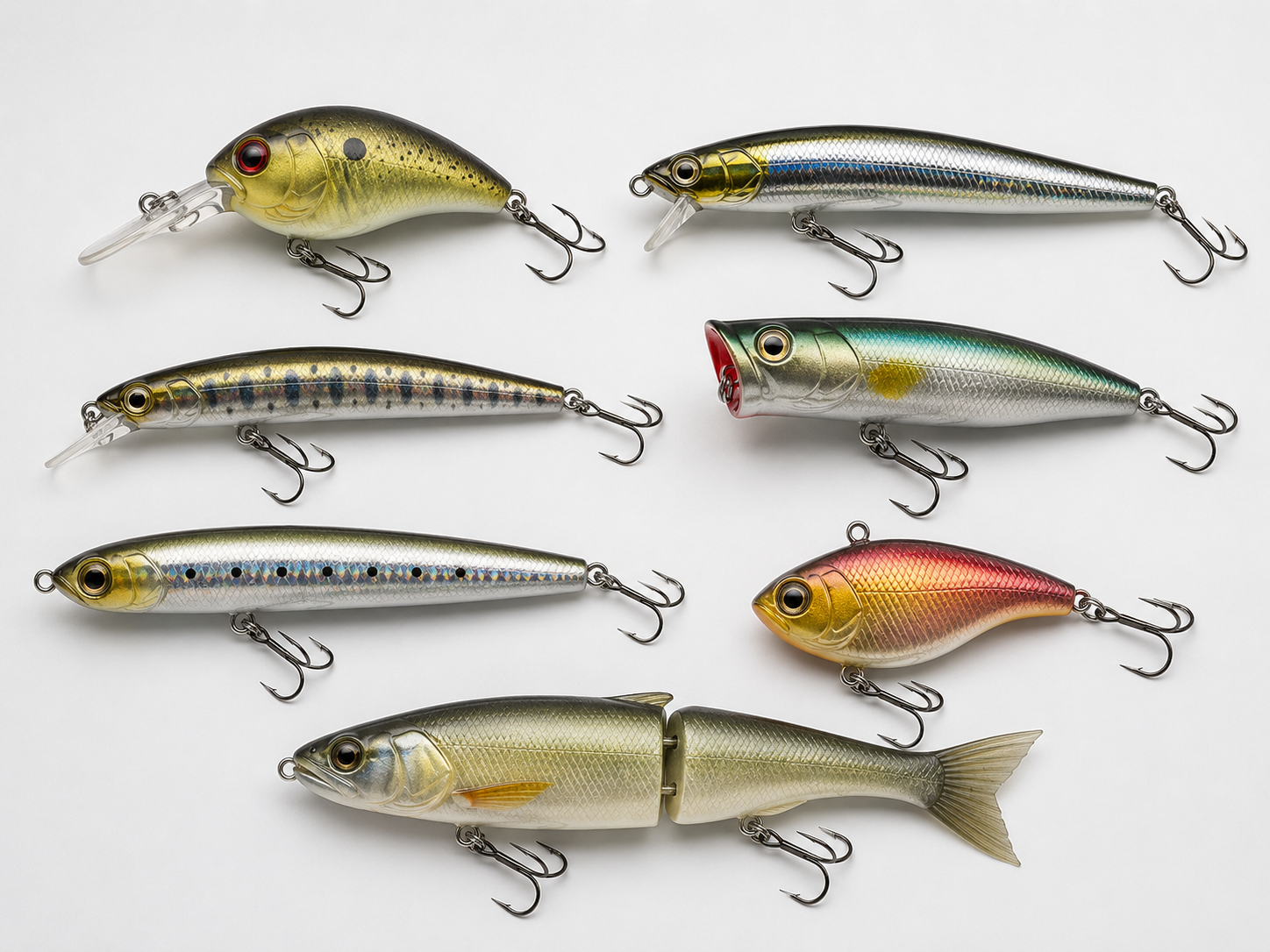
A professional RFQ should include target fish, lure type, length, weight, diving depth, floating or sinking action, color quantity, hook requirement, packaging style and estimated annual demand.
If the buyer already has a reference lure, it is helpful to provide a physical sample, photos, body measurements and target improvement points. This helps the supplier avoid guessing the lure action or structure.
2. Confirm Body Design, Size and Material
Body design is the foundation of a hard bait OEM project. Length, body thickness, profile, lip shape, line tie position and material all affect lure action and production cost.
Common hard bait materials include ABS plastic, resin and other engineering plastics depending on the lure structure and target price level. ABS is widely used because it is suitable for molded lure bodies, stable production and painted finishes.
Buyers should confirm whether the project will use existing molds or require a new custom mold. Existing molds can reduce cost and lead time, while custom molds may be needed for exclusive shapes, special action or brand-specific product lines.
3. Check Lure Action and Internal Weight System
Lure action is one of the most important points in hard bait development. A lure may look attractive in photos, but it must swim correctly in water.
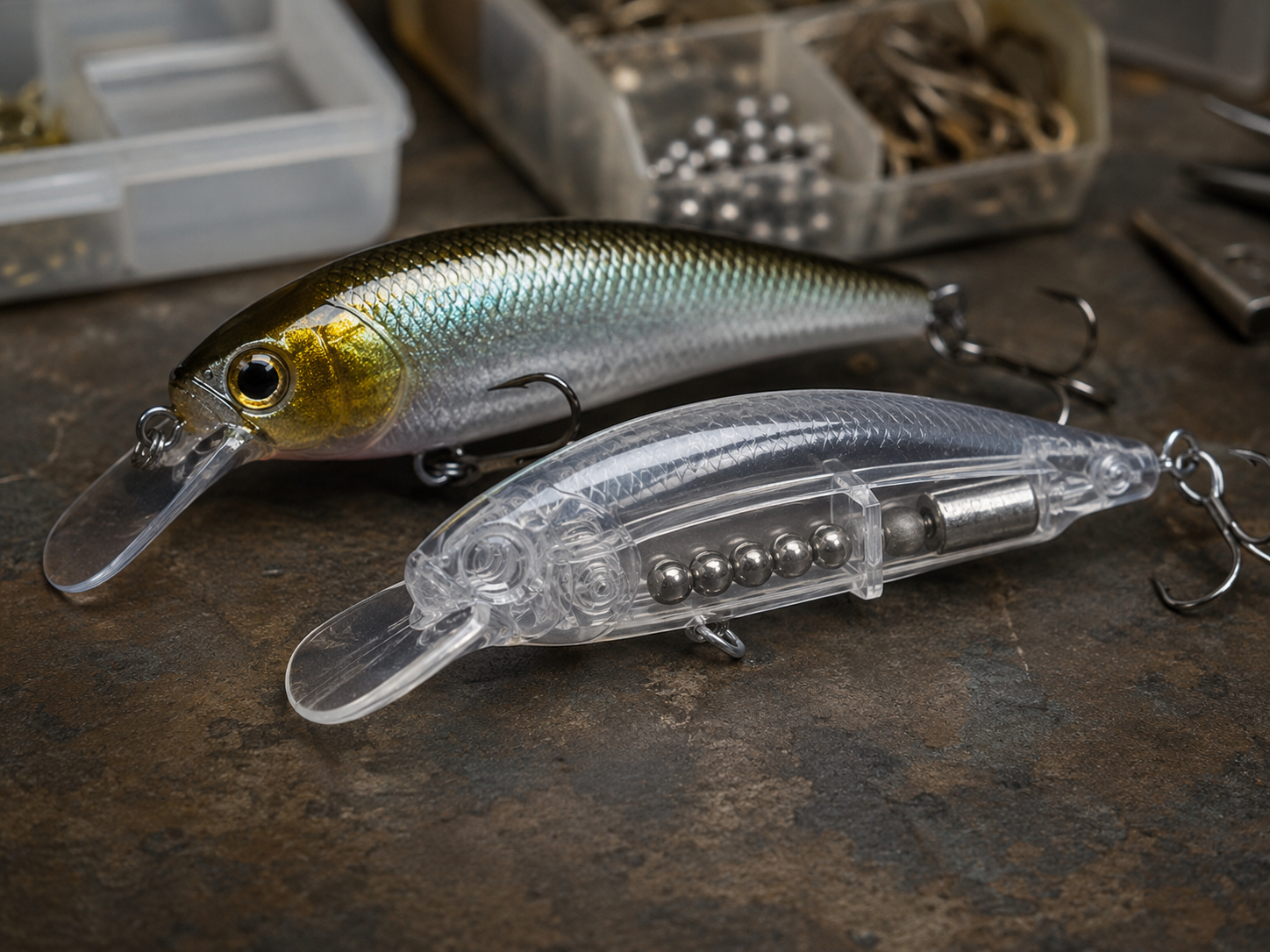
Internal weights can influence casting distance, sound, balance, sinking speed and swimming stability. Some hard baits use fixed weights, while others use moving weight systems for longer casting or stronger sound.
Buyers should confirm whether the lure needs to be floating, suspending, slow sinking, fast sinking or topwater. For crankbaits and minnows, target diving depth should also be confirmed before sample approval.
4. Prepare Painting, Color and Finish Requirements
Painting is a major part of hard bait product value. Color design affects retail presentation, brand identity and market positioning.
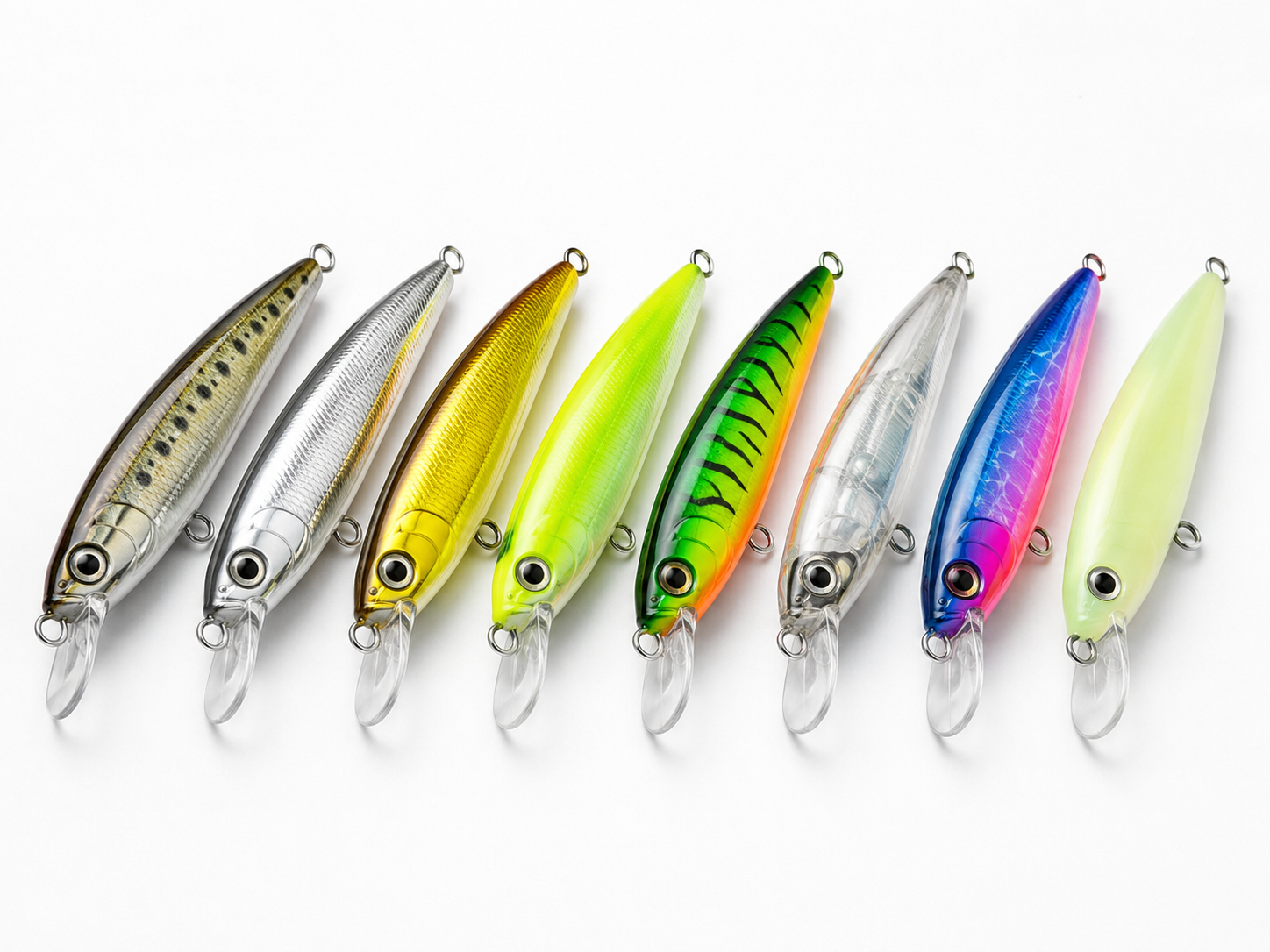
Common finish options include natural baitfish patterns, metallic finish, pearl finish, transparent body, UV effect, glow effect, matte coating, holographic foil and custom airbrush patterns.
For repeat orders, color consistency is important. Buyers should keep approved color samples and confirm whether the supplier can maintain the same paint standard in future batches.
5. Choose Hooks, Split Rings and Hardware
Hard bait hardware directly affects product performance and customer satisfaction. Hooks, split rings, line ties and internal wire structure should match the target fish and lure size.
Standard hooks may be acceptable for budget ranges, while premium lure lines may require stronger treble hooks, sharper points, corrosion-resistant coatings or specific hook brands.
Split ring strength and hook size should also be checked. A hook that is too heavy may change lure balance, while a hook that is too weak may create complaints in the market.
6. Confirm Packaging and Private Label Details
Hard baits are often sold in retail packaging, so packaging design should be confirmed early. Packaging affects presentation, protection, barcode management and carton packing.
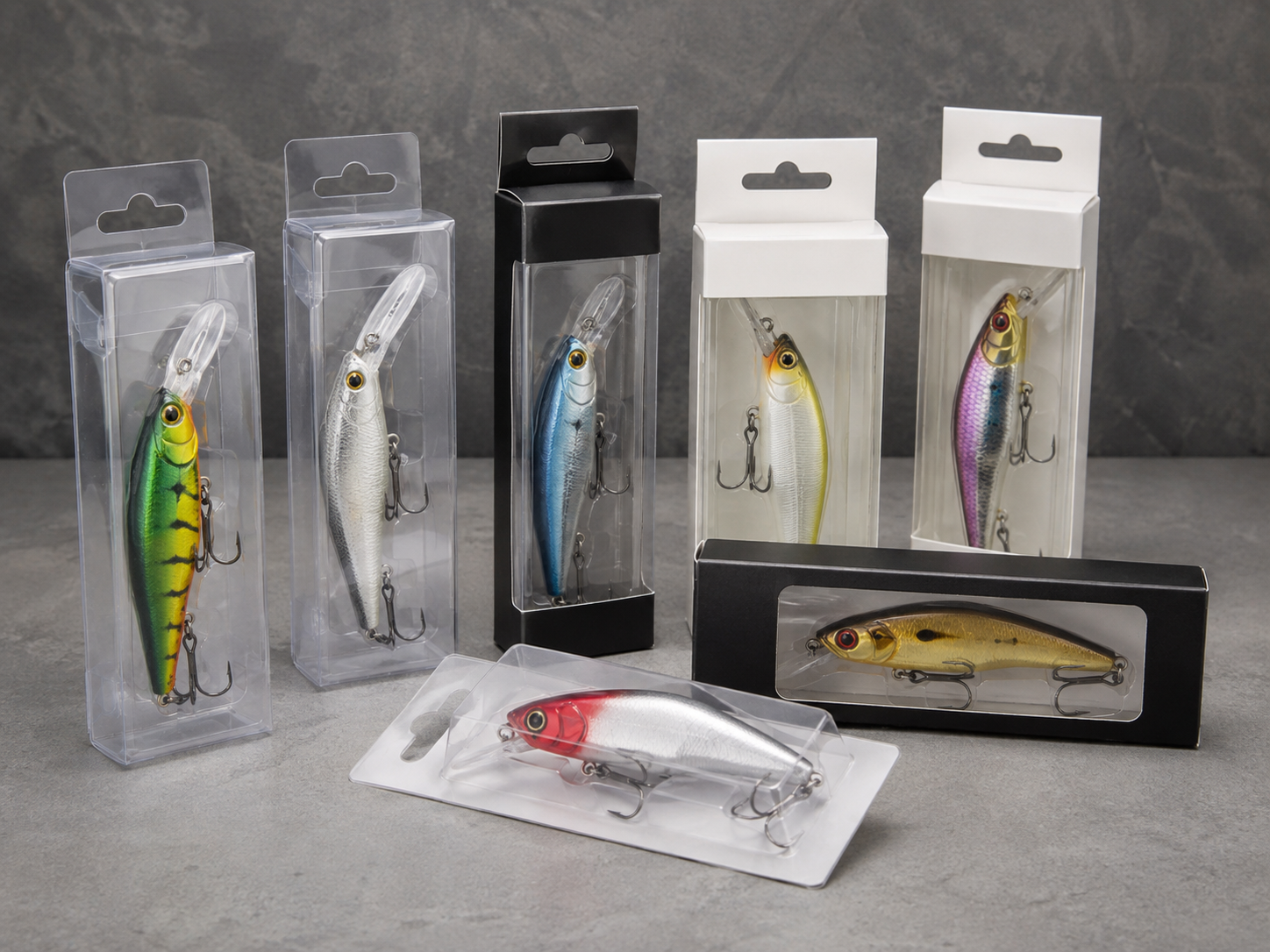
Common packaging options include blister cards, clamshell packs, window boxes, paper boxes, header cards, plastic trays and bulk packing. Buyers should prepare logo, artwork, barcode, SKU, lure size, color name, quantity and country of origin information.
If several lure colors share the same packaging design, the label or barcode system should still clearly identify each color and SKU.
7. Confirm MOQ, Mold Cost and Sample Lead Time
MOQ depends on lure type, mold situation, color quantity, hardware choice and packaging. Existing mold projects usually have more flexible MOQ. Custom mold projects need higher planning because mold cost and sample testing are involved.
Buyers should ask about MOQ per model, MOQ per color, sample cost, mold cost, packaging MOQ and production lead time. For professional importers and distributors, it is also useful to discuss repeat order planning and annual quantity.
8. Check Quality Control Before Mass Production
Hard bait quality control should cover appearance, action and assembly. Common inspection points include body surface, paint defects, coating adhesion, hook strength, split ring quality, eye placement, weight, action testing and packaging accuracy.
Pre-production samples should be approved before bulk production. The buyer should test swimming action, casting performance, color appearance, hardware strength and packaging fit.
For repeat orders, keeping approved samples, color standards and hardware specifications can reduce batch differences.
9. Build a Complete RFQ Before Quotation
A clear RFQ helps the supplier provide accurate pricing and avoid repeated changes. It also helps importers compare suppliers beyond unit price.
Hard Bait OEM Quotation Checklist
- Lure Type: Crankbait, minnow, jerkbait, popper, pencil bait, vibration lure or swimbait
- Size: Length, weight, body shape and target diving depth
- Action: Floating, suspending, sinking, topwater, wobble or vibration requirement
- Material: ABS, resin or other plastic material
- Mold: Existing mold or custom mold
- Color: Natural pattern, UV, glow, foil, transparent body or custom painting
- Hardware: Hooks, split rings, line tie, rattle and internal weight system
- Packaging: Blister card, clamshell, paper box, window box or bulk packing
- Quantity: Quantity per model, color and packaging style
- Reference: Samples, drawings, photos or target performance information
Conclusion
A successful hard bait OEM project requires clear control of body design, action, material, painting, hardware, packaging and quality inspection. For importers and fishing tackle brands, these details are essential for stable supply and repeatable product quality.
Terminalpro supports fishing tackle importers, distributors and brands with hard baits, soft baits, jig heads, OEM fishing lures, sinkers, swivels, hooks and terminal tackle products.
You can also download our fishing accessories catalog to review more product options and prepare your next OEM order.
Need a Hard Bait OEM Quotation?
Send us your lure type, size, action requirement, color plan, hardware request, packaging idea and estimated quantity. Terminalpro will review your project and provide a practical OEM quotation.
FAQ
What information is needed for a hard bait OEM quotation?
Buyers should provide lure type, length, weight, target action, diving depth, color plan, hardware requirement, packaging method and estimated quantity.
Can hard baits be made with custom colors?
Yes. Hard baits can be made with natural patterns, foil finish, UV colors, glow colors, transparent bodies and custom airbrush patterns. Physical color samples are recommended before mass production.
Do hard bait OEM projects require new molds?
Not always. Existing molds can be used for many projects. A new mold may be needed if the buyer requires an exclusive body shape, special action or unique product design.
Why should buyers test hard bait action before production?
Hard bait performance depends on body balance, lip angle, internal weight and hook selection. Water testing helps confirm swimming action before mass production.
Can hard baits be packed with private label packaging?
Yes. Hard baits can be packed in blister cards, clamshell packs, paper boxes, window boxes or custom retail packaging with private label artwork, barcode and SKU information.