Fishing hooks are small components, but they have a direct impact on hook-up rate, landing rate, lure performance and customer satisfaction. For importers, distributors and fishing tackle brands, a clear fishing hooks OEM guide can help confirm the right hook type, material, size, coating, sharpness standard, packaging and quality control before placing an order.
What This Guide Covers
- How to choose the right hook type for your target market
- Why hook material, hardness and strength matter
- How size, wire diameter, gap and point shape affect performance
- What coating and finish options buyers should compare
- How packaging and quality control reduce OEM order risks
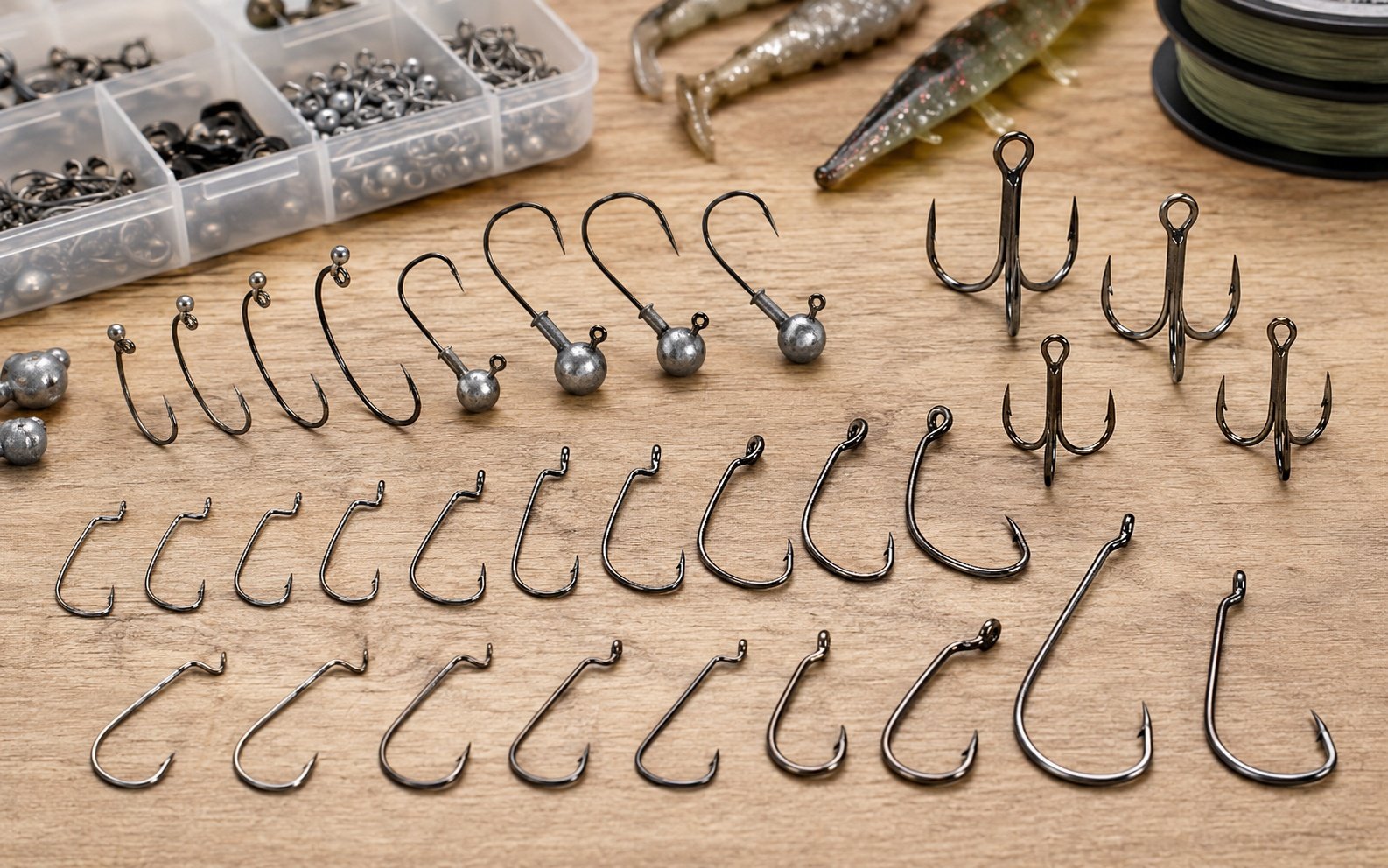
Many buyers describe hooks only by size, such as “#2 hook” or “3/0 hook.” In real production, this information is not enough. Hook type, wire diameter, shank length, gap width, point style, barb shape, coating and packing method can all change the cost and the final performance.
This fishing hooks OEM guide explains the key details buyers should prepare before asking a supplier for quotation or sample development.
1. Start with a Clear Fishing Hooks OEM Guide and Hook Type
The first step is to define the exact hook type. Different fishing methods require different hook shapes and structures. A hook for soft bait rigging is different from a treble hook for hard lures, and a carp hook is different from a jig hook or saltwater hook.
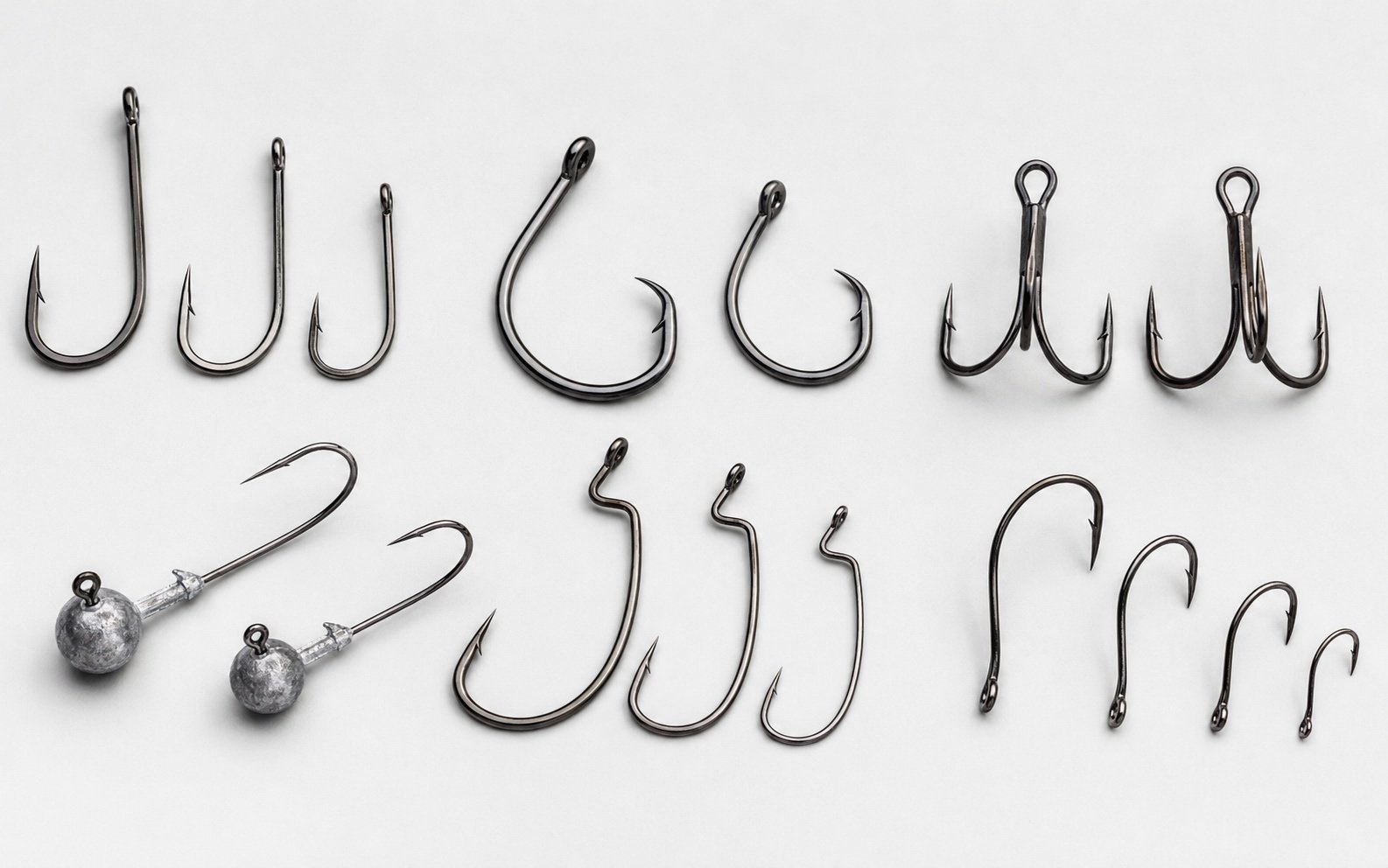
Common fishing hook types include J hooks, circle hooks, treble hooks, double hooks, jig hooks, offset hooks, worm hooks, wide gap hooks, carp hooks, assist hooks and octopus hooks.
If you already have a reference product, it is useful to provide physical samples or detailed photos. Small differences in hook bend, shank length, eye angle or point style can affect both performance and production cost.
2. Confirm Material and Strength Requirements
Hook material affects strength, hardness, flexibility, sharpness retention and corrosion resistance. Common materials include high carbon steel, stainless steel and special alloy wire depending on the target use and price level.
High carbon steel is widely used for many freshwater and lure fishing hooks because it offers good strength and sharpness at a reasonable cost. Stainless steel is often considered for saltwater or corrosion-resistant applications, although cost and hardness may differ.
Buyers should explain whether the hook is for freshwater, saltwater, carp fishing, lure fishing, jigging, trolling or heavy-duty use. This helps the supplier recommend a suitable wire material and strength level.
3. Check Hook Size, Wire Diameter and Gap
Hook size numbers are not always enough for accurate sourcing. A #4 hook from one supplier may not match the length, gap, wire diameter or strength of a #4 hook from another supplier.
Important dimensions include total length, shank length, gap width, wire diameter, eye diameter and point length. For OEM orders, buyers should confirm actual measurements when possible.
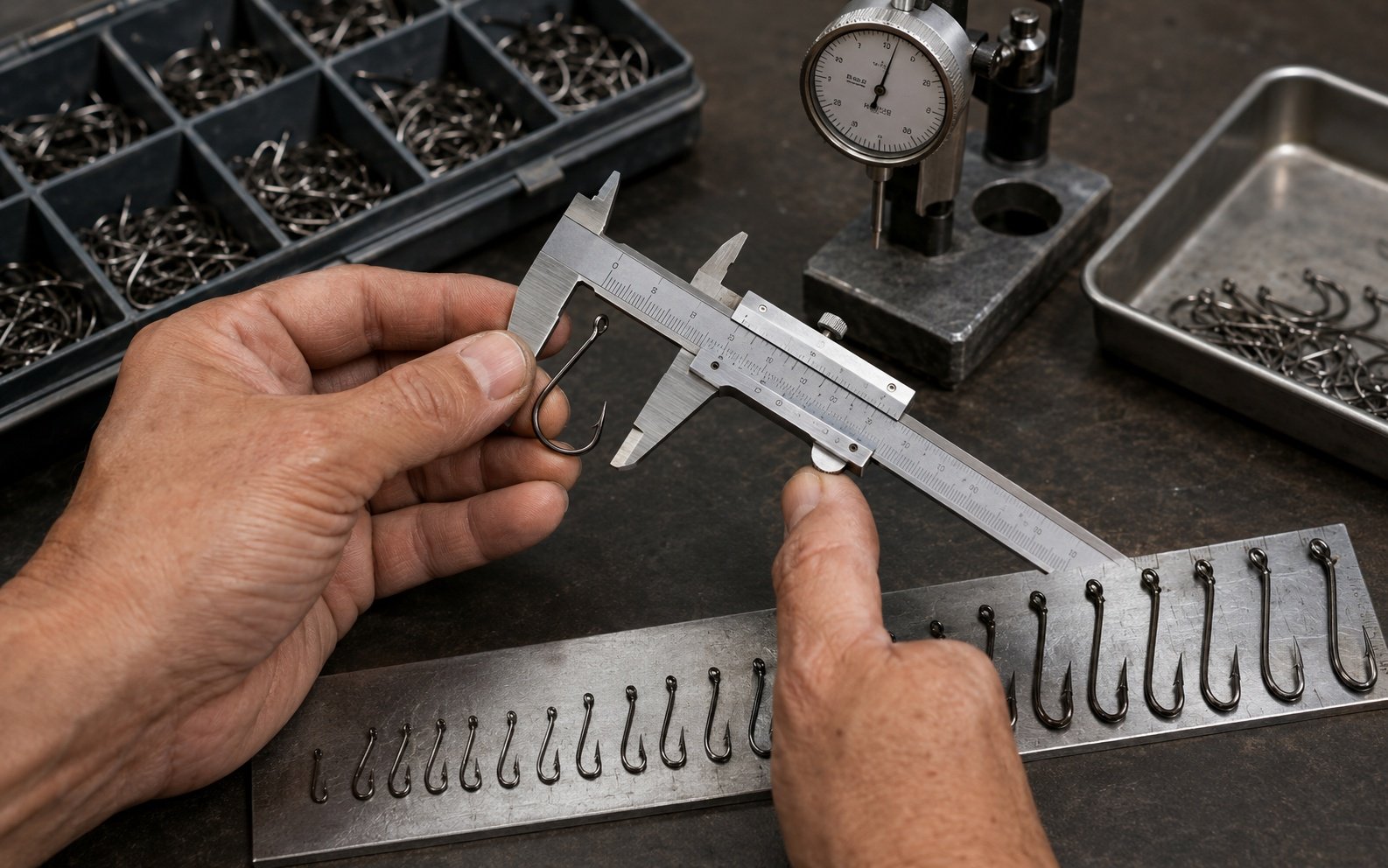
Wire diameter is especially important because it affects hook strength, penetration and lure action. A thicker wire can improve strength, but it may reduce penetration or change lure balance. A thinner wire may penetrate more easily, but it may bend under heavy load.
4. Decide Point Shape and Sharpness Standard
Sharpness is one of the most important quality points for fishing hooks. A hook may look good in packaging, but poor sharpness can lead to missed bites and customer complaints.
Common point styles include needle point, cutting point, beaked point, straight point and chemically sharpened point. The best option depends on target fish, fishing method and price level.
Buyers should confirm whether the hook must pass a specific sharpness test, penetration test or sample comparison. For branded products, sharpness consistency between batches is also important.
5. Choose the Right Coating and Finish
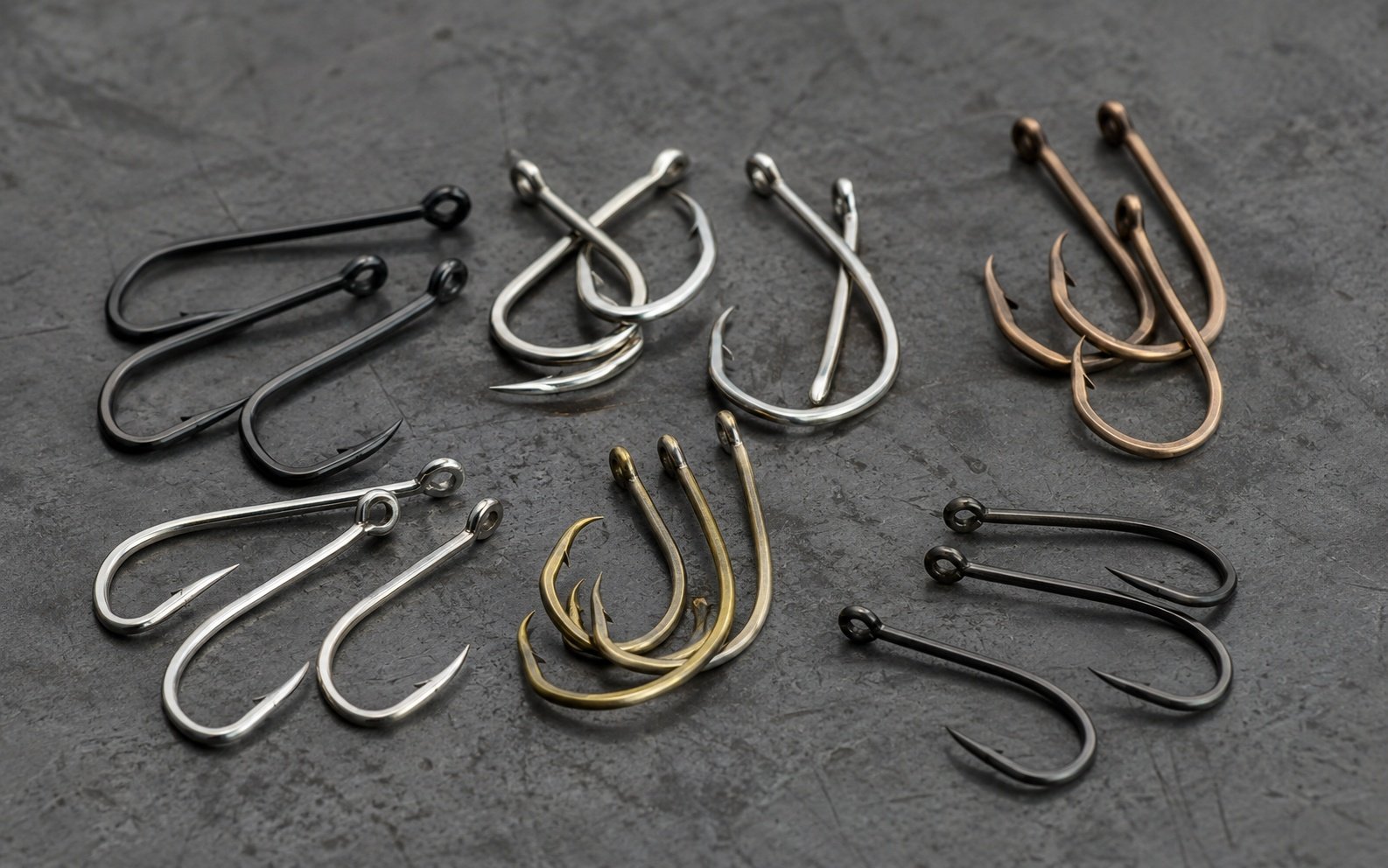
Coating and finish affect appearance, corrosion resistance and market positioning. Common hook finishes include black nickel, nickel, tin, bronze, red, gold, PTFE-style coating and other custom finishes.
Black nickel is popular for many lure fishing and carp fishing products. Tin or stainless finishes may be used for some saltwater applications. Bronze and gold finishes are common in certain traditional markets and product categories.
If corrosion resistance is important, buyers should discuss saltwater use, storage conditions and possible corrosion testing with the supplier. For products sold in the European market, buyers may also need to consider REACH requirements depending on material, coating and sales channel.
6. Confirm Eye Type, Barb and Special Structure
The hook eye and barb design should match the rig or lure. Hook eyes may be straight, turned up, turned down, ringed, welded or flattened depending on the application.
Barbs can be standard, micro barb or barbless. Some markets prefer barbless hooks for certain fishing rules or catch-and-release fishing. Other projects may require special bends, keeper barbs, offset points or welded eyes.
Buyers should provide reference samples or drawings if the hook structure is not a standard catalog model.
7. Prepare Packaging and Private Label Requirements
Packaging is important for hook OEM orders because hooks are sharp, small and easy to mix by size. Good packaging protects the product, supports retail display and reduces warehouse mistakes.
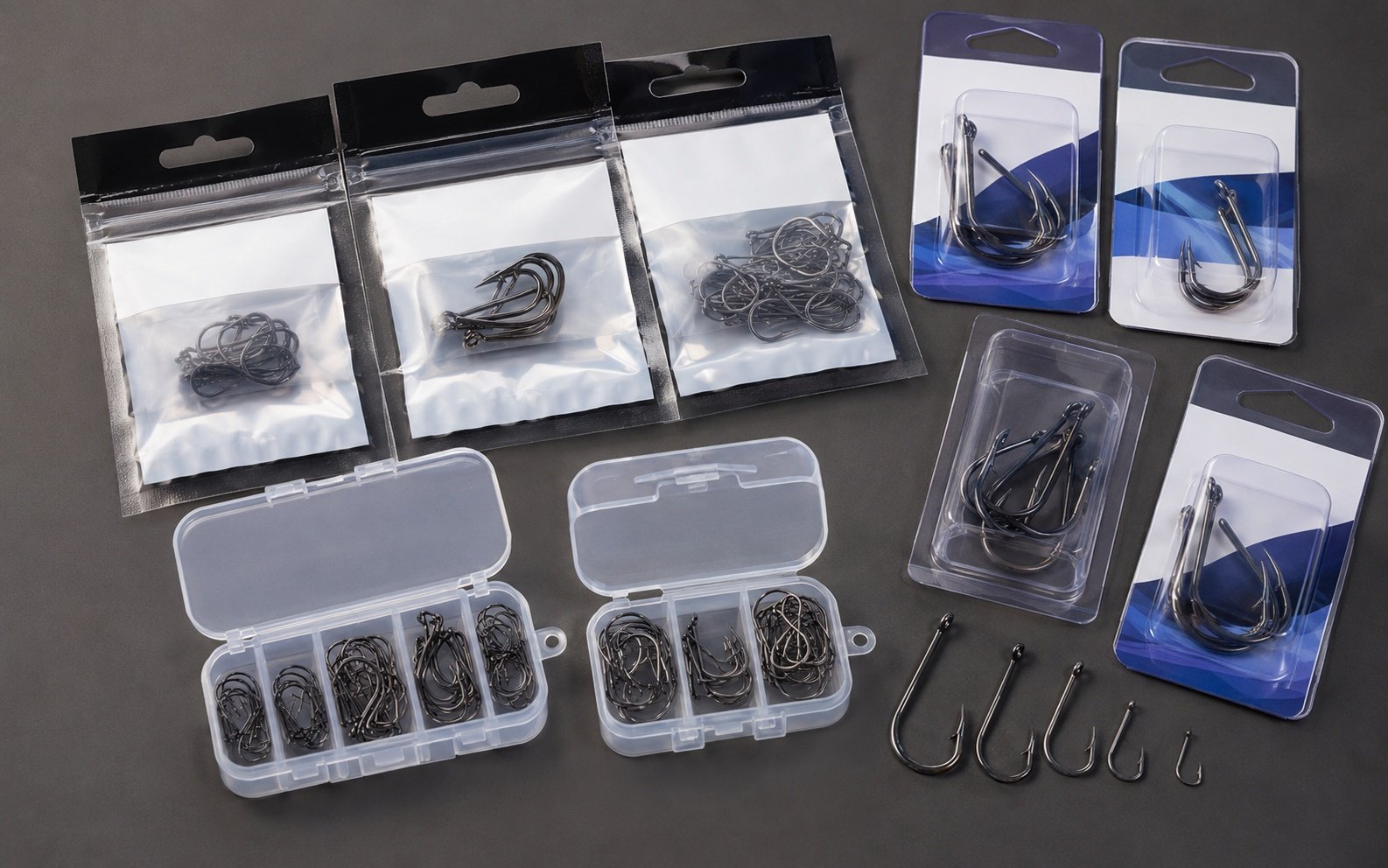
Common packaging options include small polybags, header bags, blister cards, plastic boxes, foam cards, bulk bags and inner cartons. For private label packaging, buyers should prepare logo, product name, size, quantity, barcode, SKU, country of origin and warning labels.
The number of hooks per pack should also be confirmed early. A 10 pcs pack, 25 pcs pack and 100 pcs bulk pack will have different labor cost, packaging cost and retail positioning.
8. Check Quality Control Before Mass Production
Hook quality control should cover more than appearance. Common inspection points include size, wire diameter, point sharpness, barb shape, eye opening, coating quality, bend strength, corrosion resistance and packing accuracy.
For OEM orders, pre-production samples should be approved before mass production. Buyers should compare samples with the reference product or target specification.
If the hook is used for a lure, jig head or rig system, it is also important to test assembly fit before ordering bulk quantities.
9. Confirm MOQ, Sample Cost and Lead Time
MOQ depends on hook type, size range, material, coating, packaging and whether existing tooling can be used. Standard hook models usually have more flexible MOQ. Custom shapes, special wire, custom coating or private label packaging may require higher quantities.
Buyers should ask about MOQ per size, MOQ per coating, sample cost, tooling cost if any, packaging MOQ and production lead time. This helps plan cash flow, inventory and launch schedule.
10. Build a Complete RFQ Before Quotation
A clear RFQ helps the supplier provide a more accurate price and sample plan. It also reduces repeated communication and avoids misunderstanding after production starts.
Fishing Hooks OEM Quotation Checklist
- Hook Type: J hook, circle hook, treble hook, jig hook, worm hook, carp hook, assist hook, etc.
- Size Range: Size number and actual dimensions if available
- Material: High carbon steel, stainless steel or special wire
- Strength: Standard, heavy-duty or saltwater requirement
- Point: Needle point, cutting point, beaked point or chemically sharpened point
- Finish: Black nickel, nickel, tin, bronze, red, gold or custom finish
- Structure: Eye type, barb type, offset, keeper, welded eye or special bend
- Packaging: Bulk bag, header bag, blister card, plastic box or private label pack
- Quantity: Quantity per size, finish and packaging style
- Reference: Photos, samples, drawings or existing product code
Conclusion
Fishing hooks may look simple, but OEM sourcing requires careful control of type, size, material, coating, sharpness, strength, packaging and quality standards. A small change in wire diameter, point shape or coating can affect the final product performance.
For importers and brands, using a fishing hooks OEM guide as an internal checklist can make supplier communication clearer and reduce sample changes, quality issues and delivery delays.
Terminalpro supports fishing tackle importers, distributors and brands with hooks, jig heads, OEM fishing lures, sinkers, swivels, snaps and other terminal tackle products.
You can also download our fishing accessories catalog to review more product options and prepare your next OEM order.
Need a Fishing Hook OEM Quotation?
Send us your hook type, size list, material request, coating requirement, packaging idea, reference samples and estimated quantity. Terminalpro will review your project and provide a practical OEM quotation.
FAQ
What information is needed for a fishing hooks OEM quotation?
Buyers should provide hook type, size, material, finish, point style, barb type, packaging method, quantity and target market. Photos or physical samples are very helpful.
Can hooks be made with private label packaging?
Yes. Hooks can be packed in header bags, blister cards, plastic boxes, foam cards, small polybags or bulk bags with private label artwork, barcode and SKU information.
What affects fishing hook price?
Main cost factors include hook type, wire material, wire diameter, size, coating, sharpness standard, packaging method, order quantity and whether custom tooling is required.
Is high carbon steel better than stainless steel for hooks?
It depends on the application. High carbon steel is widely used for strength and sharpness. Stainless steel may be considered for corrosion resistance in some saltwater applications, but cost and performance should be compared.
Why should buyers approve hook samples before production?
Sample approval helps confirm size, sharpness, wire diameter, coating, eye type, packaging and overall quality before mass production. This reduces misunderstanding and quality risks.