Lead sinkers are simple products in appearance, but a clear lead sinker OEM guide is important for importers, distributors, and fishing tackle brands. Weight tolerance, coating durability, mold accuracy, packing method, carton weight, and quality control can all affect customer satisfaction and repeat orders.
What This Guide Covers
- Why weight tolerance matters in lead sinker OEM production
- How mold condition affects shape, surface and consistency
- How to choose coating options for different markets
- What packing details buyers should confirm before production
- How to reduce quality issues before shipment
Many buyers focus only on the unit price when buying fishing sinkers. In real production, however, the final result depends on much more than raw material cost. A sinker that is overweight, underweight, poorly coated, mixed by size, or packed in weak cartons can create complaints after delivery.
This lead sinker OEM guide explains the key details buyers should confirm before placing an order with a supplier.
1. Start with a Clear Lead Sinker OEM Guide and Product List
Before asking for a quotation, buyers should prepare a clear product list. The supplier needs to know the sinker type, weight range, quantity per size, coating requirement, packaging method and target market.
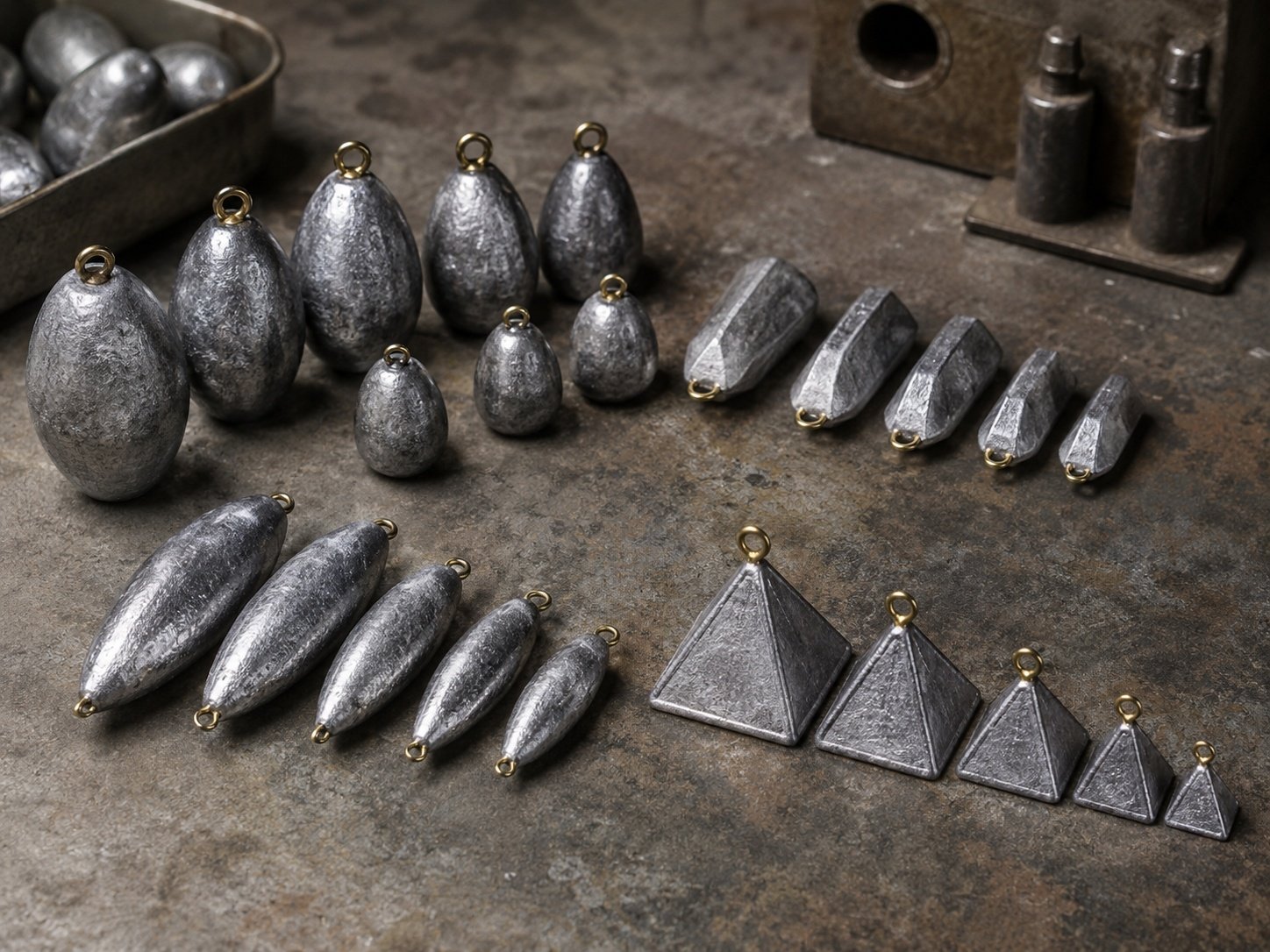
Common lead sinker types include bank sinkers, pyramid sinkers, egg sinkers, bell sinkers, drop shot sinkers, split shot sinkers, torpedo sinkers, surf sinkers, carp leads and other custom shapes.
If you already have a reference sample, drawing or product photo, it is better to provide it at the beginning. Small differences in shape, hole position, wire insert, swivel connection or coating thickness can affect mold selection and final cost.
2. Confirm Weight Range and Tolerance
Weight tolerance is one of the most important quality points in lead sinker production. If the weight is too high or too low, it may affect casting distance, bait presentation, fishing performance and customer confidence.
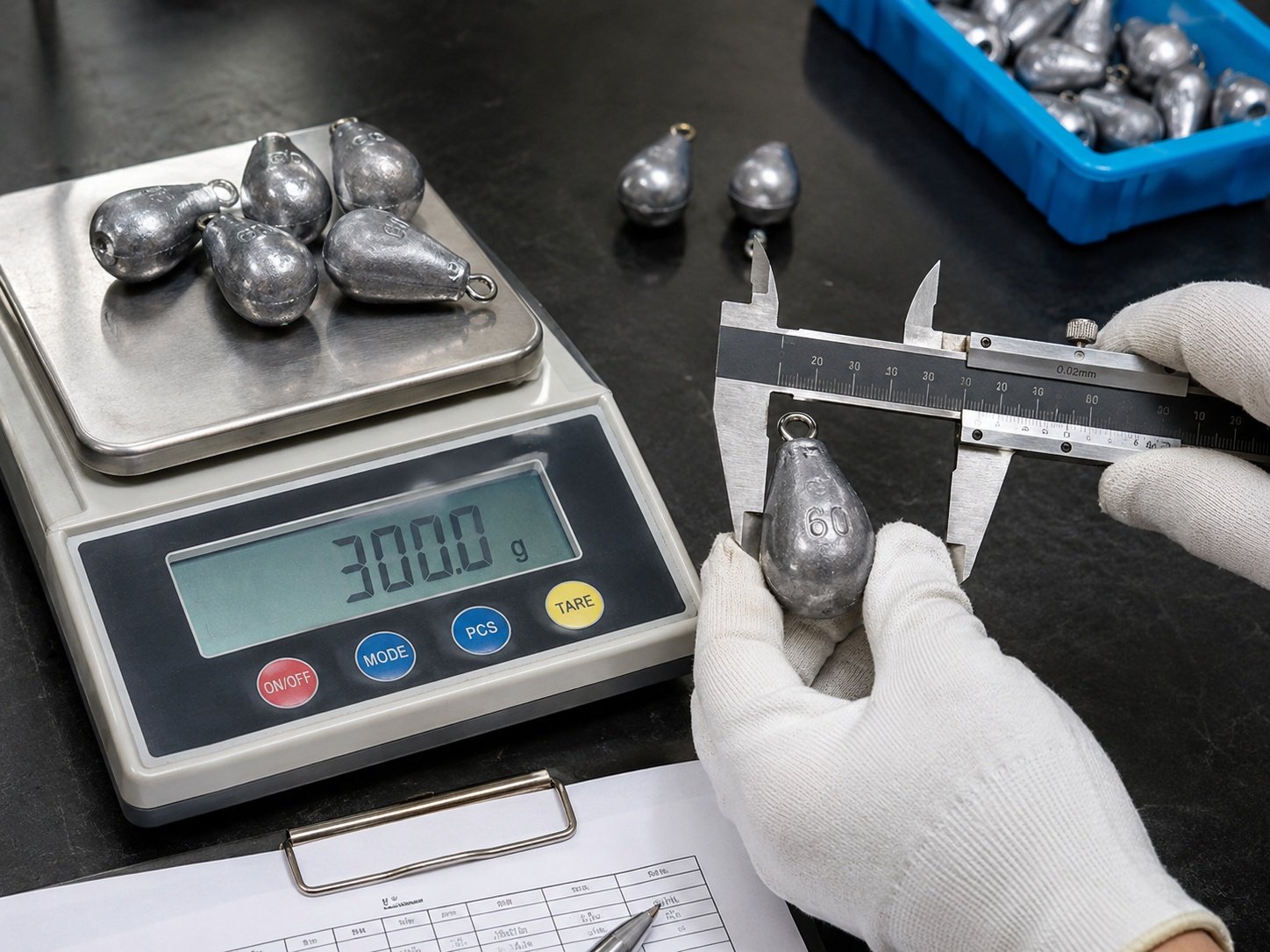
For some markets, a small tolerance is acceptable. For retail products with printed weight marking, stricter control may be needed. For larger sinkers, the tolerance range may be slightly wider, but it should still be agreed before production.
Buyers should not only list the nominal weight. It is better to confirm the acceptable tolerance range, such as ±3%, ±5%, ±8% or another agreed standard. This helps avoid disputes after inspection.
| Sinker Weight | Example Tolerance | Common Use | Inspection Point |
|---|---|---|---|
| 5 g – 20 g | ±5% to ±8% | Light freshwater rigs | Check by sample batch |
| 1 oz – 4 oz | ±5% | General sinker range | Check each size separately |
| 8 oz – 32 oz | ±3% to ±5% | Surf or heavy fishing | Check carton weight and unit weight |
| 1 kg and above | Project specific | Special purpose weights | Confirm drawing and sample approval |
3. Check Shape, Hole Position and Mold Condition
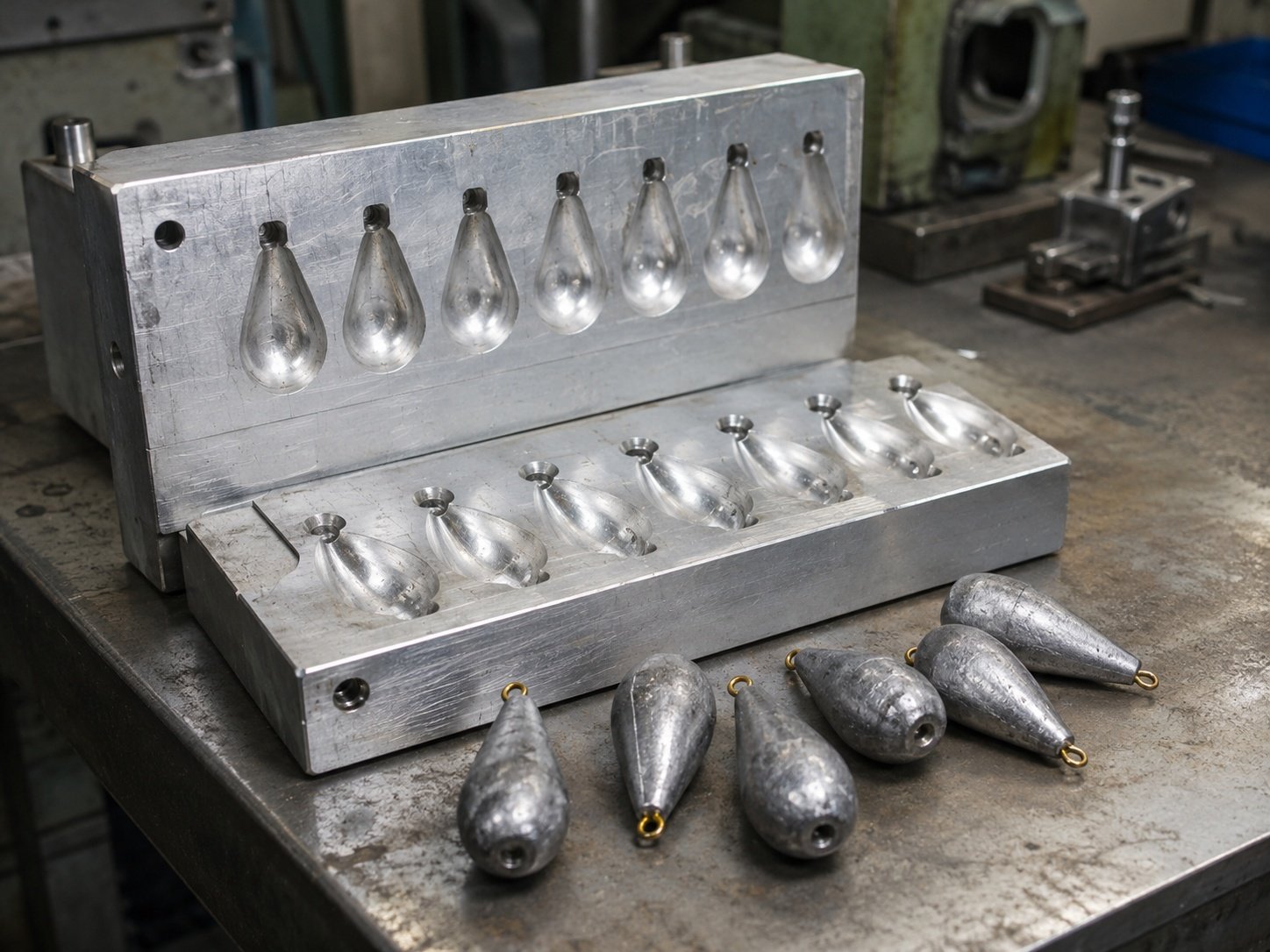
The shape of a sinker affects both performance and production cost. A standard shape can usually use an existing mold. A special shape, logo, insert, hole position, wire connection or custom profile may require a new mold.
Mold condition also affects surface quality and weight consistency. An old or rough mold may create uneven surfaces, burrs or poor shape details. For private label or retail products, buyers should check whether the surface finish is acceptable before mass production.
If the product includes holes, stainless wire, brass eyelets, swivels or embedded parts, these positions should be confirmed in drawing or sample. A small position error may affect assembly, coating, packaging and final use.
4. Confirm Mold Sample and Pre-Production Sample
For new shapes or strict OEM projects, a mold sample or pre-production sample should be approved before mass production. This is especially important when the sinker has a custom shape, logo, weight mark, coating requirement or assembled accessories.
Buyers should check the sample carefully, including weight, dimensions, hole position, surface, coating, logo, marking and packaging fit. If adjustment is needed, it should be done before the full order is produced.
A clear sample approval process can reduce risk and avoid repeated changes after production has started.
5. Choose the Right Coating Option
Coating is important for appearance, corrosion resistance, hand feel and retail value. Different markets may prefer different finishes. Some buyers want low-cost plain lead, while others need painted, powder coated, epoxy coated, vinyl dipped or custom colored sinkers.
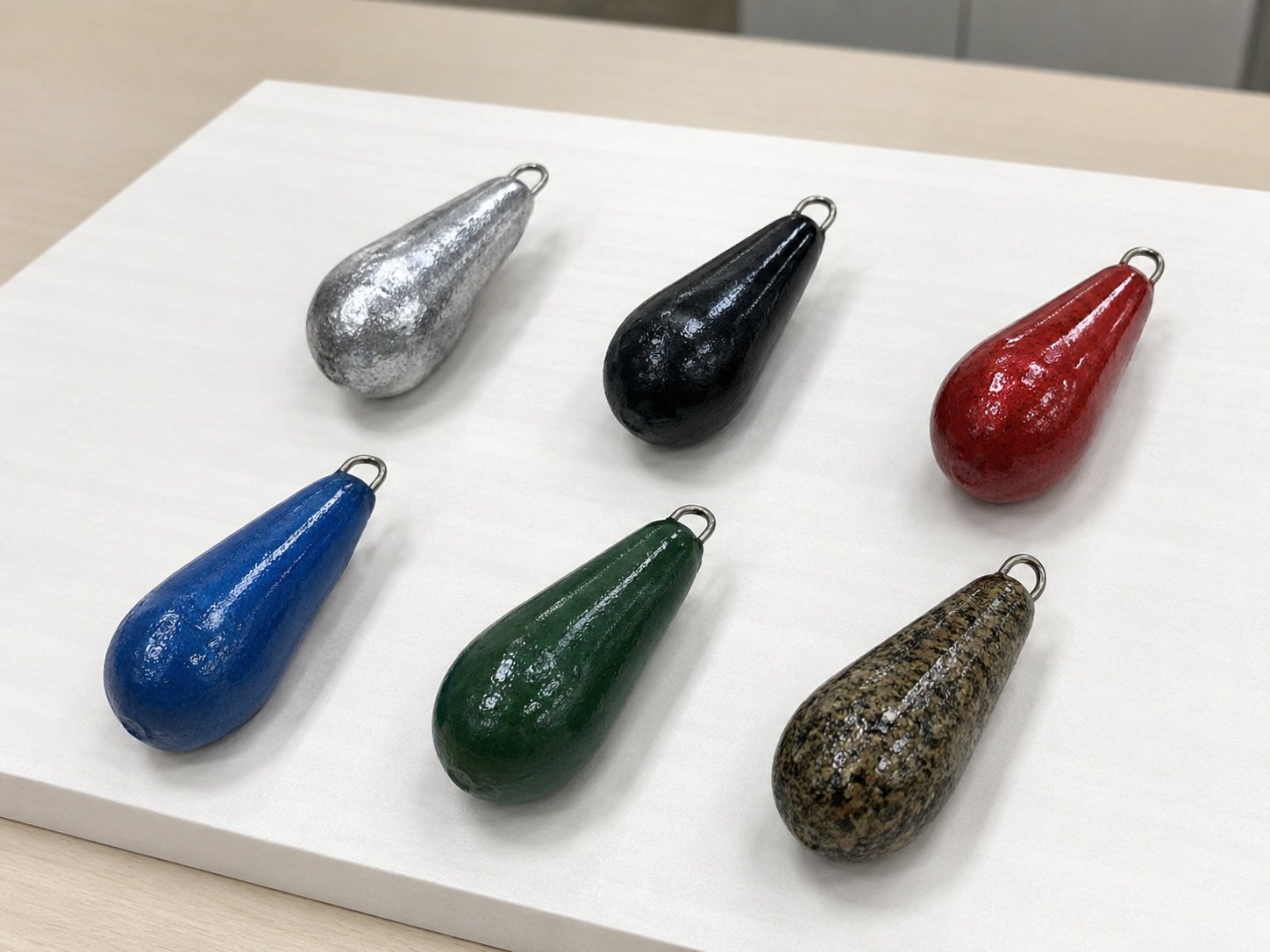
Common coating options include plain finish, painted finish, powder coating, epoxy coating, vinyl coating, nickel plating, black finish and custom colors. Each option has different cost, durability, surface feel and production time.
For saltwater or humid markets, coating durability should be discussed carefully. Buyers should consider whether the product may hit rocks, boats, buckets or other hard surfaces during use. A beautiful coating is not enough if it chips too easily.
For products sold in the European market, buyers may also need to consider REACH requirements depending on material, coating and sales channel.
6. Confirm Logo, Weight Marking and Surface Details
Some sinkers need raised logos, recessed logos, weight marks, printed logos or stickers. These details should be confirmed before mold production or coating.
Raised or recessed marks may look clean before coating, but coating thickness can reduce clarity. For dipped or thick coated products, printed logo, pad printing or sticker labels may be more practical than molded lettering.
Buyers should decide whether the logo needs to be on the product itself, on the packaging, or both. For many OEM projects, clear packaging branding is more stable than forcing a complicated logo onto a small or curved sinker surface.
7. Prepare Packaging and Carton Requirements
Lead sinkers are heavy products, so packaging is not only about appearance. It is also about safety, carton strength, handling, transport cost and warehouse management.
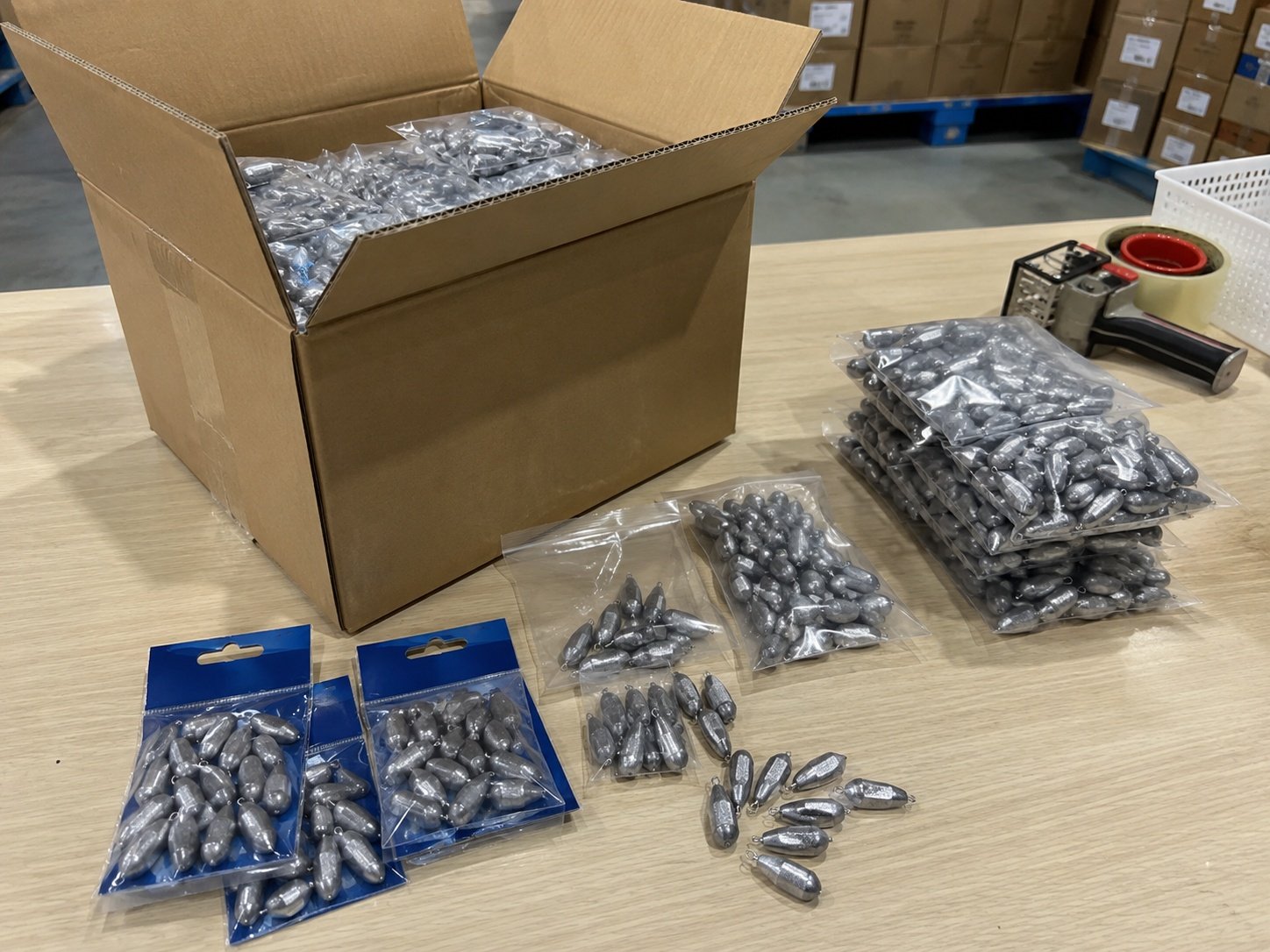
Common packaging options include bulk bags, small polybags, blister cards, header bags, inner boxes, wooden cases and export cartons. For heavy sinkers, carton weight must be controlled carefully. If cartons are too heavy, they may be difficult to handle or damaged during transport.
Buyers should confirm pieces per bag, bags per inner box, inner boxes per carton, carton weight limit, carton mark, barcode, label information and pallet requirement if needed.
8. Control Mixed Sizes and Counting Accuracy
Mixed size problems are common in sinker orders because many sizes may look similar after coating or packing. If different weights are packed together incorrectly, it can create warehouse problems and customer complaints.
A good production plan should separate sizes clearly during casting, coating, drying, inspection and packing. Carton labels should include product name, size, quantity, gross weight, net weight and order number when needed.
For retail products, barcode and SKU accuracy should also be checked before shipment. For bulk products, weight and quantity should be checked by carton.
9. Confirm MOQ, Lead Time and Cost Structure
MOQ depends on sinker type, weight, mold condition, coating, packaging and total order quantity. Standard sinkers with existing molds usually have more flexible MOQ. Custom shapes, special coatings, private label packaging or new molds may require higher quantities.
Buyers should ask about mold cost, sample cost, coating cost, packaging cost, production lead time and shipping method. For heavy products, freight can strongly affect the final landed cost.
If it is a trial order, buyers can start with standard shapes and simple packaging. For long-term product lines, custom molds and private label packaging may be more suitable.
10. Build a Complete RFQ Before Quotation
A clear RFQ helps the supplier provide a more accurate quotation and production plan. It also reduces repeated communication and unexpected cost changes.
Lead Sinker OEM Quotation Checklist
- Product Type: Bank sinker, pyramid sinker, egg sinker, torpedo sinker, carp lead or custom shape
- Weight Range: Weight list and quantity per size
- Tolerance: Acceptable weight tolerance for each size
- Material: Lead, iron, zinc alloy, tungsten alloy or other material if required
- Mold: Existing mold or custom mold
- Coating: Plain, painted, powder coated, epoxy coated, vinyl coated or custom color
- Marking: Weight mark, logo, recessed mark, raised mark, printing or packaging label
- Packaging: Bulk bag, retail bag, blister card, inner box, wooden case or export carton
- Quality Requirement: Weight check, coating inspection, surface check, packing quantity and carton weight
- Reference: Photos, drawings, samples or existing product code
Conclusion
A lead sinker may look like a simple product, but OEM production includes many details that affect cost, quality and customer satisfaction. Weight tolerance, mold condition, coating, marking, packaging and carton control should all be confirmed before production.
For importers and fishing tackle brands, using a lead sinker OEM guide as an internal checklist can make supplier communication clearer and reduce quality risks before shipment.
Terminalpro supports fishing tackle importers, distributors and brands with sinkers, jig heads, lead products, OEM fishing lures and terminal tackle OEM projects.
You can also download our fishing accessories catalog to review more product options and prepare your next OEM order.
Need a Lead Sinker OEM Quotation?
Send us your sinker type, weight list, coating requirement, packaging method, drawings, samples and estimated quantity. Terminalpro will review your project and provide a practical OEM quotation.
FAQ
What information is needed for a lead sinker OEM quotation?
Buyers should provide sinker type, weight range, quantity per size, tolerance requirement, coating, marking, packaging method and target market. Photos, drawings or physical samples are also very helpful.
What affects the price of lead sinkers?
The main cost factors include material cost, weight, mold situation, coating method, labor, packaging, order quantity and freight. Heavy products are strongly affected by shipping cost.
Can lead sinkers be made with custom molds?
Yes. Custom molds can be made for special shapes, logos, weight marks, inserts or unique fishing applications. Buyers should prepare drawings, samples or clear reference photos.
Which coating is suitable for fishing sinkers?
It depends on the market and usage. Plain finish is economical. Painted, powder coated, epoxy coated or vinyl coated finishes can improve appearance and surface protection, but cost and durability should be tested.
Why is packaging important for lead sinkers?
Lead sinkers are heavy, so packaging must protect the product and control carton weight. Good packing helps avoid broken bags, mixed sizes, wrong labels, overweight cartons and transport damage.