Soft baits are one of the most flexible product categories in modern fishing tackle. For importers, distributors, and fishing tackle brands, a clear soft bait OEM guide can help confirm the right material, action, color, scent, salt content, mold, packaging, MOQ, and quality standard before placing an order.
What This Guide Covers
- How to choose soft bait material and softness level
- Why color, glitter, UV effect, scent and salt content matter
- When a new mold is needed for a custom soft bait project
- What packaging information buyers should prepare
- How MOQ, samples and quality control affect OEM planning
Many buyers begin a soft bait project with only a photo or a simple size request. In practice, this is not enough for an accurate quotation. A soft bait’s performance depends on more than shape. Material hardness, floating level, action, color layer, glitter, scent, salt ratio, packing method and mold design can all affect the final cost and result.
This soft bait OEM guide is written for practical sourcing work. It explains the 10 key details buyers should confirm before contacting a supplier or approving a custom soft bait sample.
1. Start with a Clear Soft Bait OEM Guide and Product Direction
Before discussing mold cost or unit price, buyers should first define the product direction. The supplier needs to understand whether the product is for bass fishing, pike fishing, perch fishing, zander fishing, trout fishing, saltwater fishing or general lure fishing.
The target fishing method also matters. A paddle tail, worm, creature bait, grub, shad, tube bait, craw bait or finesse lure may require different material softness, body thickness and action.
If the buyer has a reference product, it is helpful to provide photos, samples, dimensions and target improvements. If the product is a new idea, a simple drawing or 3D concept can help the supplier understand the expected shape and action.
2. Choose the Right Soft Bait Material
Material is one of the most important decisions in a soft bait OEM project. Different materials create different softness, elasticity, durability, transparency, floating performance and production cost.
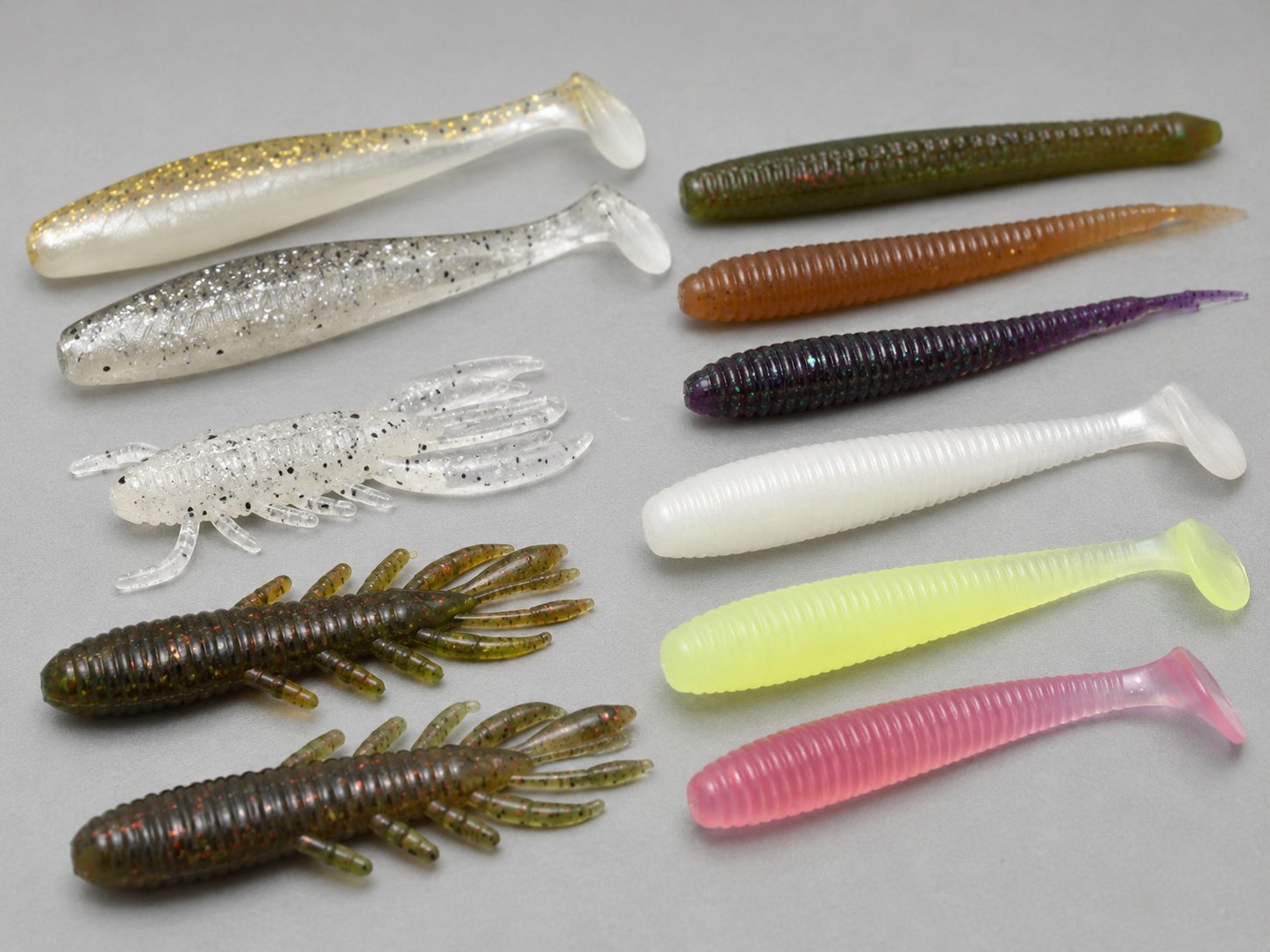
PVC is widely used for many traditional soft baits because it is flexible, easy to color and suitable for many shapes. TPE and other elastic materials may offer better stretch or durability, but they may have different processing requirements, storage considerations and cost levels.
Buyers should tell the supplier whether the bait needs to be soft, extra soft, tough, floating, sinking, transparent, scented or salted. The supplier can then recommend a suitable formula instead of quoting only a standard material.
3. Confirm Softness, Action and Swimming Performance
Softness has a direct effect on lure action. A softer material can create better tail movement and more natural action, but it may tear more easily. A tougher material may last longer, but the action may become less sensitive.
The best choice depends on the bait shape and fishing method. A thin paddle tail may need softer material to move at slow speed. A heavy-duty saltwater bait may need stronger material to resist tearing. A finesse worm may need a soft, flexible body to perform naturally.
For new projects, buyers should test samples in water before confirming mass production. A product that looks good on the table may not always perform well in real fishing conditions.
4. Prepare Color, Glitter and UV Requirements
Color is one of the most visible parts of a soft bait product range. Importers and brands should prepare a color plan before quotation, especially if the range includes several sizes and multiple colors.
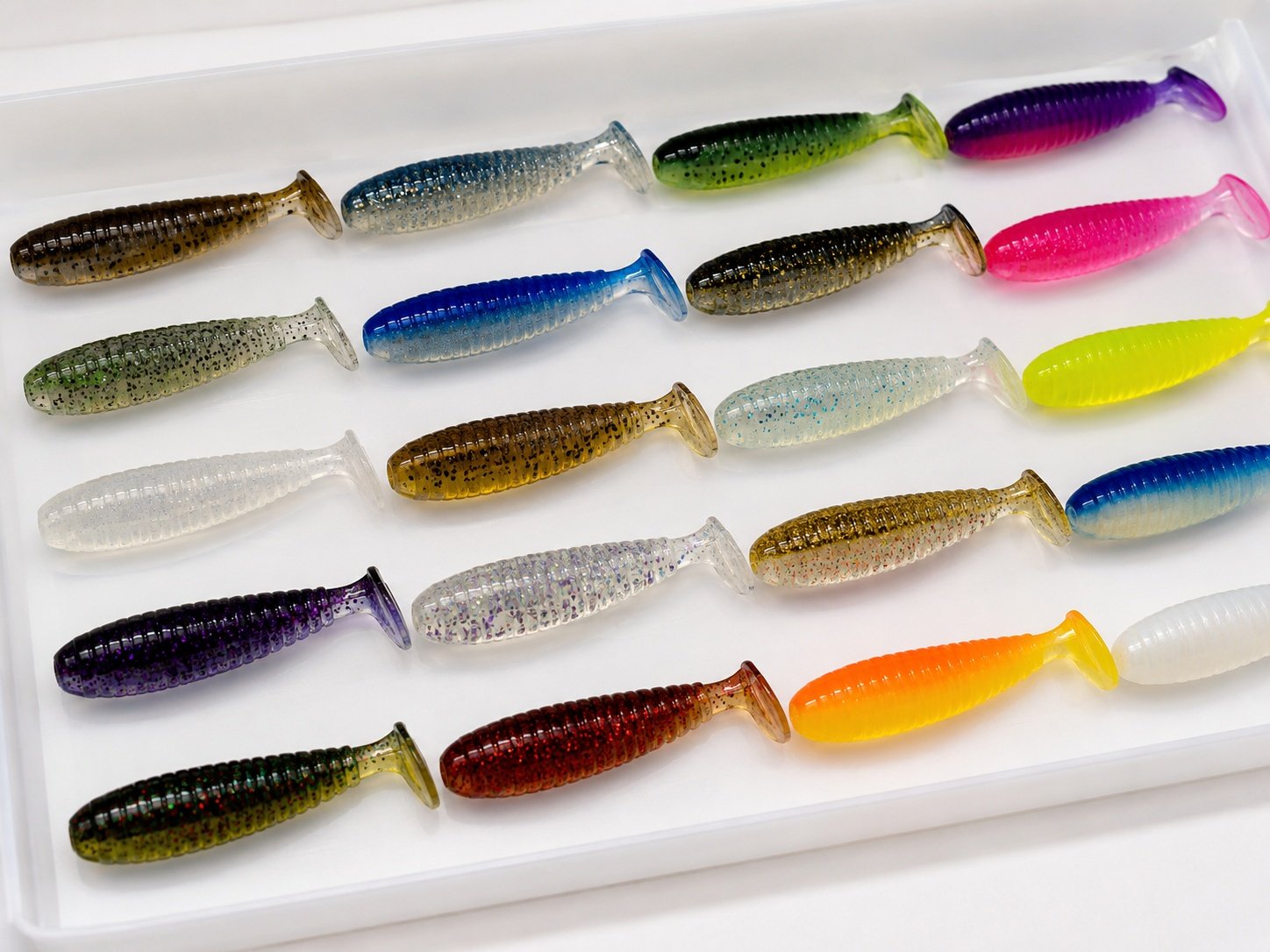
Common color details include body color, belly color, back color, transparency, pearl effect, glitter size, glitter color, UV effect, glow effect and laminated color layers.
Photos can be helpful, but color may look different under different light. For important colors, buyers should approve physical color samples. If the product is for a branded range, keeping color consistency between batches is also important.
5. Decide Whether Scent, Salt or Attractant Is Needed
Scent and salt content can affect product positioning and fishing performance. Some markets prefer garlic scent, shrimp scent, fish scent, squid scent or other attractant formulas. Some soft baits need salt for weight, texture or sinking performance.
Buyers should confirm whether the soft bait should be unscented, lightly scented or strongly scented. They should also confirm whether salt is required, and whether the bait should float, suspend or sink.
Too much salt may change softness, durability and production stability. Too much scent may affect packaging, storage and customer experience. These details should be tested before final production.
6. Confirm Mold, Shape and Size Requirements
Mold design is a major part of custom soft bait development. If the buyer can use an existing mold, the project can be faster and more economical. If the shape is unique, a new mold may be needed.
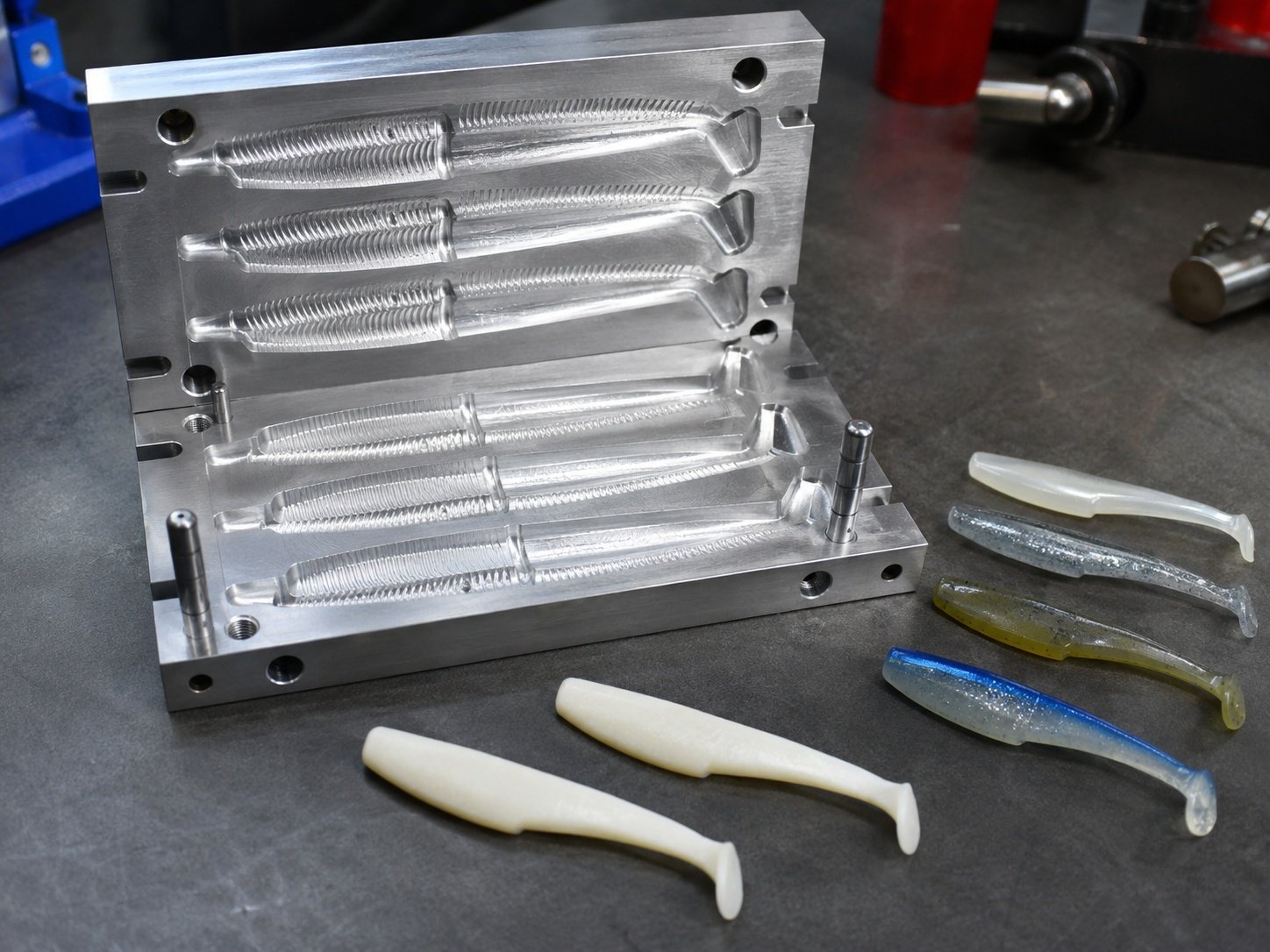
Buyers should confirm length, body thickness, tail shape, rib design, hook slot, belly slot, head shape and action requirement. For paddle tails and shad baits, tail thickness and tail angle are especially important.
For a new mold, the process may include drawing, prototype, mold production, test injection, sample review and adjustment. Buyers should allow enough time for this process, especially if action testing is needed.
7. Prepare Packaging and Private Label Details
Packaging is important for soft bait products because it affects product shape, scent retention, oil leakage, retail presentation and shipping condition.
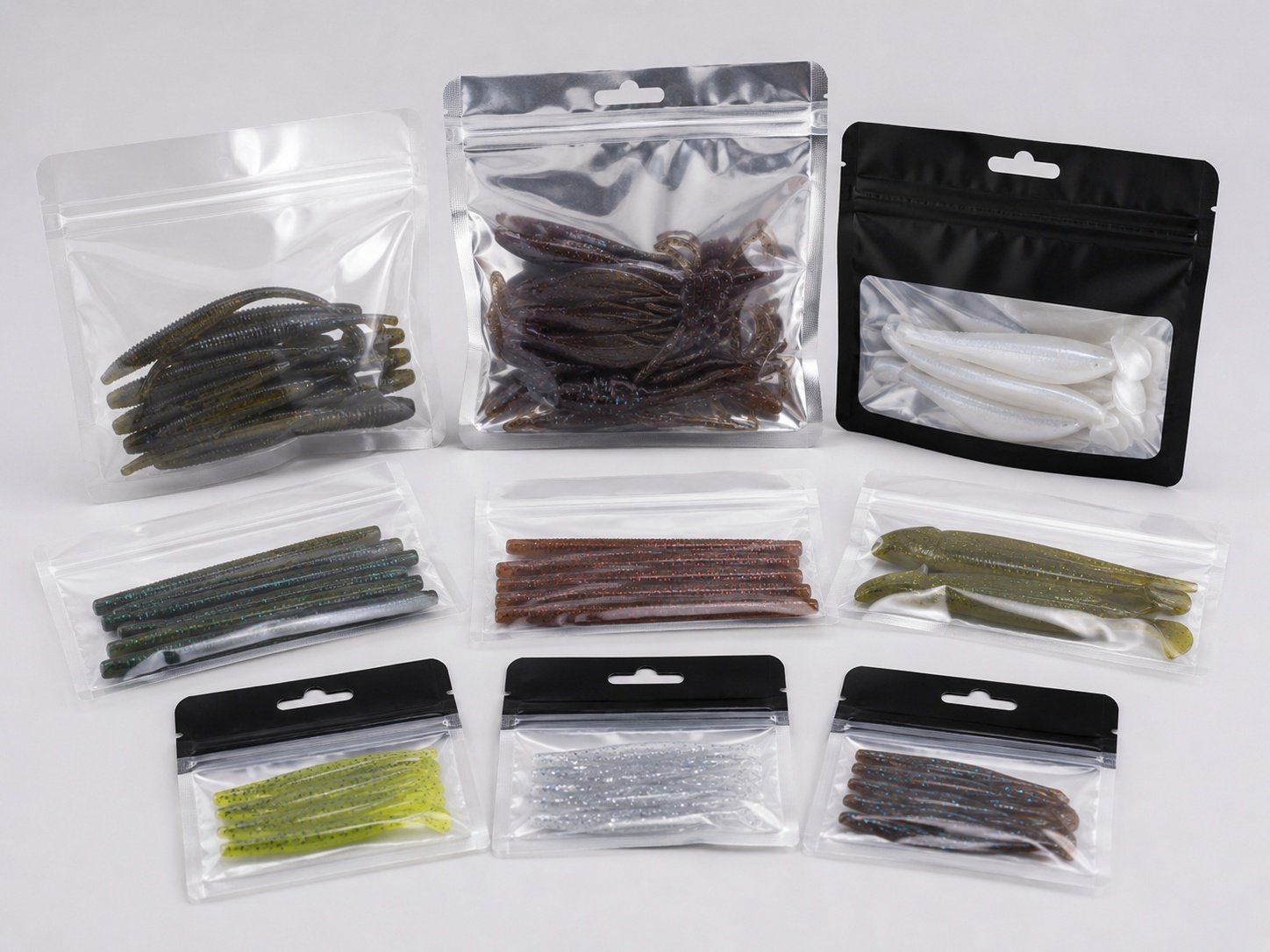
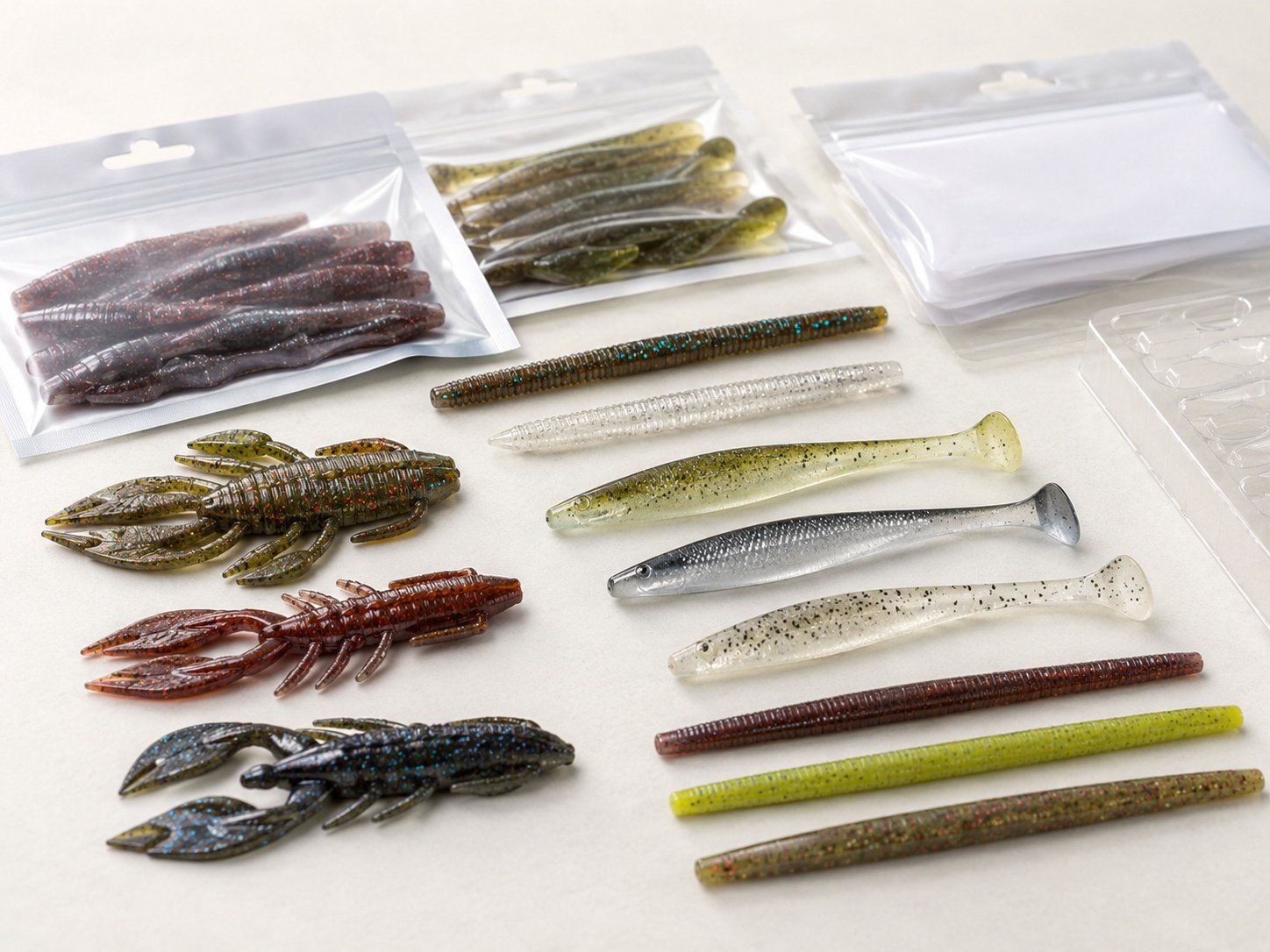
Common packaging options include ziplock bags, printed bags, header bags, blister cards, jars, boxes and bulk bags. For private label products, the packaging may also include brand logo, product name, size, color name, quantity, barcode, SKU and warning information.
Buyers should confirm pieces per pack, bag size, label design, barcode, country of origin, carton quantity and inner box requirements. If scent or oil is used, the bag material and sealing method should also be confirmed.
8. Confirm MOQ, Sample Cost and Lead Time
MOQ depends on mold situation, material, color quantity, packaging type and production arrangement. A standard shape with existing molds usually has a more flexible MOQ. A custom mold, special color, printed bag or unique formula may require a higher quantity.
Buyers should ask about MOQ per size, MOQ per color, sample cost, mold cost, packaging MOQ and production lead time. These details should be clear before confirming an OEM project.
If it is a trial order, the buyer can start with fewer colors and standard packaging. For long-term product lines, custom molds and full private label packaging may be more suitable.
9. Check Quality Control Before Mass Production
Soft bait quality control should cover both appearance and performance. Common problems include color difference, bubbles, deformation, oil leakage, wrong softness, poor tail action, mixed colors, wrong packing quantity and weak sealing.
Buyers should approve pre-production samples before mass production. The sample should be checked for size, weight, color, scent, salt level, softness, action, packaging and barcode information.
For repeat orders, the supplier should keep the approved formula, color record and packaging standard to reduce batch differences.
10. Build a Complete RFQ Before Quotation
A clear RFQ helps the supplier provide a more accurate price and development plan. It also reduces repeated communication and unexpected cost changes.
Soft Bait OEM Quotation Checklist
- Product Type: Worm, paddle tail, shad, grub, creature bait, craw bait, tube bait, etc.
- Size: Length, body thickness, tail shape and weight target
- Material: PVC, TPE, floating formula, sinking formula or custom material
- Softness: Soft, extra soft, tough or special action requirement
- Color: Solid color, laminated color, glitter, UV, glow or custom color
- Scent and Salt: Scent type, salt content, attractant and oil requirement
- Mold: Existing mold or custom mold
- Packaging: Printed bag, header bag, ziplock bag, jar, box or bulk bag
- Quantity: Quantity per size, color and packaging style
- Reference: Photos, samples, drawings or target product information
Conclusion
A successful soft bait OEM project depends on clear preparation before quotation. Material, softness, action, color, scent, salt content, mold, packaging, MOQ and quality control all affect the final product.
For importers and brands, using a soft bait OEM guide as an internal checklist can make supplier communication clearer and reduce the risk of sample changes, production delays or quality problems.
Terminalpro supports fishing tackle importers, distributors and brands with OEM fishing lures, including custom soft baits, jig heads, hard lures and other private label fishing tackle products.
You can also download our fishing accessories catalog to review more product options and prepare your next OEM project.
Need a Soft Bait OEM Quotation?
Send us your soft bait type, size, material request, color samples, scent requirement, packaging idea and estimated quantity. Terminalpro will review your project and provide a practical OEM solution.
FAQ
What information is needed for a soft bait OEM quotation?
Buyers should provide product type, size, material, softness, color, glitter, scent, salt requirement, mold situation, packaging method and estimated quantity.
Can I make custom colors for soft baits?
Yes. Custom colors can be made based on color samples, reference photos or target color descriptions. Physical color samples are recommended for important branded colors.
Do custom soft baits need a new mold?
If the shape is unique, a new mold is usually required. If an existing mold is close to your target design, it may be possible to use the existing mold to reduce cost and development time.
Can soft baits be packed with private label packaging?
Yes. Soft baits can be packed in printed bags, ziplock bags, header bags, jars, boxes or bulk bags with private label artwork, barcode and product information.
What affects the MOQ of soft bait OEM orders?
MOQ is affected by mold type, material, color quantity, scent, salt content, packaging style and production arrangement. Custom molds and printed packaging usually require higher quantities.