Private label fishing tackle packaging is more than putting products into a bag or box. For importers, distributors, and fishing tackle brands, the right packaging helps improve shelf presentation, reduce packing mistakes, support barcode management, and make the product easier to sell.
What This Guide Covers
- How to choose the right packaging style for fishing tackle products
- Why pack quantity, size and product fit should be confirmed early
- How artwork, barcodes and labels affect production approval
- What compliance and warning information buyers should prepare
- How carton marks and packing details reduce shipment mistakes
In many OEM projects, the product itself is confirmed quickly, but the packaging takes much longer. The reason is usually simple: the buyer has not prepared the pack quantity, bag size, artwork, barcode, warning label, or carton mark details.
This private label fishing tackle packaging guide is written for practical OEM sourcing work. It explains the details buyers should prepare before confirming a private label packaging order.
1. Start with a Clear Private Label Fishing Tackle Packaging Plan
Before choosing a bag, card, blister, or box, buyers should first confirm how the product will be sold. A retail store product, an online product, and a bulk wholesale product may need very different packaging.
For example, a product sold in a physical store may need a strong header bag, clear product display, barcode, and clean brand presentation. A product sold online may need packaging that is lighter, easier to ship, and less likely to be damaged during delivery. A bulk order for distributors may only need simple polybags, labels, and export cartons.
Clear positioning helps avoid two common problems: over-packaging and under-packaging. Over-packaging increases cost and shipping volume. Under-packaging may make the product look low value or cause handling problems.
2. Choose the Right Packaging Type
Different fishing tackle products need different packaging types. Hooks, swivels, snaps, sinkers, soft baits, jig heads, and lures cannot always use the same packaging solution.
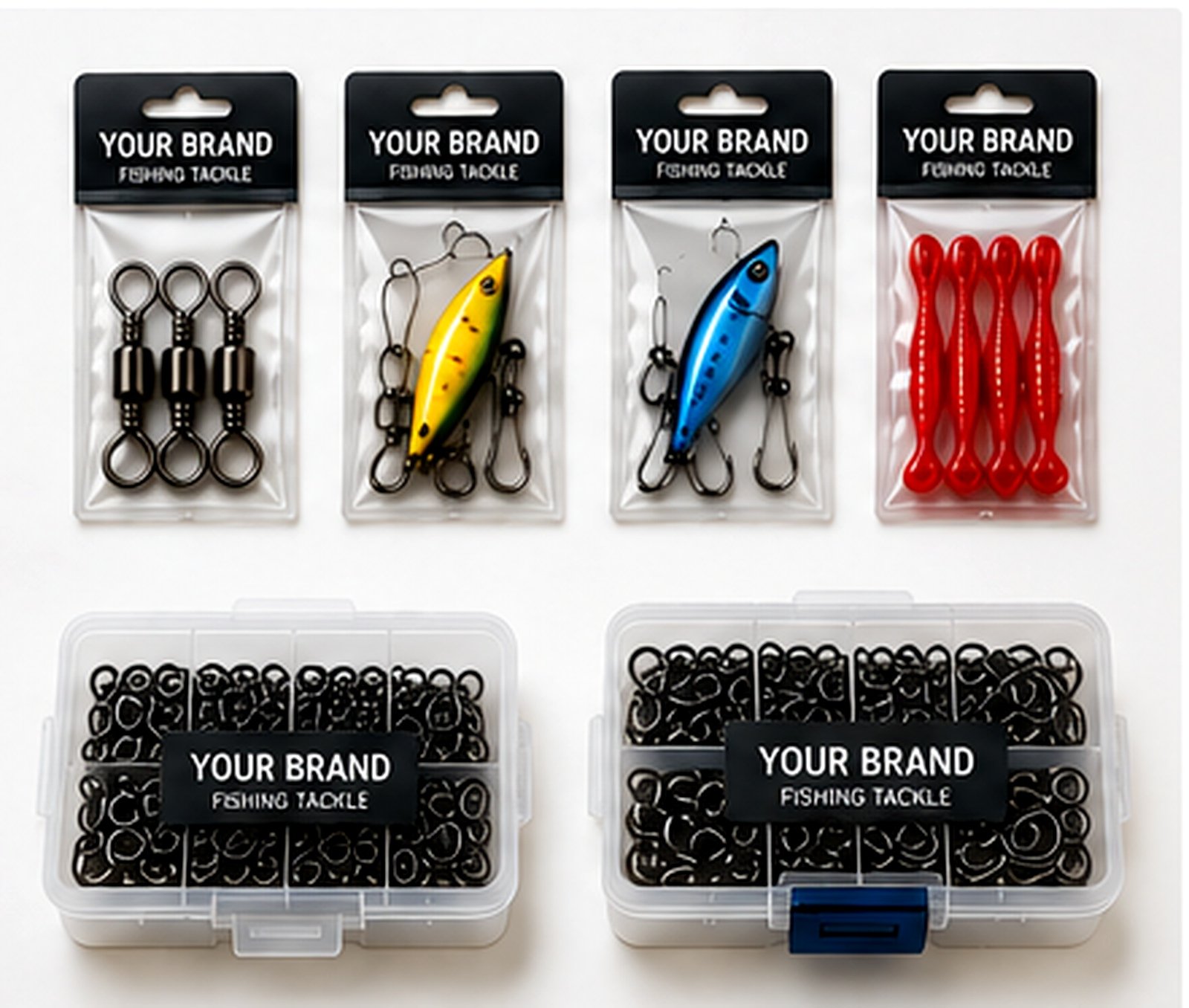
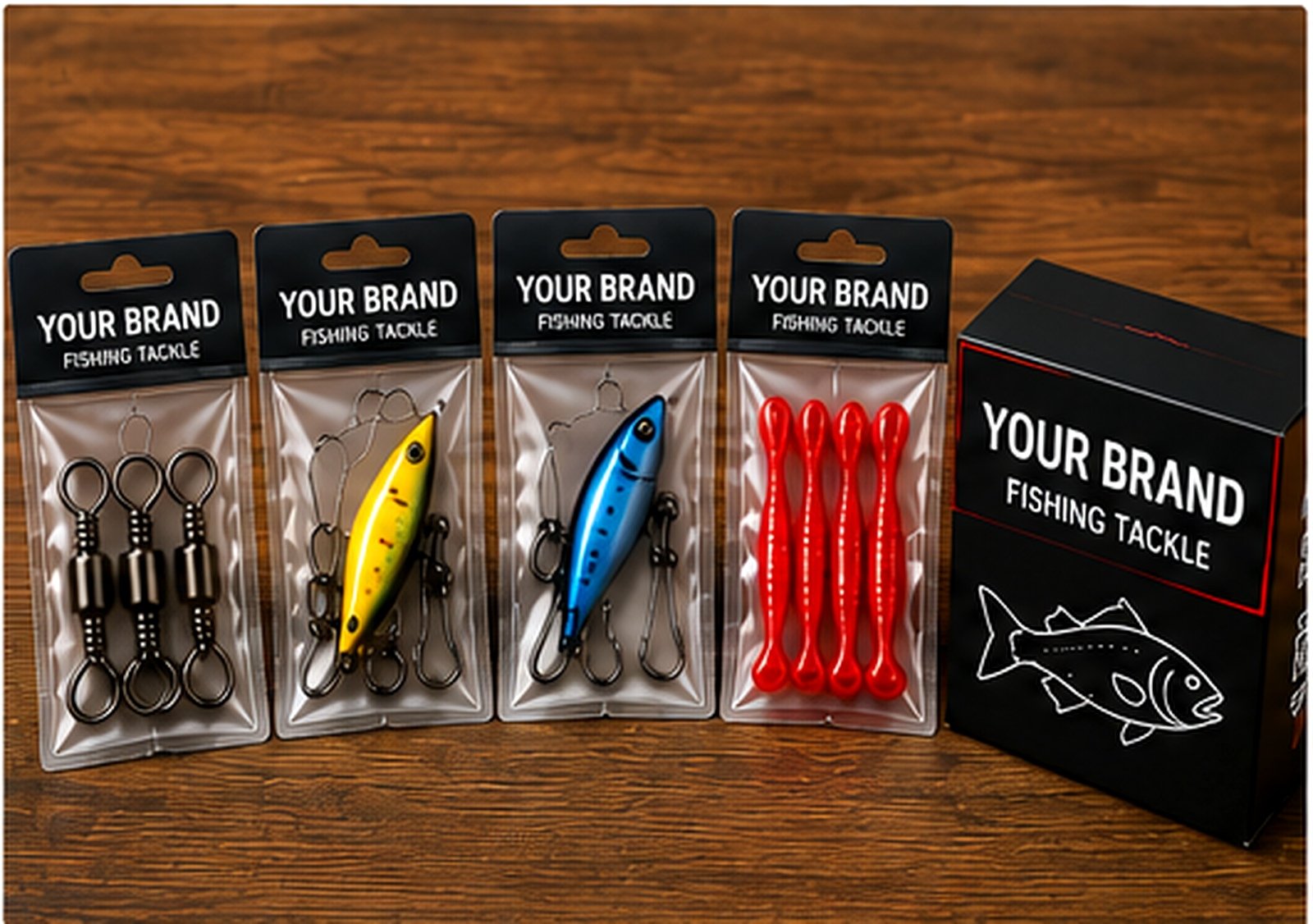
Common private label fishing tackle packaging options include header bags, blister cards, clamshell packs, sliding boxes, plastic cases, bulk polybags, printed bags, sticker labels, and display cartons.
Each option has a different cost, MOQ, protection level, labor requirement and shelf display effect. A low-cost swivel bag, a premium lure blister card and a soft bait printed bag should be planned differently.
3. Confirm Pieces Per Pack
Pieces per pack is one of the first details a supplier needs for an accurate quotation. It affects packaging size, labor time, barcode setup, carton quantity and retail price positioning.
For example, rolling swivels may be packed 10 pcs, 20 pcs or 50 pcs per bag. Jig heads may be packed 2 pcs, 3 pcs, 5 pcs or 10 pcs per card. Soft baits may be packed by piece count or by weight. Sinkers may be packed by piece count, total weight or size group.
| Product | Size | Pieces Per Pack | Packaging Type |
|---|---|---|---|
| Rolling Swivel | #8 | 20 pcs | Header Bag |
| Jig Head | 1/4 oz | 3 pcs | Blister Card |
| Soft Bait | 100 mm | 6 pcs | Printed Bag |
| Sinker | 10 g | 5 pcs | Polybag with Label |
If pieces per pack are changed after quotation, the final cost may also change. For this reason, buyers should prepare a packing list before asking for final pricing.
4. Check Packaging Size and Product Fit
Packaging size should match the product size and shape. If the bag or blister is too large, the product may look empty and unprofessional. If it is too small, the product may damage the package or make sealing difficult.
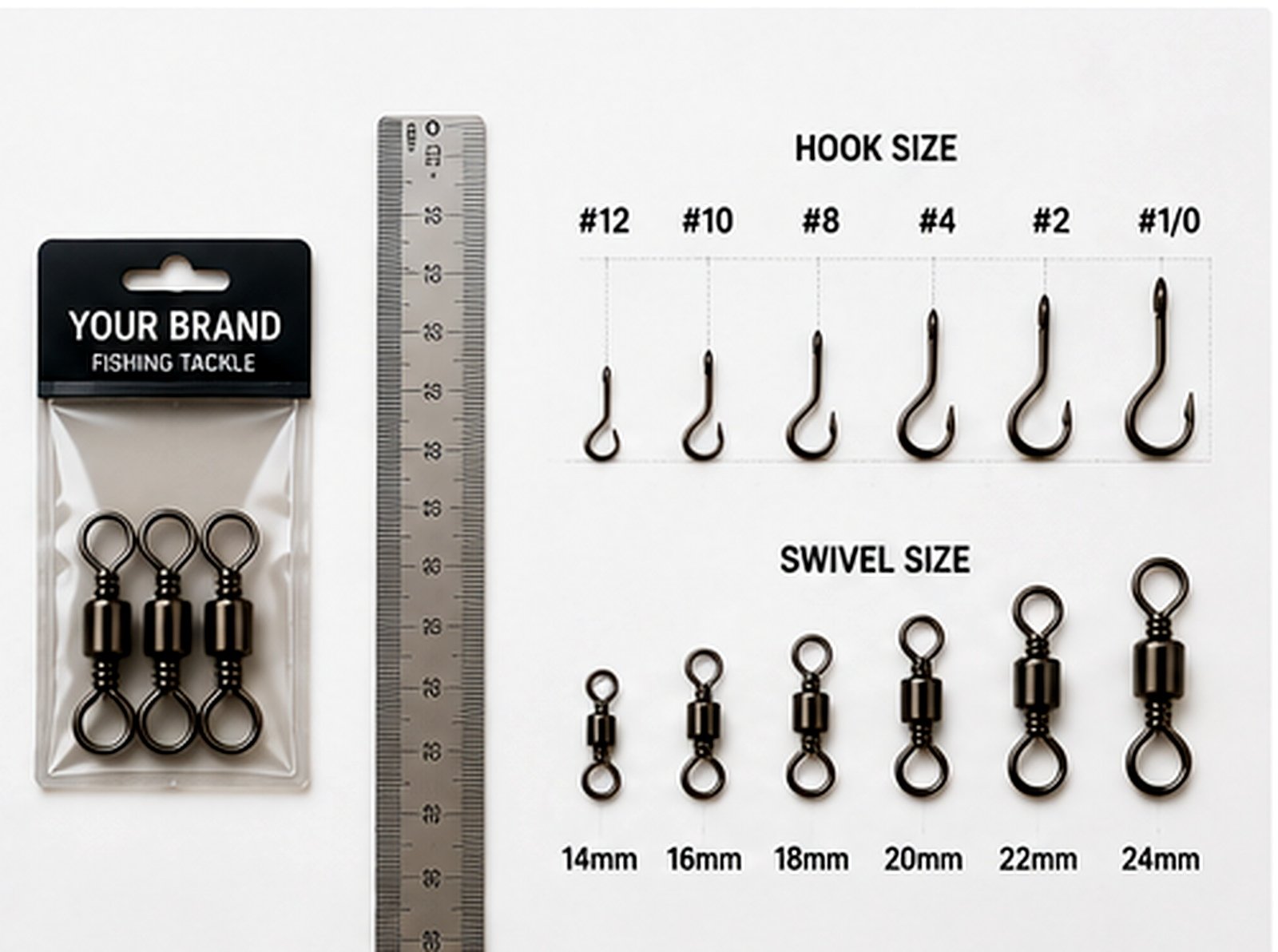
For blister packaging, the cavity should fit the product properly. For header bags, the supplier needs enough space for the header area, heat seal, product display and barcode label. For boxed products, the inside space should reduce product movement during shipping.
Correct packaging size can also help reduce carton volume. This is important for importers because packaging volume affects freight cost, warehouse space and retail shelf efficiency.
5. Prepare Artwork and Brand Elements
Private label packaging normally includes logo, product name, size, color, quantity, barcode, SKU number, warning information, country of origin, and sometimes product instructions.
Artwork files should be provided in editable or print-ready formats, such as AI, PDF, EPS, or high-resolution print files. Low-resolution screenshots are not suitable for final printing.
Buyers should also confirm whether one artwork can be used for several sizes or whether each size needs a different label, barcode, SKU and product description.
6. Confirm Barcode, SKU and Product Label Details
Barcodes and SKU labels are small details, but mistakes can create serious problems for warehouse receiving, retail checkout and online order management.
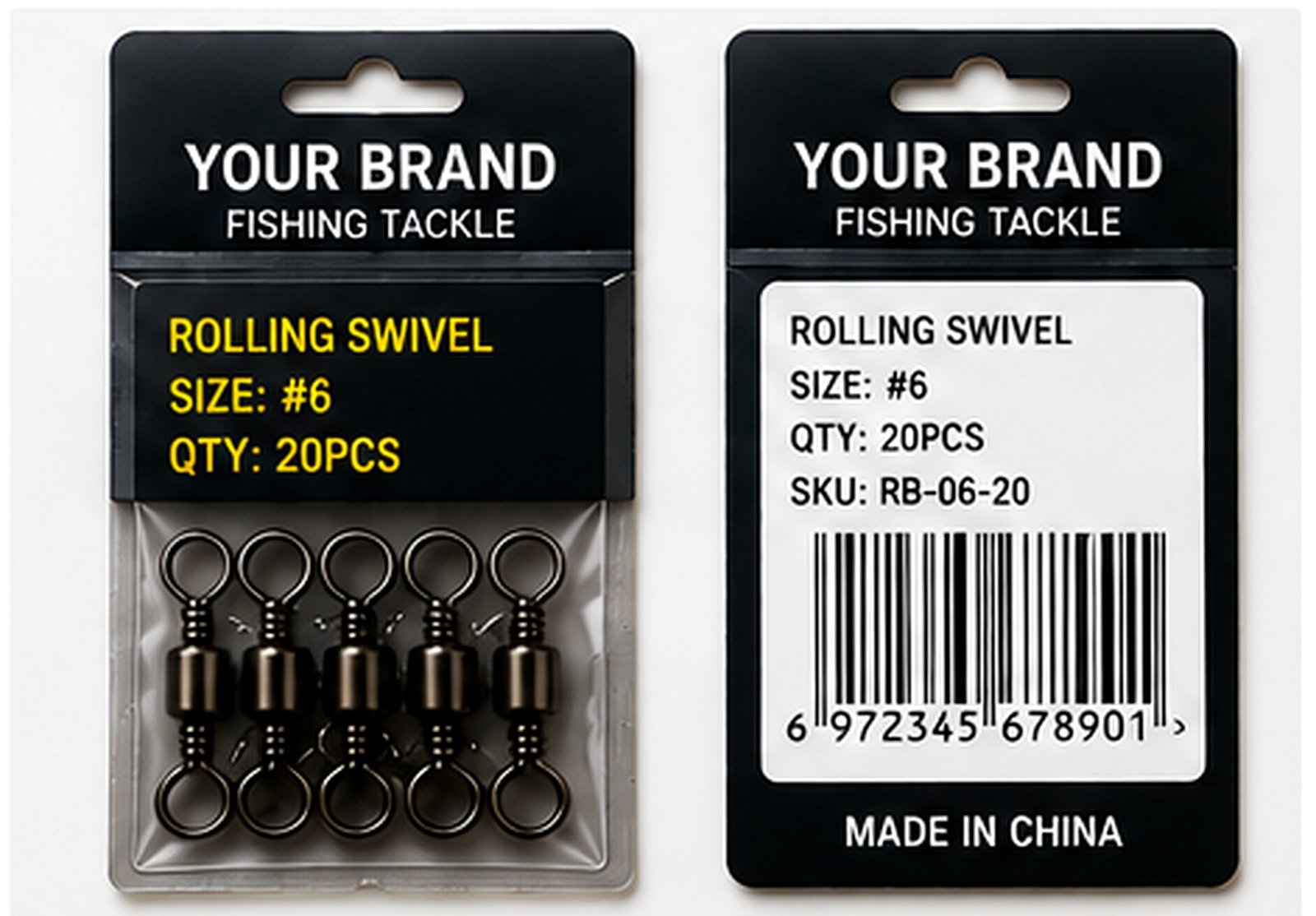
Each size, color or pack quantity may need a different barcode. Buyers should provide the barcode number, SKU code, product description, size, color and quantity in a clear file.
Barcode position also matters. It should be easy to scan and should not be placed on folds, sealing areas, curved surfaces or unstable positions.
7. Check Packaging MOQ and Cost
Packaging MOQ is a common issue in OEM fishing tackle orders. Some printed bags, cards, labels, stickers or blister packaging may require a minimum printing quantity.
Sometimes the product order quantity is small, but the packaging supplier has a higher MOQ. For example, the buyer may only need 3,000 retail packs for a trial order, but printed bags may require 10,000 or 30,000 pcs.
In this situation, buyers can consider universal packaging, sticker labels, neutral bags, smaller batch printing, or keeping extra packaging for future repeat orders. The best choice depends on the product plan and expected annual demand.
8. Prepare Compliance and Warning Information
Different markets may require different warning labels or compliance information. This is especially important for lead products, sharp hooks, small parts, plastic packaging and products sold through large retailers.
Buyers should confirm whether the packaging needs lead warning, sharp hook warning, small parts warning, age warning, country of origin, recycling mark, batch code, REACH-related information, or Proposition 65 warning.
For products sold in the European market, buyers may also need to consider REACH requirements depending on the material, coating and sales channel.
The supplier can help place the information on the packaging, but the buyer should confirm local market and retailer requirements before mass printing.
9. Confirm Inner Box and Export Carton Marks
Private label fishing tackle packaging does not stop at the retail bag or card. Inner boxes and export cartons also need clear labels and marks.
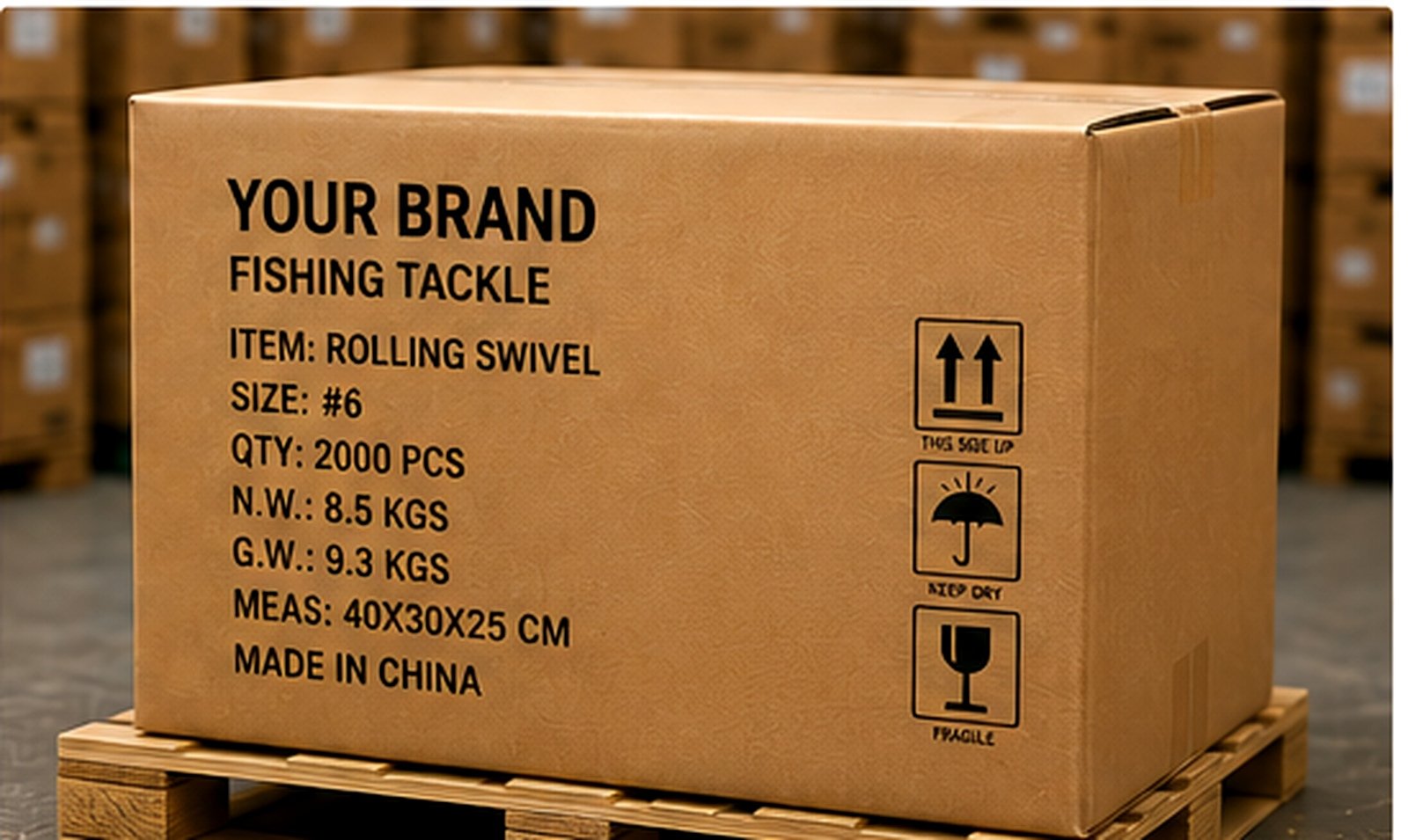
Carton marks may include brand name, product name, item number, size, color, quantity, gross weight, net weight, carton dimensions, country of origin and destination information.
For mixed-size orders, carton labeling is especially important. If different sizes or SKUs are packed together, the packing list and carton marks should be clear enough for warehouse teams to identify the goods quickly.
Private Label Packaging Checklist
- Packaging Style: Header bag, blister card, printed bag, box, sticker label or bulk bag
- Pieces Per Pack: Quantity per retail pack or bulk pack
- Size: Bag, card, blister, label and carton dimensions
- Artwork: Logo, product name, size, color, warning label and country of origin
- Barcode: Barcode number, SKU code, scan test and label position
- MOQ: Product MOQ and packaging MOQ
- Compliance: Lead warning, sharp hook warning, REACH, Prop 65 and retailer rules
- Carton Marks: Brand, SKU, quantity, weight, dimensions and destination
- Approval: Artwork proof, packaging sample, barcode scan and final confirmation
Conclusion
Private label fishing tackle packaging is a key part of OEM project planning. It affects product appearance, quotation accuracy, production lead time, carton volume, barcode management and retail readiness.
For buyers comparing suppliers, using a private label fishing tackle packaging checklist can make communication clearer and reduce the chance of printing mistakes, wrong labels, poor product fit or carton mark problems.
Before requesting a quotation, buyers should prepare packaging style, pieces per pack, artwork, barcode, warning labels, carton marks and quantity details. The more complete the packaging information is, the smoother the OEM process will be.
Terminalpro supports importers, fishing tackle brands and distributors with private label packaging for OEM fishing lures, jig heads, swivels, snaps, sinkers, hooks and other terminal tackle products.
You can also download our fishing accessories catalog to review more product options and prepare your next OEM project.
Need Private Label Fishing Tackle Packaging?
Send us your product list, packaging idea, artwork, barcode details and order quantity. Terminalpro will help review the packaging requirements and provide a practical OEM solution.
FAQ
What information is needed for private label fishing tackle packaging?
Buyers should provide packaging style, pieces per pack, bag or card size, artwork, barcode, warning label, country of origin requirement, carton marks and estimated order quantity.
Can I use my own brand logo on fishing tackle packaging?
Yes. Private label packaging can include your logo, product name, color, size, barcode, SKU and other brand information. Editable artwork files are recommended for printing.
Why does packaging MOQ matter?
Some printed bags, cards, labels and blister packaging have their own MOQ. If the order quantity is small, packaging MOQ may affect cost or require a different packaging solution.
Do fishing tackle packages need warning labels?
This depends on the product and target market. Lead products, sharp hooks, small parts and retail chain products may require specific warnings or compliance information.
Should buyers approve packaging samples before production?
Yes. Buyers should approve artwork, barcode, packaging size, material, product fit and carton marks before mass production to reduce mistakes and delays.