
For importers, distributors, and fishing tackle brands, a clear fishing swivel snap buying guide can help avoid many common sourcing problems. Swivels and snaps are small terminal tackle parts, but they affect rig strength, lure movement, line twist, corrosion resistance, retail presentation, and customer complaints.
What This Guide Covers
- How to choose the correct swivel and snap type
- Why size number alone is not enough
- How strength, material and finish affect product quality
- What packaging information buyers should prepare
- How to reduce quality issues before mass production
Many buyers only send a simple message such as “please quote swivel snaps.” In real production, this is not enough. A rolling swivel, barrel swivel, ball bearing swivel, coastlock snap, interlock snap, or duo lock snap may look similar in a catalog, but the cost and performance can be very different.
This fishing swivel snap buying guide is written for practical sourcing work, not only for product introduction. It focuses on the details that usually affect quotation accuracy, sample approval and repeat order stability.
Before asking for a quotation, buyers should prepare the product type, size range, material, finish, strength requirement, packing method, and estimated quantity. This makes the quotation faster and more accurate.
1. Start with a Clear Fishing Swivel Snap Buying Guide
The first step is to confirm the exact product type. This is especially important when buyers are sourcing from a new supplier, because different markets may use different product names for similar items.
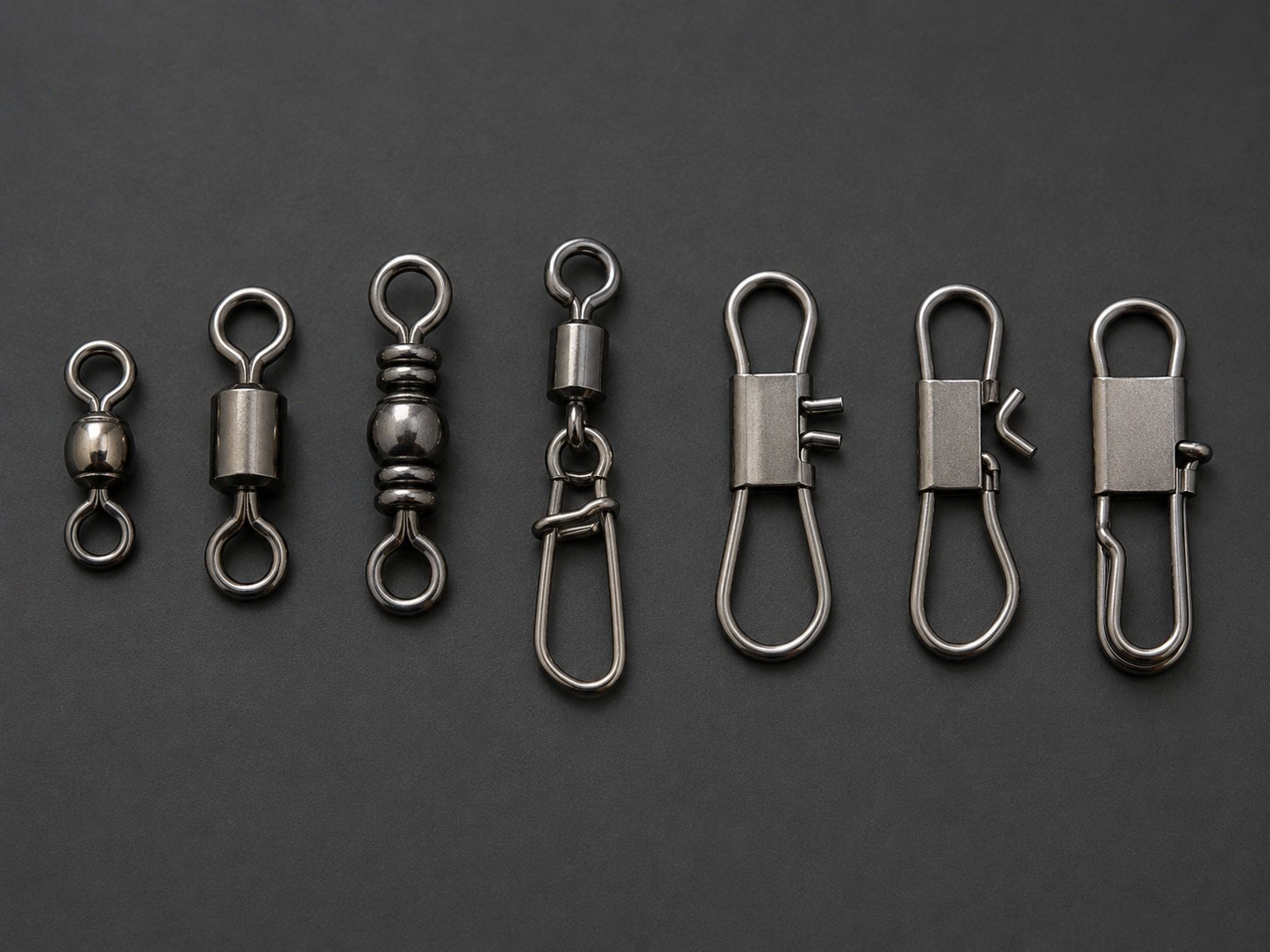
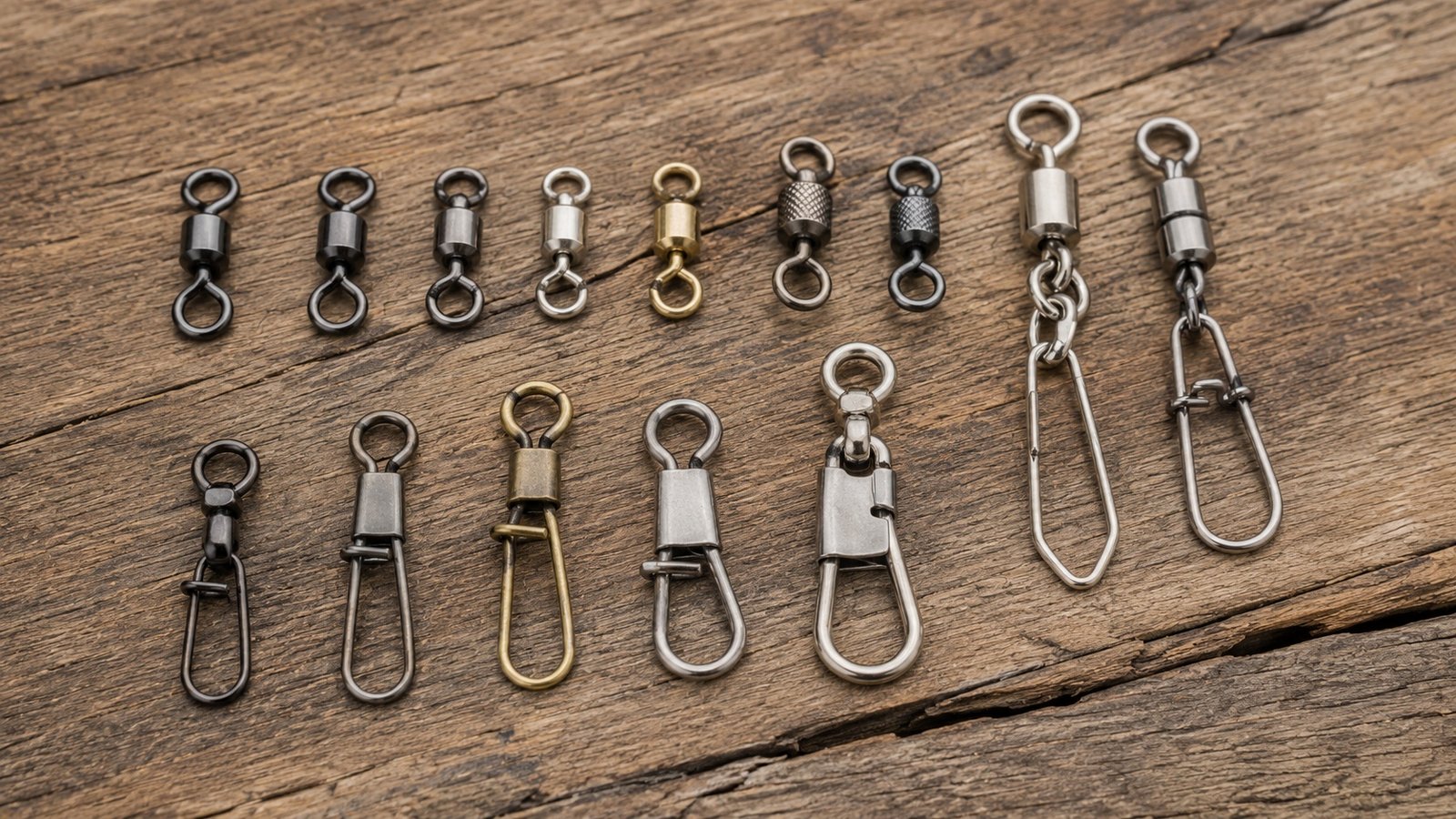
Common products include barrel swivels, rolling swivels, crane swivels, ball bearing swivels, three-way swivels, snap swivels, coastlock snaps, duo lock snaps, interlock snaps, fastlock snaps and crossline swivels.
If you already have a reference product, it is better to provide a photo, sample, drawing, or product code. Small differences in snap shape, ring size, wire diameter, or swivel structure can affect both cost and performance.
2. Do Not Rely Only on Size Number
Swivel and snap sizes are often shown as numbers, such as #10, #8, #6, #4 or #2. However, size numbers are not always the same between different factories or product series.
A size #8 rolling swivel from one supplier may not have the same length, ring diameter, body size or breaking strength as a size #8 from another supplier. For OEM sourcing, buyers should confirm actual dimensions when possible.
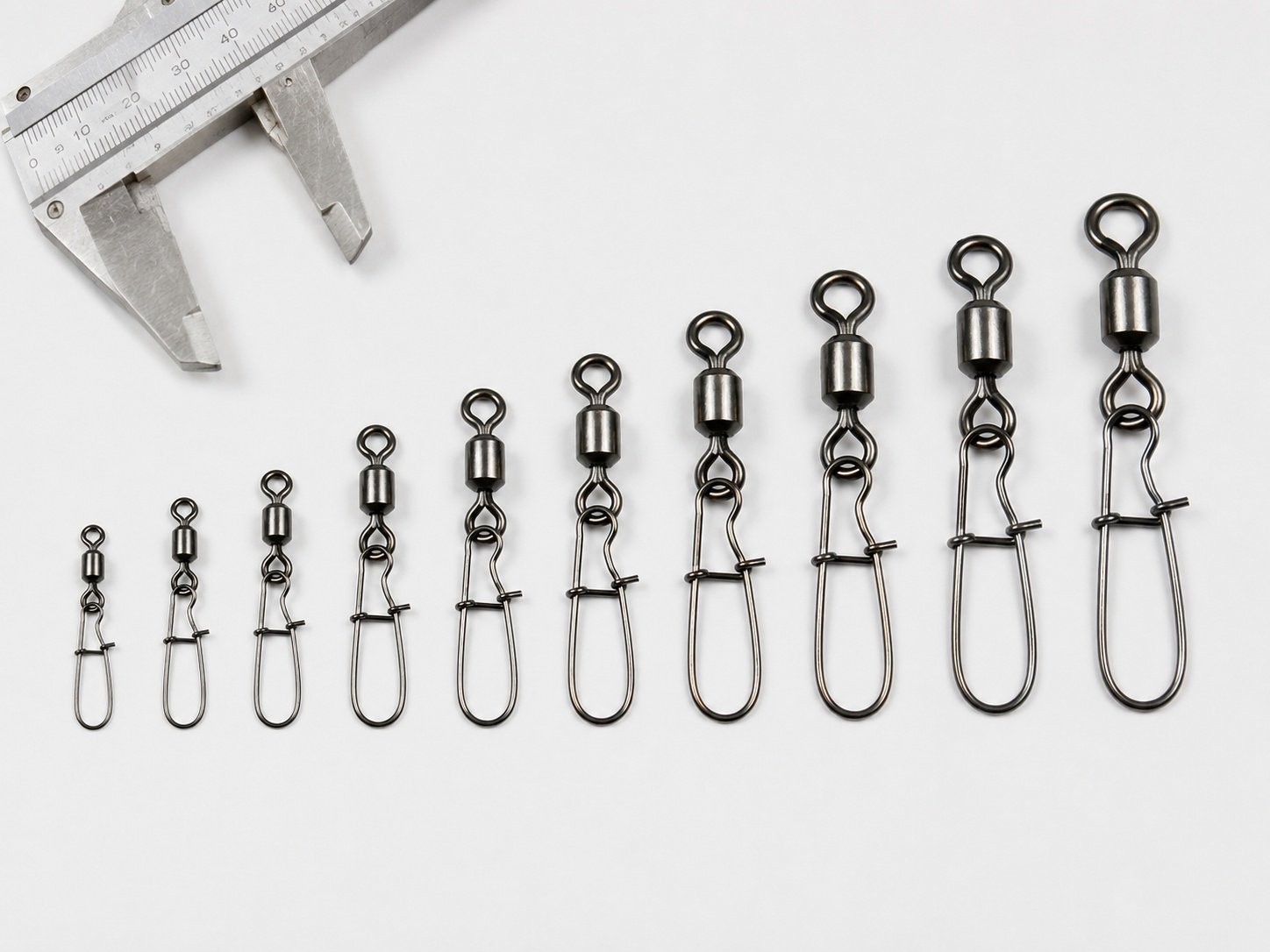
A practical quotation request should include size number, estimated strength, finish, and quantity per size. This helps the supplier check whether standard production models can be used or whether a different specification is needed.
| Product | Size | Finish | Estimated Quantity |
|---|---|---|---|
| Rolling Swivel | #8 | Black Nickel | 20,000 pcs |
| Rolling Swivel | #6 | Black Nickel | 20,000 pcs |
| Snap Swivel | #4 | Nickel | 10,000 pcs |
| Coastlock Snap | #2 | Stainless Steel | 10,000 pcs |
3. Confirm the Strength Requirement
Strength is one of the most important details in swivel and snap purchasing. A low-cost product may look acceptable in the package, but if it opens, bends, or breaks during fishing, it can damage the brand’s reputation.
Strength requirements depend on the fishing method and target market. Carp rigs, freshwater lure fishing, surf fishing, trolling, saltwater fishing, and heavy-duty terminal tackle all need different strength levels.
Buyers should also understand that higher strength normally requires stronger material, thicker wire, better forming, and more careful quality control. This may increase the cost, but it is often necessary for mid-range and premium products.
4. Choose the Right Material
Material affects strength, corrosion resistance, flexibility and price. Common materials include carbon steel, brass, stainless steel and copper alloy, depending on the product structure.
For general freshwater products, standard material with suitable plating may be enough. For saltwater products or higher-end ranges, stainless steel parts, better rings or improved surface treatment may be needed.
When contacting a supplier, buyers should explain whether the product is mainly used for freshwater, saltwater, carp fishing, lure fishing, trolling, or heavy-duty fishing. This helps the supplier recommend a suitable material level instead of only quoting the cheapest option.
5. Select a Suitable Surface Finish
The surface finish affects appearance, corrosion resistance and market positioning. Common finishes include nickel, black nickel, stainless steel natural finish, brass color, matte black and other customized finishes.
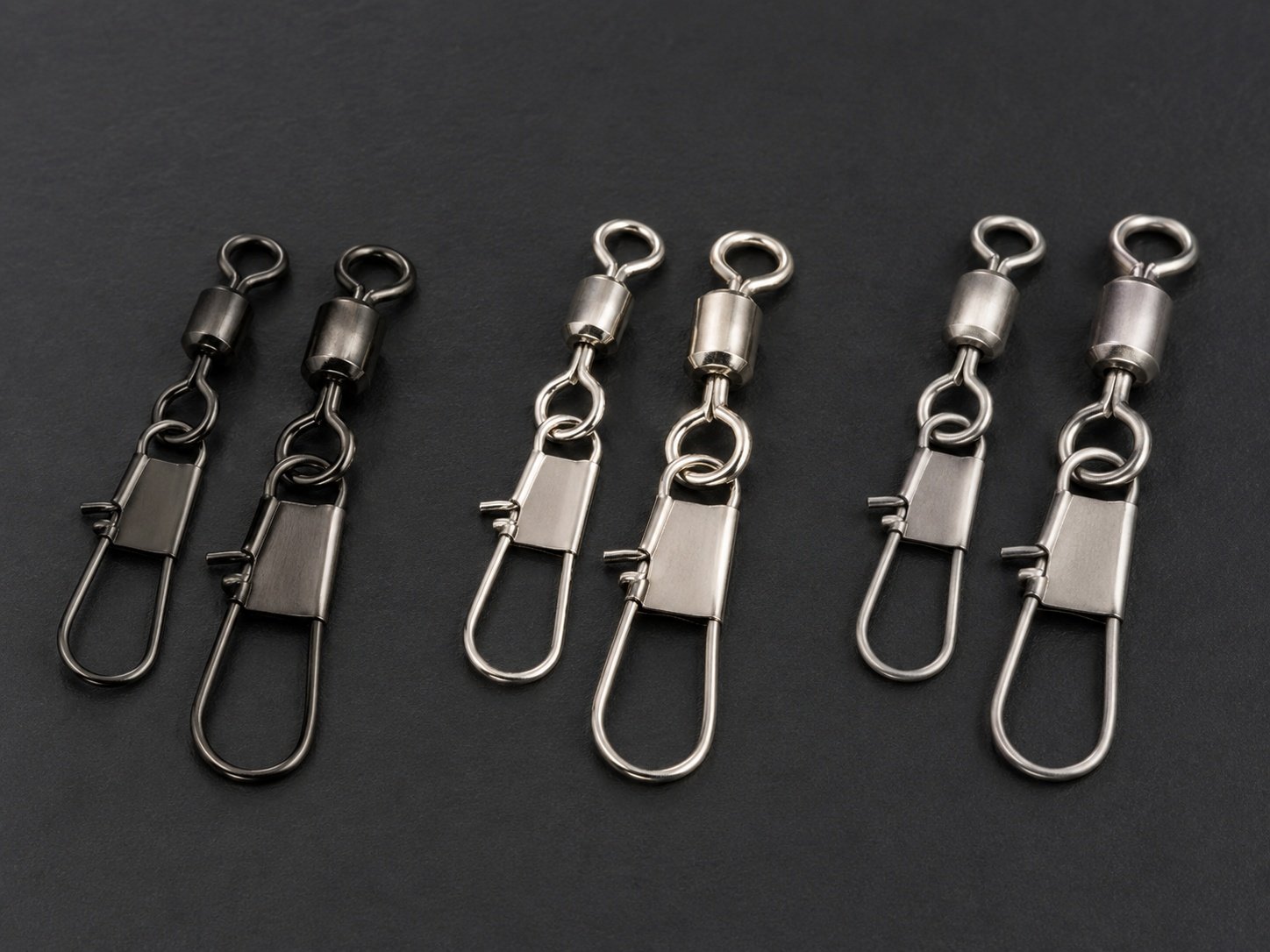
Black nickel is popular for many carp fishing and lure fishing products because it gives a clean, dark appearance. Nickel finish is often used for general terminal tackle. Stainless steel finish is more suitable for some saltwater or heavy-duty products.
If the product will be sold in humid or coastal markets, buyers should discuss corrosion resistance with the supplier. For some projects, salt spray testing or improved plating control may be needed.
For products sold in the European market, buyers may also need to consider REACH requirements depending on the material, finish and sales channel.
6. Check Rotation and Snap Action
A swivel should rotate smoothly. If the rotation is poor, it may not reduce line twist effectively. This is especially important for trolling, spinning lures, and some rig systems.
A snap should open and close properly. It should not be too loose, too hard to open, or easy to deform. The locking area should be checked carefully because this is one of the most common points of failure.
Before mass production, buyers should approve samples and check the actual hand feel. Photos alone cannot show rotation quality or snap locking performance.
7. Prepare Packaging Requirements
Packaging is an important part of swivel and snap orders. Bulk packaging is suitable for wholesalers or assembly use. Retail packaging is more suitable for brands, online sellers, distributors and chain stores.
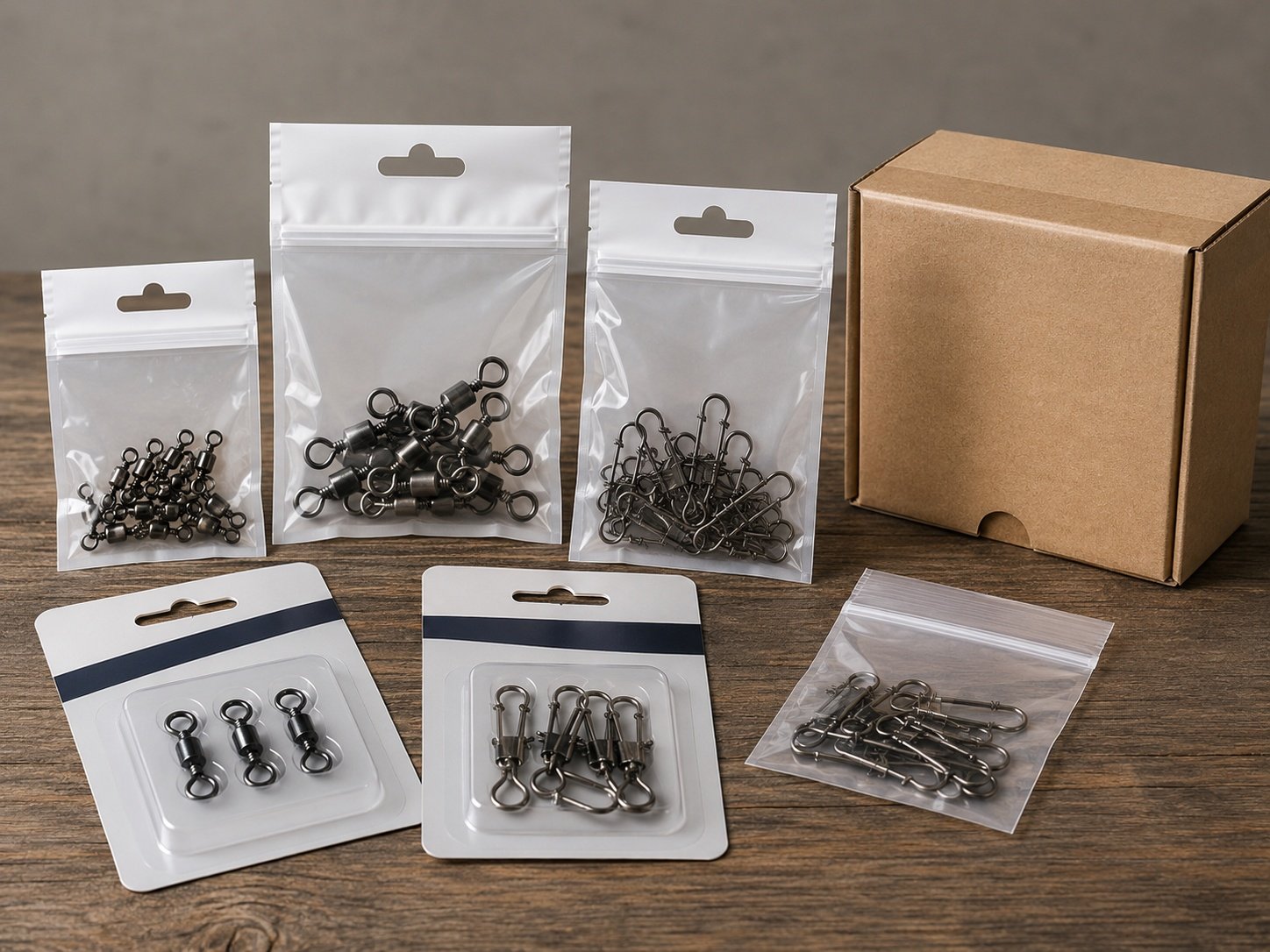
Buyers should confirm pieces per pack, bag size, header card size, barcode, warning labels, country of origin marking, inner box quantity and export carton requirements.
For example, 20 pcs per header bag and 1,000 pcs per bulk polybag are completely different packing methods. Labor cost, packaging material cost and carton volume will also be different.
8. Send Samples or Clear References
If possible, buyers should send a physical sample. A sample helps the supplier check actual size, wire diameter, ring shape, finish, strength level and packing method.
If sending a sample is not convenient, provide clear photos from multiple angles, size measurements, strength requirements and packaging pictures. For replacement sourcing, a physical sample is still the safest option.
9. Confirm Quality Control Points
Common quality issues for swivels and snaps include open rings, weak snaps, poor rotation, plating marks, rust spots, mixed sizes, incorrect packing quantity and wrong barcode labels.
Buyers should confirm inspection points before production. These may include appearance check, size check, pull strength test, rotation test, snap opening test, plating check, packing quantity check and carton mark review.
For private label orders, packaging samples should also be approved before mass packing. This helps avoid mistakes in barcode, label content, product size, pack quantity and country of origin information.
10. Build a Clear Quotation Request
A clear quotation request saves time for both buyer and supplier. It also reduces the risk of price changes after the details are confirmed.
Fishing Swivel Snap Quotation Checklist
- Product Type: Rolling swivel, barrel swivel, snap swivel, coastlock snap, ball bearing swivel, etc.
- Size Range: Size number and actual dimensions if available
- Strength: Normal, upgraded or heavy-duty requirement
- Material: Carbon steel, brass, stainless steel or specified material
- Finish: Nickel, black nickel, stainless steel, matte black or custom finish
- Use: Freshwater, saltwater, carp fishing, lure fishing, trolling, etc.
- Packaging: Bulk bag, header bag, blister card, barcode label or private label
- Quantity: Quantity per size and finish
- Quality Requirement: Strength, plating, rotation, snap lock and counting accuracy
- Reference: Photo, drawing, sample or existing product code
Conclusion
Fishing swivels and snaps are small terminal tackle parts, but they should not be treated as simple low-value accessories. The wrong specification can lead to weak performance, poor corrosion resistance, packing mistakes and customer complaints.
For buyers comparing several suppliers, using a fishing swivel snap buying guide as an internal checklist can make communication much clearer and reduce the chance of choosing the wrong specification.
Before requesting a quotation, buyers should prepare product type, size range, strength, material, finish, packaging, quantity and quality requirements. This helps the supplier provide a more accurate price and more suitable production plan.
Terminalpro supports fishing tackle importers, distributors and brands with swivel, snap and terminal tackle OEM supply. We can help with standard models, private label packaging, bulk orders and customized sourcing solutions based on your market requirements.
You can also download our fishing accessories catalog to review more terminal tackle options, including swivels, snaps, sinkers, hooks and fishing lures.
If you are preparing a larger OEM product range, you may also review our OEM fishing lures service page for more related product categories.
Need a Swivel or Snap Quotation?
Send us your product photos, size list, strength requirements, finish, packaging details and estimated quantity. Terminalpro will review your project and provide a practical quotation.
FAQ
What information is needed for a fishing swivel snap quotation?
Buyers should provide product type, size, material, finish, strength requirement, packaging method, quantity and target market. Photos or physical samples are also very helpful.
What is the difference between a rolling swivel and a ball bearing swivel?
Rolling swivels are widely used for general terminal tackle and offer a balance of cost and performance. Ball bearing swivels usually provide smoother rotation and are often used for higher-performance or saltwater applications.
Is black nickel better than nickel finish?
Black nickel gives a darker appearance and is popular in many lure fishing and carp fishing products. Nickel finish is common for general terminal tackle. The best choice depends on market preference, corrosion requirement and price target.
Can swivels and snaps be packed with private label packaging?
Yes. Swivels and snaps can be packed in header bags, blister cards, small polybags, barcode labels or other private label retail packaging based on the buyer’s requirements.
Why should buyers approve samples before mass production?
Sample approval helps confirm size, finish, strength, snap action, rotation, packaging and overall quality before production. This reduces misunderstanding and lowers the risk of quality problems.