Request Quote
Fishing Lure OEM / Jig Head

Jig Head OEM Supplier in China

Jig head OEM is a mold-sensitive and hook-sensitive project. Buyers need to confirm head shape, weight, hook model, hook position, keeper design, coating, eye direction and packaging before sampling or bulk production.

This page helps fishing tackle brands, importers and wholesalers understand whether their jig head project can start from an existing mold, needs hook or coating adjustment, or requires a new mold for an exclusive jig head design.

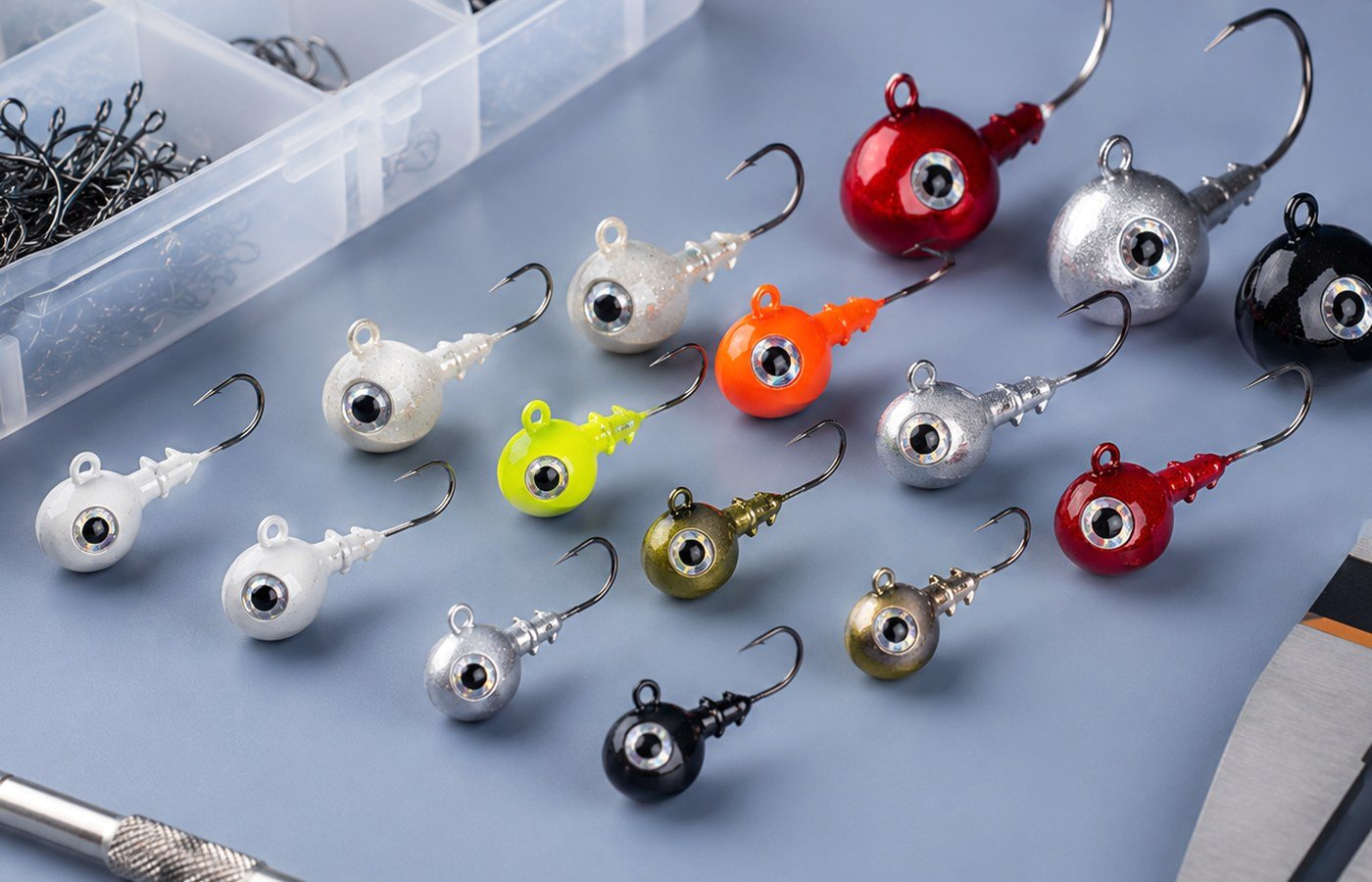
Jig head OEM supplier for lead jig heads hooks keepers coating and packaging

Product scope

What types of jig heads can be customized?

A jig head project should first be matched to the right head style and fishing application. The head shape, hook model and keeper design decide whether an existing mold can be used or a new mold is needed.

Jig head type Typical examples Main OEM focus Buyer should prepare
Round jig head Basic round head, painted round jig, soft bait jig head. Weight range, hook model, eye angle, coating and pack count. Target weights, hook size, color, quantity and packaging style.
Swim jig head Fish head jig, shad jig head, minnow head jig. Head profile, hook angle, soft bait match, eye position and coating. Soft bait size, hook model, head shape reference and target action.
Football / stand-up jig head Football jig, stand-up jig, bottom fishing jig head. Bottom contact, head balance, hook gap, weed guard and coating durability. Target species, fishing environment, hook size and weight range.
Finesse / Ned jig head Ned rig head, mushroom head, finesse jig head. Small weight accuracy, keeper design, hook sharpness and retail pack count. Weight range, hook wire strength, keeper type and pack count.
Custom jig head Exclusive head shape, special keeper, blade jig head, screw-lock jig head. New mold, hook fit, accessory assembly, coating and sample approval. Drawing, sample, hook model, accessory requirement and order plan.

OEM route

Do you need a new jig head mold?

Many jig head projects can start from existing molds, especially for standard round heads and common weights. A new mold is usually needed when the buyer requires a special head shape, hook position, keeper structure or exclusive product design.

1. Existing mold + custom finish

Suitable when the buyer can accept an available jig head shape and wants to customize weight range, color, coating, eyes, packaging or private label.

  • Lower starting cost
  • Faster sample route
  • Good for trial orders
  • Suitable for standard jig head ranges

2. Existing mold + hook adjustment

Suitable when the buyer wants to change hook size, hook wire, hook finish, keeper, eye position or component assembly based on an existing head style.

  • Moderate customization
  • Hook fit must be checked
  • Sample approval is important
  • May require mold adjustment

3. New jig head mold

Required for exclusive head shapes, special hook angle, new keeper structure, special blade/screw-lock design or brand-owned jig head product series.

  • Highest customization level
  • Tooling cost required
  • Longer development time
  • Best for long-term programs

Hook and mold fit

Hook selection must be checked together with the mold

For jig heads, the hook is not just an accessory. Hook shank length, wire diameter, eye angle, bend shape and gap can decide whether the hook fits the mold correctly.

Hook detail What to confirm Why it affects production
Hook size For example #2, #1, 1/0, 2/0, 3/0, 4/0, 5/0 or buyer-specified size. Hook size affects bait fit, mold cavity fit and final fishing application.
Hook shank length Short shank, standard shank, long shank or special jig hook. Shank length decides how the hook sits inside the lead head and soft bait.
Hook eye angle 90-degree, 60-degree, flat eye, vertical eye or custom eye direction. Eye angle affects mold compatibility, swimming action and line tie position.
Wire diameter Light wire, standard wire, heavy wire or saltwater hook wire. Wire diameter affects mold fit, strength, hook gap and target fish suitability.
Hook finish Black nickel, tin, nickel, bronze, stainless or buyer-specified finish. Finish affects corrosion resistance, appearance and cost.
Hook brand / model Standard factory hook, buyer-approved hook model or specific hook brand. Special hooks may require MOQ, longer lead time or mold test before approval.

Hook fit note: changing the hook after mold confirmation can cause production problems. If the buyer requires a specific hook model, it should be confirmed before tooling or sample approval.

Specification details

Jig head details that affect quotation and sampling

A useful jig head quotation needs more than weight and color. Head shape, hook model, keeper, coating, accessories and packaging can all change cost and lead time.

Specification item What the buyer should confirm Why it matters
Head shape Round, football, stand-up, bullet, darter, fish head, mushroom, custom shape. Determines mold route, action, bottom contact and whether existing tooling can be used.
Weight range Each size in grams or ounces, plus acceptable tolerance if important. Different weights may require different cavities or molds. Heavy weights affect carton and freight planning.
Hook model Hook size, hook wire, eye angle, shank length, finish and preferred hook brand if required. Hook selection affects cost, strength, alignment, mold fit and final fishing performance.
Hook position Eye position, hook angle, shank depth inside lead and hook gap exposure. Small position changes can affect swimming action, rigging and mold feasibility.
Keeper / collar Lead collar, wire keeper, barb keeper, screw lock, no keeper or custom structure. Keeper design affects soft bait holding power, mold complexity and finishing work.
Coating / painting Raw lead, powder coating, painted finish, clear coat, eyes, UV color, glow color or multi-color paint. Finish affects unit price, sample approval, production speed and QC standard.
Accessory parts Blade, skirt, weed guard, split ring, swivel, screw lock or trailer hook. Accessories change sourcing route, assembly time, QC points and packaging protection.
Packaging Bulk bag, small PE bag, header card, blister card, box, barcode, FNSKU and warning label. Packaging may have separate MOQ, artwork requirement and lead time.

Up-front cost planning

Possible early investment before bulk production

The following ranges are planning references only. Final cost depends on head shape, weight range, hook model, coating, accessories, packaging and sample approval requirement.

Cost item When it may be needed Typical planning range Buyer should know
Reference sample / courier When shape, hook position, coating or keeper must match a physical product. Usually USD 30–150+ Physical samples help avoid misunderstanding in hook angle, head shape and coating.
Coating / color sample For powder coating, painted finish, glow, UV, eyes, multi-color paint or clear coat. Usually USD 50–300+ Multiple colors or repeated sample adjustments may increase sample cost.
Hook test / hook sourcing When buyer requires special hook size, wire strength, finish or hook brand. Depends on hook MOQ Special hooks may require MOQ, deposit or mold fit testing.
3D drawing / design review When the buyer has a new head idea but no production-ready drawing. Usually USD 100–500+ Useful before mold development, especially for hook angle and keeper structure.
Jig head mold Required for new head shape, new weight range, new keeper or exclusive design. Usually USD 300–1,500+ Weight range, cavity number, hook position and head complexity affect tooling cost.
Accessory sourcing For blades, skirts, weed guards, screw locks, swivels or special split rings. Depends on component MOQ Accessories should be confirmed before packaging and sample approval.
Packaging artwork / printing setup For header card, blister card, printed bag, box, barcode or FNSKU. Usually USD 100–800+ Packaging MOQ may be different from product MOQ.
Testing or compliance review When buyer needs material, coating, hook strength, label or market-specific review. Usually USD 150–600+ Third-party testing cost depends on test item and laboratory.

Cost note: standard jig heads using existing molds usually have lower starting cost. New head molds, special hooks, complex coating and retail packaging should be planned before bulk order confirmation.

Coating and accessories

Coating, keeper and accessories should be confirmed before bulk production

Jig head quality problems often come from small details: coating chips, blocked eyelets, weak keeper, wrong hook angle, loose blade or unsuitable packaging.

Decision item Options to discuss Important note
Surface finish Raw lead, powder coating, painted finish, glow, UV, eyes, clear coat or plated finish. Finish choice affects durability, sample cost, production speed and packaging protection.
Eye protection Open eye, painted eye, cleaned eyelet, 3D eyes or no eyes. Blocked hook eyes or line tie holes can cause direct buyer complaints.
Keeper structure Lead collar, barb keeper, wire keeper, screw lock, double keeper or no keeper. Keeper design should match soft bait size and material softness.
Blade / skirt assembly Willow blade, Colorado blade, skirt, swivel, split ring or wire arm. Assembly parts affect action, labor cost, QC and packaging size.
Packaging protection Bulk bag, small bag, header card, blister card, hook cap or inner tray. Hooks and coated heads can damage each other if packaging is too simple.

Production flow

Typical jig head OEM process

Jig head projects should confirm mold route, hook fit, coating, accessories and packaging before bulk production.

1. Product route review

Confirm whether the project uses an existing mold, modified specification or new mold.

2. Hook and weight confirmation

Review hook model, size range, weight range, keeper, eyelet and functional parts.

3. Mold or sample preparation

Prepare available sample, modify mold details or develop new tooling according to the approved route.

4. Casting and trimming

Cast the jig head, trim burrs, check hook alignment and prepare surface work.

5. Coating and painting

Apply powder coat, paint, eyes, glow, UV or clear coat according to approved sample.

6. Accessory assembly

Assemble blades, skirts, weed guards, screw locks, split rings or swivels if required.

7. Packaging approval

Confirm pack count, header card, blister, barcode, warning label and carton marks.

8. QC and shipment

Check weight, hook alignment, coating, assembly, pack count and export carton protection.

Quotation checklist

What buyers should send for a faster quotation

Jig head quotations can change significantly if hook model, weight range, coating or packaging is unclear. The following information helps us quote more accurately.

Product information

  • Jig head type: round, football, swim jig, stand-up, finesse or custom head.
  • Product photo, physical sample, drawing or catalog code.
  • Weight range in grams or ounces.
  • Target fish species and freshwater or saltwater use.
  • Existing mold, modified specification or new mold expectation.

Hook and finish

  • Hook size, hook model, wire strength, eye angle and hook finish.
  • Keeper type, collar shape, screw lock or no keeper requirement.
  • Raw lead, powder coating, painting, glow, UV, eyes or clear coat.
  • Blade, skirt, weed guard, swivel or split ring requirement.
  • Acceptable sample tolerance and approval standard.

Packaging and order plan

  • Quantity by weight, color and hook size.
  • Bulk bag, PE bag, header card, blister card, box or private label pack.
  • Logo, barcode, FNSKU, warning text and carton mark.
  • Sample deadline and delivery window.
  • Shipping destination or preferred Incoterms.

Quality control

QC focus for jig head production

Jig head QC should cover weight, hook alignment, burrs, coating, keeper strength, accessory assembly and packaging accuracy. Small defects are easy to see in retail packs.

QC item Inspection focus Why it matters
Weight accuracy Check actual weight against approved specification and accepted tolerance. Important for fishing performance, retail claims and buyer confidence.
Hook alignment Check hook straightness, eye angle, shank position and hook gap exposure. Hook alignment affects rigging, swimming action and customer complaints.
Burrs and surface Check trimming, lead surface, sharp edges, blocked eyes and casting marks. Burrs affect appearance, packaging and line safety.
Coating coverage Check powder coat, paint coverage, chips, bubbles, eyes and clear coat. Directly affects retail appearance and durability perception.
Keeper and accessory assembly Check keeper shape, screw lock, blades, skirts, weed guards, split rings or swivels. Prevents loose assembly, missing parts or functional failure.
Packaging accuracy Check pieces per pack, size/color mix, barcode, label and carton mark. Reduces warehouse, retail and customer service problems.

Related lure OEM routes

Not sure if jig head is the right route?

If your product is not a jig head, choose a closer lure category below.

Soft Bait OEM

For paddle tails, worms, craws, creature baits, shads and other soft plastic baits involving softness, color, scent, oil and salt.

View Soft Bait OEM

Spinnerbait OEM

For spinnerbaits, buzzbaits and wire frame lures involving blade selection, wire frame, skirt, hook setup and balance.

View Spinnerbait OEM

Metal Lure OEM

For jigging lures, spoons, metal VIBs and casting jigs involving weight, metal body, finish, hooks, rings and carton protection.

View Metal Lure OEM

FAQ

Jig head OEM FAQ

These questions help buyers prepare clearer information before starting a jig head OEM project.

Do I need a new mold for my jig head project?

Not always. If an existing head shape and weight range are suitable, you can usually customize hook, coating, eyes, packaging and label. New tooling is needed for exclusive head shapes, special keeper structures, unusual hook angles or custom product designs.

Can I change the hook in an existing jig head mold?

Sometimes. Hook change depends on shank length, wire diameter, eye angle and how the hook sits inside the mold. A small hook change may be possible, but major changes may require mold modification or new tooling.

Can you make powder-coated or painted jig heads?

Yes. Powder coating, painted finish, glow color, UV color, eyes and clear coat can be discussed. The buyer should provide color references and confirm acceptable finish tolerance before mass production.

Can you make jig heads with blades, skirts or weed guards?

Yes. Blade, skirt, weed guard, screw lock, split ring and swivel assembly can be reviewed. These components should be confirmed during sample approval because they affect cost, action and packaging.

What information is needed before quotation?

Please send head type, photos or samples, weight range, hook model, coating requirement, keeper style, accessory requirement, target quantity, packaging plan and destination market.

Ready to plan this OEM project?

Send your jig head sample, hook model and weight range

We will help judge whether your jig head project can start from an existing mold, requires hook or coating adjustment, or needs a new tooling route. Please include product photos, weight range, hook model, coating, accessory, quantity and packaging requirement.

WhatsApp