
Jig head shapes are more than a visual choice. For fishing tackle brands, importers and product developers, the shape of a lead jig head can influence how a soft bait sits in the water, how the lure moves during retrieval, how it contacts the bottom and how easily it passes through different types of cover. Choosing the right design also affects hook selection, mold requirements, product weight and manufacturing cost.
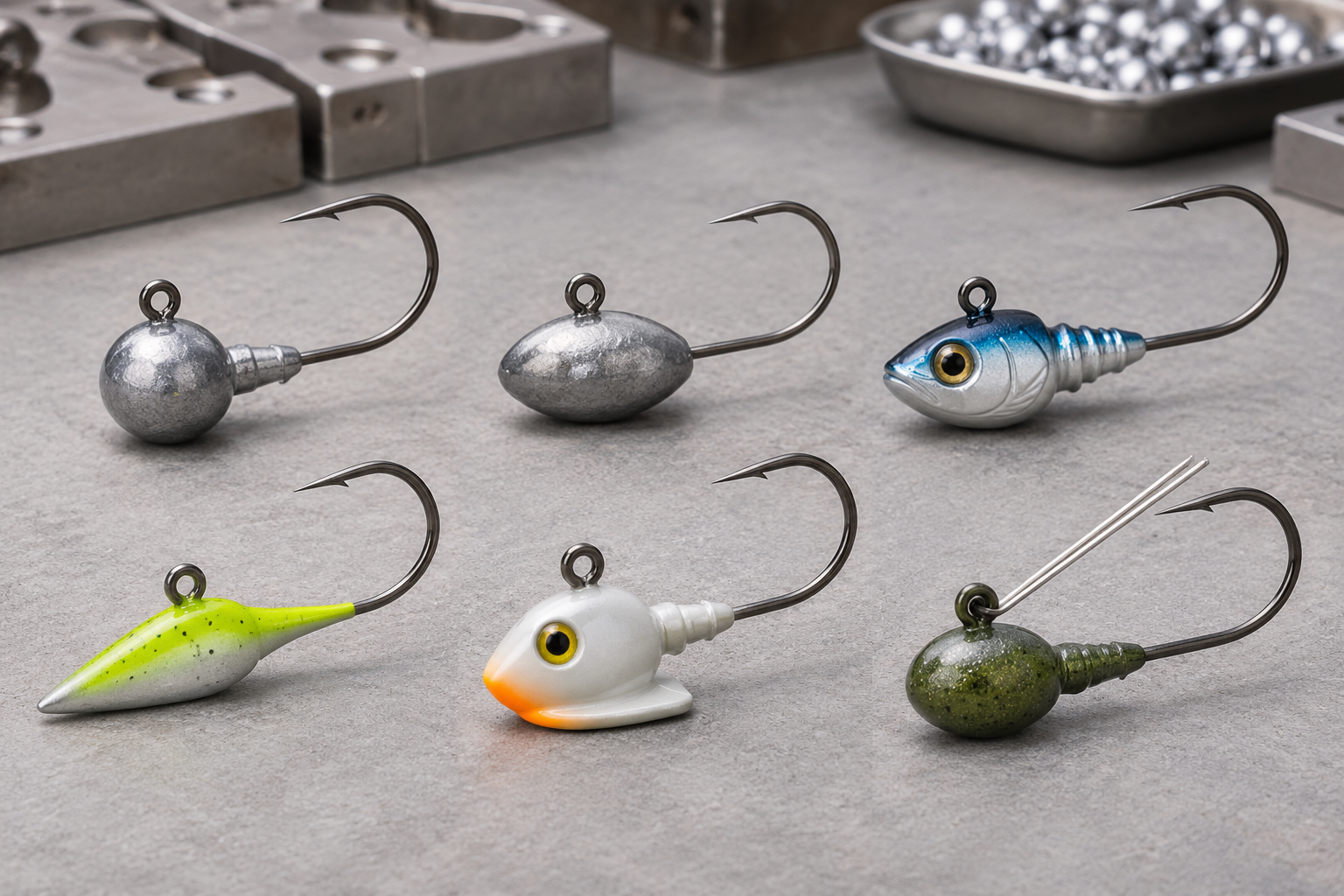
A common mistake when developing a new jig head range is to select products by weight and color alone. Two jig heads with the same weight can behave differently because of their shape, center of gravity, hook angle and connection point.
This guide compares seven common jig head designs and explains what professional buyers should consider when building a product range for freshwater, predator and saltwater fishing markets.
What This Guide Covers
- Seven common jig head shapes and their typical applications.
- How head geometry affects lure presentation and bottom contact.
- How to match head shape with soft bait and hook specifications.
- The difference between a jig head shape and a complete bucktail jig.
- What importers should confirm before requesting samples or new molds.
1. Round or Ball Head: The All-Round Jig Head Design
The round jig head is one of the most widely used designs in soft plastic fishing. Its simple rounded profile makes it suitable for a broad range of soft baits, including grubs, curly tails, paddle tail shads and small swimbaits.
For general lure fishing, round heads are often used with a steady retrieve, occasional bottom contact or a lift-and-fall presentation. They are also a practical starting point for distributors building a basic jig head product range.
From a manufacturing perspective, round heads offer a relatively straightforward product structure. Buyers can develop several weights using a consistent head profile, while changing hook sizes and finishes to create different SKUs.
What buyers should check:
- Head diameter and overall profile.
- Hook shank length and hook gap.
- Line tie position and eye angle.
- Lead weight and acceptable tolerance.
- Collar or keeper design for securing soft plastics.
For importers, round jig heads are often a useful foundation for a product series because they can be offered in several weights, hook sizes and painted finishes without changing the basic product concept.
2. Football Head: Designed for Bottom Contact
Football jig heads have a wider body profile that resembles an American football. The shape provides a broader contact surface and is commonly used for bottom-oriented presentations, particularly around rocky or gravel structures.
Compared with a conventional round head, the wider profile can help the jig maintain a more stable orientation when dragged along the bottom. It can also reduce the tendency to fall into certain gaps between rocks, although no head design is completely snag-proof.
Football heads are often paired with craw-style soft plastics, creature baits and skirted jig combinations. Hook strength and gap should be selected according to the trailer size and target fish.
What buyers should check:
- Width and height of the football profile.
- Weight distribution and bottom stability.
- Hook strength and eye position.
- Skirt collar or trailer attachment method.
- Consistency of the molded shape across production batches.
For brands developing a bass fishing range, football heads can complement standard round heads rather than replace them.
3. Fish Head and Swimbait Head: Matching Baitfish Profiles
Fish head jig heads use a baitfish-style body profile. They are commonly designed for paddle tail shads and soft swimbaits, where the head shape, hook position and weight distribution need to work together.
A well-matched fish head should allow the soft bait to track naturally during a straight retrieve. If the head is too heavy for the bait body or the hook is positioned incorrectly, the lure may roll, swim unevenly or restrict tail movement.
Many fish head designs include painted eyes, molded details and a bait keeper. These features make the product suitable for retail programs where appearance and soft bait compatibility both matter.
What buyers should check:
- Head length, width and overall baitfish profile.
- Hook length relative to the soft bait body.
- Eye position and horizontal balance.
- Keeper structure and soft bait retention.
- Paint coverage, eye details and finish consistency.
When developing a fish head jig, it is advisable to test the actual soft bait together with the approved jig head sample. A product photograph alone cannot confirm swimming balance.
4. Darter and Arrow Head: For Directional Lure Action
Darter or arrow-style jig heads generally use a more streamlined or angled profile. Depending on the specific geometry, keel design and weight distribution, they can produce a more pronounced directional or darting movement when worked with rod movements.
These designs are used in some predator fishing and soft lure applications where an irregular swimming presentation is preferred over a simple straight retrieve.
However, not every pointed jig head will produce the same action. The angle of the front section, center of gravity, hook position and line tie all contribute to the finished lure’s movement.
Buyers can review the VMC Dart Jig design as an example of a commercial jig head developed specifically for directional darting action.
What buyers should check:
- Front profile and keel geometry.
- Weight distribution and balance.
- Line tie position.
- Hook pattern and wire strength.
- Actual movement during sample testing.
5. Stand-Up and Mushroom Head: Keeping the Bait in Position
Stand-up and mushroom-style jig heads are designed around how the lure rests on the bottom. Their flattened or specially shaped lower surfaces can help position the hook and bait at an upward angle when the jig comes to rest.
Mushroom heads are commonly associated with Ned-style finesse presentations, while other stand-up designs are used with worms, craws and creature baits.
The exact resting position depends on the head profile, hook angle, weight distribution and buoyancy of the attached soft bait. It should therefore be checked with the intended bait rather than assumed from the head shape alone.
What buyers should check:
- Flat-bottom dimensions and stability.
- Hook position when the jig rests on a flat surface.
- Keeper design and bait compatibility.
- Head weight relative to the intended presentation.
- Whether the complete rig maintains the desired posture.
6. Bullet and Streamlined Head: Compact Profiles for Specific Conditions
Bullet-style jig heads have a narrow, tapered profile. They are used in applications where a compact shape and reduced frontal profile are useful, including some current-oriented and streamlined lure presentations.
A pointed or tapered shape can influence how the lure moves through water, but sinking speed is not determined by the head profile alone. Total weight, density, body dimensions, line resistance and current all play a part.
Some bullet-style heads are also combined with weed guards or special hook arrangements. For buyers, it is important to distinguish the head profile from the complete rigging configuration.
What buyers should check:
- Overall length and taper angle.
- Weight distribution.
- Hook eye position and hook gap.
- Soft bait fit and keeper structure.
- Whether a weed guard or other accessory is required.
7. Weedless Jig Heads: A Configuration, Not Just a Head Shape
Weedless jig heads are designed to reduce hook exposure when fishing around grass, vegetation, timber and other cover. They commonly use a wire guard or another protective arrangement in front of the hook point.
One important distinction for product buyers: weedless is a functional configuration rather than one single head shape. A weedless product may use a round, bullet or other lead head profile.
The guard must be matched to the hook gap, bait thickness and intended cover. A guard that is too stiff may affect hook penetration, while one that is too flexible may provide insufficient protection.
What buyers should check:
- Guard material and wire diameter.
- Guard angle and attachment position.
- Hook gap and hook strength.
- Compatibility with the intended soft bait.
- Guard consistency and attachment security.
For OEM orders, weedless configurations should be confirmed through physical samples because small differences in guard position can affect the finished product.
8. Where Bucktail Jigs Fit In: Head Shape and Dressing Are Separate Decisions
Bucktail jigs deserve separate consideration when developing a jig product range. A bucktail jig is a complete lure made from a weighted head, hook and hair dressing. The hair material and tying method create the lure’s profile and movement.
Unlike round, football or fish-head designs, bucktail describes the dressing material and construction of the lure rather than one fixed head geometry.
Depending on the intended application, bucktail jigs can use different lead head profiles and hook specifications. The buyer should therefore confirm the head and dressing as separate parts of the product specification.
Important bucktail jig specifications include:
- Lead head shape and weight.
- Hook size, wire diameter and strength.
- Natural bucktail, synthetic hair or mixed materials.
- Hair length, density and color combination.
- Thread wrapping and tying security.
- Flash material, eyes and other decorative details.
- Final lure length and retail packaging.
For brands selling saltwater or predator fishing products, bucktail jigs can complement a standard lead jig head range and provide additional product variety.
TerminalPro’s jig head and bucktail jig product range covers several head styles and related product configurations for professional buyers.
9. Comparing Different Jig Head Shapes
The following table provides a quick comparison for buyers planning a new product range. These are typical applications rather than fixed rules; final performance depends on the complete lure design and fishing conditions.
| Design | Typical Application | Important Specification |
|---|---|---|
| Round / Ball | General soft bait fishing | Hook size, weight, collar and eye angle |
| Football | Bottom contact and rocky structure | Body width, balance and hook strength |
| Fish Head | Paddle tails and swimbaits | Bait fit, hook length and tracking balance |
| Darter / Arrow | Directional and darting presentations | Keel, eye position and weight distribution |
| Stand-Up / Mushroom | Bottom-oriented finesse presentations | Base stability and hook orientation |
| Bullet / Streamlined | Compact and current-oriented presentations | Profile, taper and weight distribution |
| Weedless Configuration | Fishing around vegetation and cover | Guard material, angle and hook gap |
10. What Buyers Should Confirm Before Developing a New Jig Head
Selecting a head style is only the first step. For OEM development, several specifications must be confirmed before a supplier can provide a meaningful quotation or prepare a production sample.
Head shape and dimensions
Provide a reference photo, physical sample or dimensioned drawing. Confirm head length, width, height, weight and line tie position. If the design is custom, discuss whether an existing mold can be modified or a new mold is necessary.
Hook specification
Hook size alone is not enough. Confirm the hook model, wire diameter, shank length, gap, eye type and finish. Two hooks with the same nominal size may have different physical dimensions.
TerminalPro’s fishing hook range provides a reference for discussing hook types and specifications used in jig head production.
Weight and lead head production
Confirm the target weight for each SKU and the acceptable tolerance. Clarify whether the marked weight refers to the lead head alone or the complete assembled product.
Lead head mold design, hook positioning, cavity dimensions and trimming all need to be considered when developing a consistent production specification.
Coating and appearance
Specify whether the product requires raw lead, painted finish, powder coating, epoxy, 3D eyes or other details. For retail products, an approved physical color sample is more reliable than a color name alone.
Soft bait compatibility
If the jig head is designed for a particular soft bait, send the actual bait or its dimensions. Hook length, hook gap, body thickness and keeper position should be checked together.
Buyers developing complete lure programs can also review TerminalPro’s soft bait product range.
11. Jig Head OEM RFQ Checklist for Importers and Brands
A clear product specification makes quotation and sample approval much more efficient. When sending an inquiry, professional buyers should prepare the following information.
Jig Head Product Specification Checklist
- Head Style: Round, football, fish head, darter, stand-up, bullet or custom design.
- Reference: Product photo, physical sample, drawing or existing item number.
- Weight: Required weight per SKU in grams or ounces.
- Dimensions: Head length, width, height and other controlled measurements.
- Hook: Hook model, size, wire diameter, gap and finish.
- Eye: Eye position, angle and opening size.
- Keeper: Lead barb, wire keeper, screw lock or other structure.
- Weed Guard: Required or not, with material and stiffness specification.
- Coating: Raw lead, painted, powder coated, epoxy or custom finish.
- Accessories: Eyes, blades, skirts or other components.
- Quantity: Quantity per weight, hook size and color.
- Packaging: Bulk bag, retail bag, blister card or assortment pack.
- Market: Target country, fishing application and expected sales channel.
Conclusion
Different jig head shapes serve different purposes. Round heads provide a versatile starting point, football heads are suited to many bottom-oriented applications, fish-head designs are developed around baitfish profiles, and darter or stand-up designs address more specific presentations.
For fishing tackle brands and importers, the most effective product range is not necessarily the one with the largest number of shapes. It is the one where each design has a clear purpose, suitable hook specification, practical weight range and consistent production standard.
When developing a new lead jig head, buyers should consider head geometry, mold requirements, hook integration, weight tolerance, coating and soft bait compatibility together. These details make the difference between a product that simply looks right and one that is ready for a reliable retail program.
For further sourcing information, see TerminalPro’s Jig Head OEM Guide and fishing tackle quality control information.
Planning a New Jig Head or Bucktail Jig Range?
Send us your product references, preferred head shapes, weight range, hook specifications and estimated quantity. For custom designs, a physical sample or dimensioned drawing helps us review the mold and production requirements before quotation.
Frequently Asked Questions
Which jig head shape is best for general soft bait fishing?
Round or ball heads are widely used for general soft bait fishing because of their versatile profile. However, the best choice depends on the bait, fishing depth, current and intended presentation.
What is the difference between a football head and a round jig head?
A football head has a wider profile that is commonly used for bottom-oriented presentations around rocky or gravel structures. A round head is a more general-purpose design used with many soft bait styles.
Are weedless jig heads a separate head shape?
Not necessarily. Weedless describes a configuration that protects the hook point, commonly through a wire guard. The underlying lead head can have different shapes.
Is a bucktail jig the same as a jig head?
No. A jig head is the weighted head and hook assembly. A bucktail jig is a complete lure that combines a weighted head, hook and hair dressing. Different head profiles can be used in bucktail jig designs.
What information is needed for a custom jig head mold?
Buyers should provide a reference sample or drawing, target weight, head dimensions, hook specification, eye position, keeper structure and finish requirements. The supplier can then review whether an existing mold can be adapted or new tooling is needed.
Can different jig head weights use the same head design?
Yes, a product series can use the same general head profile in different weights. However, cavity dimensions, hook size and weight distribution may need adjustment for each SKU.